.png)
AI Is Changing Recruiting Forever: What Enterprises Need to Know
.jpeg)
May 30, 2026
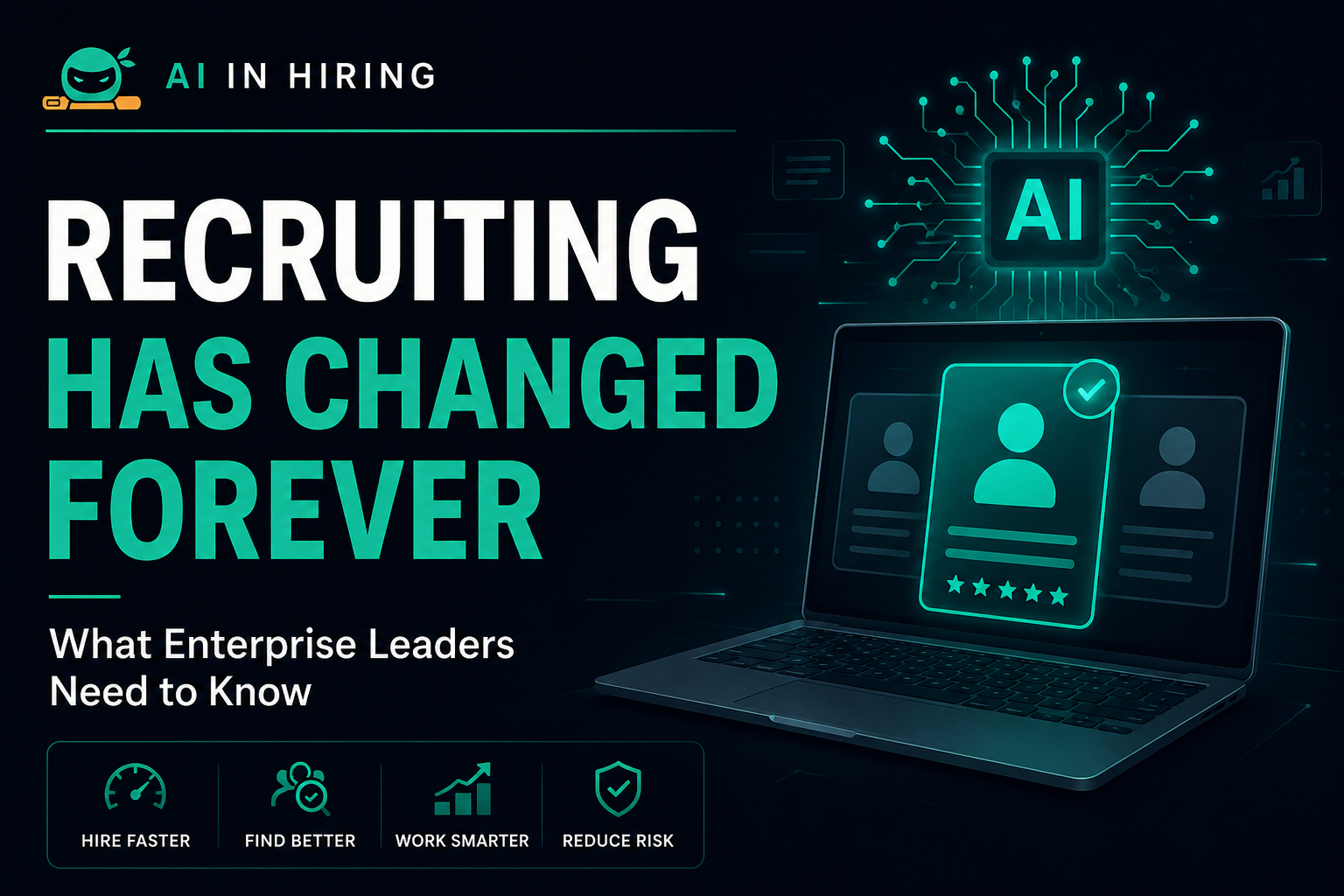
Enterprise talent acquisition has reached a critical structural inflection point. Modern macroeconomic pressures, shifting labor patterns, and volatile business environments have created an intense operational dynamic: while aggregate application volumes are scaling to record heights, actual qualified talent remains exceptionally difficult to isolate. Recruiter capacity, historically managed through linear headcount adjustments, cannot scale fast enough to meet this exponential influx of inbound data. The traditional methods of sourcing, screening, and managing candidates have become an expensive bottleneck for global organizations.
This challenge is intensified by a dramatic evolution in candidate expectations. Today's professionals demand instantaneous communication, hyper-personalized engagement loops, and smooth digital interactions. When an enterprise relies on legacy, fragmented administrative processes, candidate drop-off increases, and premium talent quickly moves toward more agile competitors. Human capital functions can no longer solve these capacity and experience constraints by simply adding more administrative headcount or adopting basic point solutions.
Artificial intelligence has emerged as the essential framework bridging corporate hiring demands and recruiting capability. Far from being a simple automated filter, AI is completely re-engineering how companies discover corporate capability, evaluate core competencies, and structure human capital workflows. Organizations that treat AI as a core strategic advantage are building highly scalable operations that maximize recruiter impact, decrease time-to-fill, and deliver exceptional candidate experiences at scale.
Strategic Overview
The paradigm shift in global recruitment requires a total reimagining of corporate systems. The modern standard relies on intelligent recruiting systems that use advanced machine learning, predictive models, and agentic workflows to handle repetitive administrative tasks. This allows enterprise human resources professionals to dedicate their focus to high-impact activities: building strategic relationships, exercising qualitative judgment, and closing key leadership talent.
Why the Traditional Recruiting Model Is Breaking Down
Recruiting Inefficiency represents the widening gap between expanding application data volume and limited human processing capacity, which leads to prolonged hiring cycles, increased cost per hire, and lost organizational productivity.
The traditional corporate talent acquisition architecture was built for a physical, linear world. Recruiters reviewed a manageable volume of physical resumes, conducted manual phone screens, and coordinated schedules via standard email channels. Today, the widespread availability of digital application tools and generative text platforms has fundamentally broken this model. A single open enterprise role can attract thousands of digital applications within hours, many of which are algorithmically tailored to match specific keywords, creating an overwhelming administrative burden for HR teams.
This operational overload creates significant friction across the entire business. Sifting through high volumes of unverified digital profiles delays critical hiring decisions, leaving vital corporate vacancies open for months. McKinsey and Gartner human capital research indicates that excessive time-to-fill periods create major productivity losses across core business units. Furthermore, when overwhelmed recruiting teams cannot provide timely updates, corporate brand equity suffers, and premium talent abandons the application process entirely.
| Operational Friction Point | Root Root Cause | Enterprise Business Impact |
|---|---|---|
| Exponential Application Influx | Mass application bots and AI-optimized resumes. | Severe recruiter fatigue; high risk of missing top candidates. |
| Fragmented Software Ecosystems | Using isolated, disconnected point tools. | Data silos; poor workflow visibility; broken candidate tracking. |
| Prolonged Decision Frameworks | Manual scheduling and complex, slow feedback loops. | Increased cost per hire; key talent lost to faster competitors. |
| Inconsistent Sourcing Profiles | Keyword matching that misses adjacent, transferable skills. | Limited talent pools; high dependency on expensive external agencies. |
What Is AI Recruiting?
AI recruiting uses artificial intelligence to automate, optimize, and enhance sourcing, screening, engagement, scheduling, analytics, and hiring workflows. By deploying advanced machine learning algorithms, natural language processing, and predictive telemetry, AI systems transform talent acquisition from a reactive administrative function into a proactive, data-driven strategy.
How does AI recruiting work in practice? Instead of relying on static keyword matching, intelligent recruiting systems evaluate candidate data contextually. These platforms analyze multi-dimensional talent profiles, assessing transferable skills, professional trajectories, and underlying potential. By automatically coordinating complex scheduling processes, answering applicant inquiries instantly via natural language engines, and identifying hidden talent trends across past applicant tracking systems, AI functions as a continuous intelligence layer that significantly extends human recruiting capacity.
The Five Ways AI Is Transforming Recruiting
The practical application of AI in enterprise talent acquisition can be categorized into five core operational areas, each designed to remove deeply embedded friction points from the hiring process:
1. AI Candidate Sourcing
Intelligent algorithms actively search through internal talent databases, professional networks, and diverse talent pools to locate passive candidates who match precise organizational needs. This approach uncovers exceptional talent that traditional boolean searches routinely miss.
2. AI Candidate Screening
Advanced natural language platforms review high volumes of candidate profiles contextually, mapping true professional capabilities and adjacent competencies directly against specific organizational requirements, rather than relying on basic keyword matching.
3. AI Candidate Engagement
Intelligent, interactive assistants provide real-time updates, clear context regarding evaluation steps, and immediate answers to candidates around the clock, ensuring applicants remain fully engaged throughout the process.
4. AI Workflow Automation
Automated coordination modules handle complex, multi-party calendar management for panel interviews, sync interview feedback instantly across internal systems, and handle repetitive compliance steps without manual intervention.
5. AI Recruiting Analytics
Predictive dashboards evaluate pipeline velocity, historical channel efficacy, and candidate success patterns. This gives human resource leaders the clear, data-backed insights required to optimize future workforce planning strategies.
The Intelligent Talent Lifecycle Architecture
The Hidden Cost of Recruiting Inefficiency
The financial consequences of maintaining outdated, slow recruitment operations are significant. Organizations often struggle to quantify the full scope of these inefficiencies because the costs are hidden across multiple business units. Prolonged vacancy periods for key roles reduce operational output, delay important project delivery timelines, and place an exhausting burden on remaining team members, which can lead to higher turnover.
Data from LinkedIn Talent Solutions, SHRM, Deloitte, and Josh Bersin underscores that the true cost of a prolonged unfilled vacancy often exceeds traditional recruitment expenditures by multiple factors. When professional talent experiences long delays, lack of updates, or confusing assessment processes, the best candidates drop out of the pipeline entirely. Transitioning to AI-powered recruiting workflows transforms these operational realities, converting hiring speed and talent quality into measurable business advantages.
| Operational Metric | Traditional Recruiting Models | AI-Assisted Recruiting Ecosystems |
|---|---|---|
| Average Time-to-Fill | 45 to 65 calendar days | 14 to 21 calendar days |
| Recruiter Profile Capacity | Limited to 15-20 active job orders concurrently | Scales efficiently to 60+ active job orders |
| Candidate Response Latency | 24 to 72 hours per interaction | Under 2 minutes via immediate automated messaging |
| Pipeline Utilization Efficiency | Less than 5% of historical database profiles repurposed | Over 65% of existing candidate profiles resurfaced |
| Interview Coordination Time | 3 to 5 business days of manual scheduling emails | Instant automated alignment via calendar integrations |
How AI Improves Candidate Experience
Modern candidate experience is defined by responsiveness, transparency, and clarity. Implementing intelligent talent acquisition workflows removes the frustrating communication gaps common in legacy processes, providing applicants with instant updates and absolute clarity regarding their evaluation status.
The most common candidate complaint in enterprise recruiting is the corporate communication gap—the period where an applicant submits their credentials and hears nothing back for weeks. AI solves this issue by managing immediate, consistent candidate touchpoints. Automated natural language interfaces answer complex applicant questions about remote work policies, health benefits, and team structures instantly, ensuring candidates feel supported from their very first interaction.
Consider the process of enterprise scheduling. In a traditional workflow, arranging an interview sequence with four internal leaders requires multiple back-and-forth emails, leading to delays and frustration. An AI recruiting platform connects directly to internal calendars, offering candidates instant options to lock in interview slots that work for everyone within seconds. This frictionless approach keeps top candidates engaged and reinforces a positive corporate brand image.
"AI is not a threat to human connection in recruitment; it is the catalyst that enables it. By automating administrative tasks, we give recruiters the time required to build deep, meaningful human connections."
How Enterprises Use AI Recruiting Today
Global enterprises use advanced talent intelligence systems to address complex hiring challenges that vary across different business sectors:
- Healthcare: Large hospital networks use automated screening tools to rapidly verify specialized medical credentials, shift availabilities, and regulatory compliance records. This accelerates nurse hiring cycles and ensures essential frontline shifts remain fully staffed.
- Financial Services: Global financial institutions deploy predictive assessment layers to review candidate capabilities contextually. This allows teams to identify high-potential analytical talent based on core transferable skills, rather than focusing exclusively on traditional Ivy League credentials.
- Technology: Fast-growing enterprise software organizations leverage intelligent sourcing systems to discover passive engineering professionals across global open-source platforms, allowing them to engage top technical talent ahead of competitors.
- High-Volume Staffing & MSPs: High-volume workforce programs use automated workflow coordination to handle high submittal volumes. This step ensures consistent supplier compliance and maintains exceptional talent quality across large contingent workforces.
| Industry Sector | Core Operational Challenge | AI Architectural Solution | Primary Strategic Metric |
|---|---|---|---|
| Healthcare Systems | Critical frontline talent shortages and rapid compliance needs. | Automated credential verification and shift-matching systems. | Significant reduction in expensive temporary agency reliance. |
| Financial Institutions | Sourcing diverse, highly analytical investment professionals. | Predictive, skills-based talent sourcing models. | Broader talent pipelines and increased team innovation. |
| Enterprise Technology | Intense competition for specialized technical capabilities. | Passive sourcing engines that scour open-source repositories. | Increased conversion rates on passive candidate outreach. |
| Logistics & Retail | Massive seasonal hiring spikes and high application volumes. | Conversational applicant screening and instant interview booking. | Rapid scaling to meet critical operational peak demands. |
Can AI Replace Recruiters?
No, AI cannot replace recruiters. While artificial intelligence excels at managing repetitive tasks, processing massive datasets, and coordinating complex schedules, it lacks the critical human qualities required for successful hiring. Genuine relationship building, nuanced character evaluation, corporate cultural alignment, sophisticated executive negotiation, and candidate persuasion remain entirely dependent on human expertise.
The future of talent acquisition lies in a collaborative model where technology enhances human capabilities. By using intelligent platforms to manage routine administrative tasks, recruiters are liberated from data entry, follow-up emails, and calendar coordination. This shifts their daily focus toward high-value activities: acting as consultative advisors to hiring managers, building deep connections with top candidates, and designing long-term human capital strategies.
| AI Algorithmic Capabilities | Human Capital Strategic Value |
|---|---|
| Rapid sourcing across global talent databases. | Building deep relationships with high-potential talent. |
| Automated screening of application materials. | Assessing cultural alignment and executive presence. |
| Instant coordination of interview schedules. | Advising business leaders on organizational design. |
| Real-time tracking of process analytics. | Navigating complex offer negotiations and packages. |
| Automated notifications and updates. | Telling an engaging, inspiring corporate story. |
The Rise of Intelligent Talent Acquisition
Enterprise recruiting is shifting from a series of disjointed, tactical steps toward unified, intelligent talent acquisition networks. Modern systems do not treat sourcing, evaluation, and workforce planning as isolated tasks. Instead, they operate as an integrated platform that connects global data insights directly with day-to-day hiring actions.
This approach centers on skills-based talent identification. Rather than screening candidates based on past employers or university names, intelligent platforms analyze the underlying skills required for corporate success. By assessing adjacent capabilities and transferable strengths, these systems help enterprises uncover exceptional talent hidden within their existing applicant databases, reducing costs and building a more agile workforce.
The Shift to Talent Intelligence
Moving toward true talent intelligence allows global enterprises to pivot from reactive hiring to proactive talent planning. By analyzing broader labor market trends, internal skill patterns, and historical team performance metrics, business leaders can accurately project future workforce gaps and initiate strategic talent engagement strategies long before open positions create business friction.
Building an AI-Powered Recruiting Strategy
To help enterprises successfully navigate this transformation, we have developed a structured implementation model. This roadmap helps human resource leaders integrate intelligent systems smoothly into their existing corporate structures while maintaining full compliance and operational safety.
The Enterprise AI Recruiting Framework™
A strategic model for implementing intelligent talent acquisition infrastructure.
Assess Operational Bottlenecks
Map your existing talent pipeline to isolate key friction points. Identify whether your primary slowdowns occur during early application screening, interview coordination, or final evaluation handoffs.
Automate Administrative Tasks
Deploy intelligent scheduling assistants and conversational platforms to manage routine inquiries and high-volume communication loops, freeing recruiters from manual coordination work.
Augment Candidate Discovery
Integrate contextual sourcing and match tools to help talent teams instantly surface premium, passive talent and highly relevant historical applicants from your existing databases.
Optimize System Workflows
Connect your automated layers directly with your core enterprise tech stack, ensuring real-time data syncs, clear dashboard visibility, and a highly consistent candidate journey.
Scale Human Strategy
Redirect saved recruiter hours toward strategic advisory work, allowing your talent team to dedicate their energy to candidate relationships, cultural alignment, and deep market analysis.
| Maturity Stage | Operational Characteristics | Technology Deployment |
|---|---|---|
| Stage 1: Legacy Reactive | Manual sorting, high reliance on emails, word-of-mouth sourcing. | Basic keyword-based applicant tracking tools. |
| Stage 2: Automated Point Solutions | Automated scheduling or basic message templates added to workflows. | Isolated point tools running alongside legacy software. |
| Stage 3: Integrated Augmentation | Sourcing and screening layers sync directly with core team workflows. | AI-assisted talent platforms integrated with central databases. |
| Stage 4: Intelligent Orchestration | Proactive skills matching and real-time workforce analytics drive strategy. | Unified talent intelligence systems driving global operations. |
The Future of Recruiting
Looking toward the next decade, the integration of artificial intelligence will move beyond simple point automations and enter the era of agentic recruiting. Future talent acquisition systems will operate as continuous, proactive intelligence networks that manage end-to-end recruitment pipelines with minimal manual intervention.
Key developments shaping the next generation of enterprise recruiting include:
- Proactive Sourcing Agents: Intelligent systems will continuously analyze broader market movements, corporate growth signals, and team structures to engage passive talent weeks before a formal job opening is created.
- Dynamic Skills-Based Matching: Traditional, rigid job descriptions will give way to dynamic, real-time capability tracking, allowing platforms to instantly match project requirements with optimal talent profiles based on current competencies.
- Deep Infrastructure Integrations: Applicant tracking tools will shift from simple record databases into central workflow orchestration engines that manage all data transfers, candidate interactions, and evaluation steps seamlessly.
- Hyper-Personalized Candidate Journeys: Advanced communication engines will create highly customized onboarding and interaction paths for every applicant, tailoring messages to individual career paths and specialized backgrounds.
Forward-thinking enterprises recognize that staying competitive requires infrastructure capable of automating routine sourcing, engagement, and workflow coordination, while enabling recruiters to focus on strategic human capital decisions. This realization is driving the adoption of advanced AI-powered recruiting platforms that expand recruiter capacity rather than simply tracking applications.
Why Recruiting Infrastructure Matters More Than Headcount
For decades, enterprise leadership measured talent acquisition power by counting recruiter heads. When hiring demands scaled, HR departments simply added more recruiting headcount. When market demand cooled, teams were downsized. This reactive, cyclical approach creates significant operational instability, erodes institutional knowledge, and leaves the organization vulnerable to sudden market shifts.
The future belongs to organizations that increase recruiter leverage rather than recruiter workload. By building high-performing talent acquisition infrastructure, enterprises protect themselves against market volatility. A lean, strategic team supported by an intelligent automation framework can easily manage sudden hiring surges without requiring frantic, expensive hiring cycles of their own.
Investing in advanced recruiting infrastructure changes how an organization approaches human capital. Instead of burdening recruiters with hours of manual scheduling, data entry, and resume sorting, companies can empower their professionals to act as talent advisors. This strategic shift improves the efficiency of your talent function, protects your bottom line, and ensures your business is always positioned to attract top-tier talent.
Frequently Asked Questions
Transform Your Talent Acquisition Architecture
Artificial intelligence is no longer a futuristic concept — it is a foundational component of modern, enterprise-grade recruiting infrastructure. Organizations that embrace intelligent talent orchestration optimize their costs, protect their teams from administrative fatigue, and secure the premier talent required to drive continuous corporate innovation.
Learn how advanced human capital functions implement scalable, high-leverage talent strategies. Build a resilient, data-driven recruiting operation today.