.png)
AI Recruiting Software for Staffing Suppliers in Enterprise MSP Programs

July 7, 2026
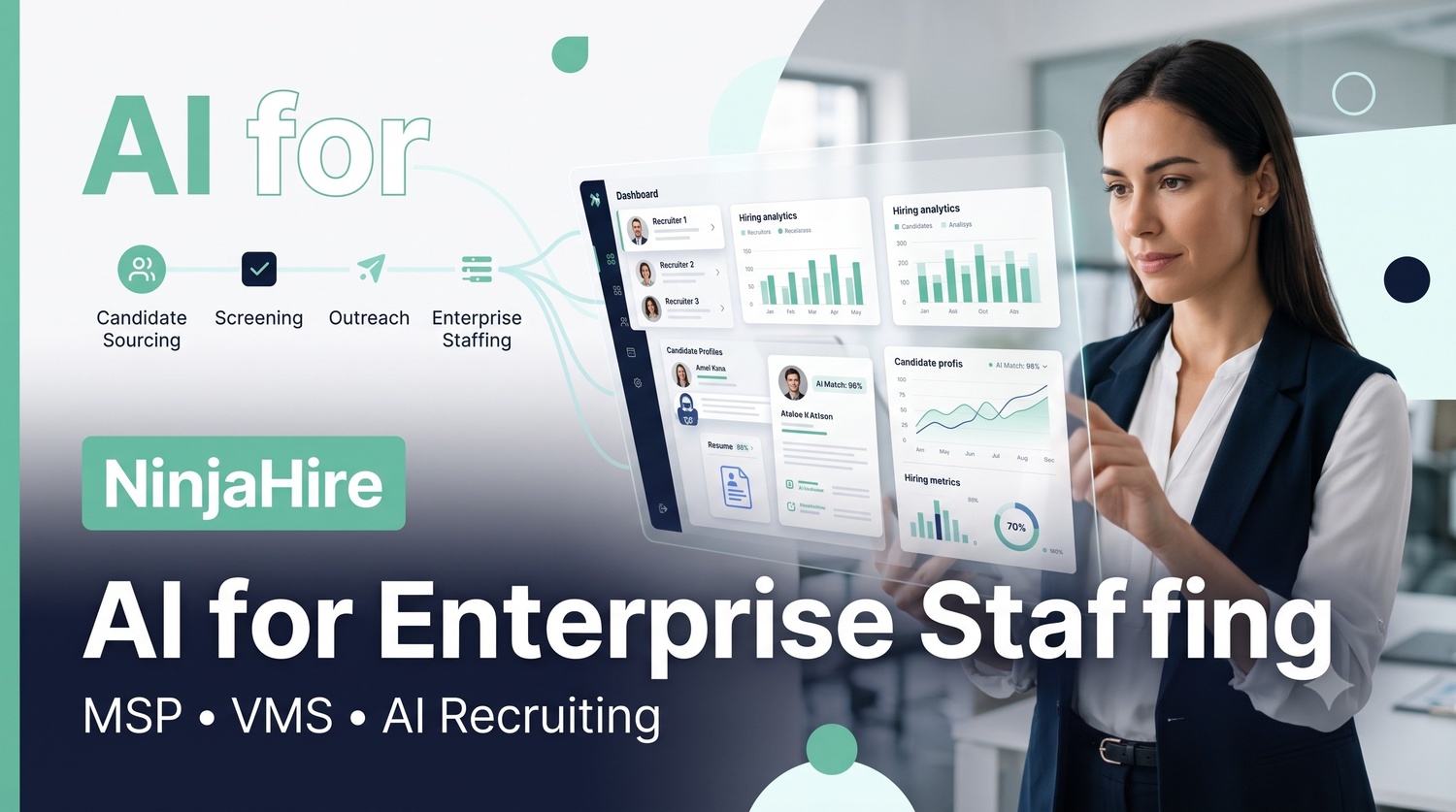
Staffing suppliers utilize advanced AI recruiting software within enterprise Managed Service Provider (MSP) networks to accelerate speed-to-market, hit aggressive client service level agreements (SLAs), and minimize submission latency.
For an enterprise contingent workforce solution provider operating inside a modern Managed Service Provider (MSP) ecosystem, the delivery rules are unforgiving. When a Fortune 500 company opens a high-volume requisition panel, the window to capture premium talent closes within hours. In this procurement-driven landscape, recruitment performance is measured down to the decimal point on automated supplier scorecards that track submission latency, time-to-submit (TTS), interview-to-hire ratios, and strict client compliance metrics.
Staffing firms that rely on manual sourcing patterns are facing structural disadvantages. Traditional methods—manually scanning external resume databases, building long Boolean strings, and making cold validation phone calls—cannot keep up with the speed requirements of vendor-neutral programs. As submission windows contract, suppliers are increasingly implementing AI Recruiting Software for Staffing Suppliers in Enterprise MSP Programs to protect their account portfolios and maximize gross margin yields.
What Is Enterprise MSP Staffing?
Enterprise Managed Service Provider (MSP) staffing represents a structured contingent labor procurement model where an outsourced corporate management partner oversees an organization's end-to-end temporary workforce lifecycle.
Operating through centralized Vendor Management Systems (VMS), the program maintains vendor neutrality, distributing incoming client requisitions to an approved tier of talent suppliers. This structural setup removes personal relationships from the selection process, making delivery speed and submission quality the primary factors for account retention.
Key components include the Managed Service Provider (MSP) governing team, the central software interface known as the Vendor Management System (VMS), and statement of work (SOW) compliance protocols. In a vendor-neutral program, all approved suppliers receive requisitions at the exact same moment, transforming execution speed into a strict survival metric.
How Enterprise Staffing Suppliers Recruit Today
Modern contingent workforce suppliers commonly recruit through a high-frequency transactional sourcing model centered around manual, multi-tool search operations across external channels.
The standard delivery model utilized across legacy recruitment branches requires an intense amount of manual administrative effort. When a high-volume account executive logs a role notification inside the central Applicant Tracking System (ATS), the delivery pipeline follows a series of fragmented processing steps: manual boolean building, calling lists of candidates from external databases, and running back-and-forth email chains for compliance logs.
This transactional method means recruiters spend up to three hours daily handling basic data entries, filtering duplicate database profiles, and chasing unreturned cold calls. This administrative load takes valuable desk time away from deep candidate relationship development and qualitative verification screens, resulting in missing critical scorecard submission windows.
Why Traditional Recruiting Software Falls Short
Legacy applicant tracking systems and generic recruitment software platforms fall short within enterprise MSP programs because they function as passive databases of record rather than active workflow engines.
Staffing firms looking to scale high-volume contract placements face several distinct technology gaps when relying on traditional recruitment platforms:
- Rigid Keyword Indexing vs. Functional Competency: Standard software relies on basic keyword search operators. If a recruiter builds an exact-match query, alternative title configurations are completely missed, leading to candidate isolation.
- The Problem of Stale Records and Data Decay: Without automated re-engagement tools, changes in contact profiles, newly acquired certifications, or expanded job responsibilities are lost. Within twelve months, up to 30% of a database becomes obsolete.
- Complete Lack of Real-Time Pipeline Visibility: Management cannot accurately project whether an urgent contract requisition will be fulfilled within mandatory scorecard submission limits because performance data is trapped across disjointed spreadsheets.
What AI Recruiting Software Should Actually Do
Modern AI recruiting software must function as an integrated operational orchestration layer that automatically handles candidate data parsing, calculates suitability scores, and executes automated multi-channel engagement campaigns.
To protect gross margins and elevate your supplier scorecard tier, an enterprise-grade intelligence platform must optimize every phase of the recruitment lifecycle. Advanced platforms evaluate candidate documentation using natural language processing rather than rigid keyword text rules, instantly identifying high-potential candidates hidden within the existing database via semantic candidate rediscovery.
Furthermore, the platform must take over early applicant validation steps by launching automated communication campaigns across SMS, email, and interactive voice intelligence channels. Built-in voice AI modules can automatically check candidate shifting availability, verify salary expectations, and confirm essential compliance credentials before a human team member ever spends hours on cold outreach.
Essential Features Checklist
Staffing operations buyers must look past surface-level interface elements and prioritize deep system utility infrastructure that directly influences submission speed and scorecard compliance parameters.
| Advanced Technology Capability | Core Operational Impact | Procurement Status |
|---|---|---|
| Contextual Semantic Matching Engine | Interprets adjacent skill frameworks and career progression paths, bypassing rigid text-only rules. | Must-Have |
| Automated Profile Enrichment Lookups | Automatically updates stale data assets by pulling fresh professional milestones from public layers. | Must-Have |
| Natively Integrated Voice AI Screening | Conducts automated early screening calls to verify credentials and check availability at scale. | Must-Have |
| Real-Time VMS/SLA Tracking Metrics | Programmatically monitors client submission deadlines, prioritizing active contract allocations. | Must-Have |
| Cross-Platform Database Deduplication | Unifies duplicate entry pathways and split tracking files into clean records automatically. | Nice-to-Have |
Best AI Recruiting Software Comparison
Choosing the right technology layer requires an objective review of the primary platforms available in the modern contingent workforce software market measured against metrics-driven execution standards.
| Software Platform Selection | Primary Technology Focus | Native Database Rediscovery | Integrated Voice AI Screening | Real-Time VMS SLA Analytics |
|---|---|---|---|---|
| NinjaHire | Integrated Recruiting Operations Workspace | Yes (Full Semantic) | Yes (Native Voice AI) | Yes (Automated) |
| HireEZ | Outbound Candidate Sourcing Overlay | Yes (Basic Filter) | No | No |
| SeekOut | Technical Talent Sourcing Engine | Yes (Niche Filter) | No | No |
| Gem | Passive Executive Outreach CRM | No (Requires Sync) | No | No |
The ROI of AI Recruiting Platforms
Evaluating the implementation of advanced recruiting software requires analyzing direct business metrics: sourcing credit reductions, turnaround compression times, and recruiter capacity leverage indices.
Traditional recruitment models waste considerable capital re-buying candidate data from external boards that already exists inside internal software systems. Compressing your submission loops through automated candidate rediscovery tools minimizes reliance on expensive external job boards, reducing external sourcing and credit expenditures by an average of 60%.
When manual administrative tasks—like background checking, calendar management, and document formatting—are moved to dedicated automation layers, your internal team recovers significant production capacity. Recapturing 2.5 hours of administrative time per recruiter daily across a 30-recruiter branch immediately uncovers 1,500 wasted sourcing hours monthly, allowing your existing team to handle larger requisition volumes cleanly.
Questions Buyers Should Ask Before Choosing Software
Operations executives and procurement technology teams should deploy strict technical screening parameters to audit platform stability, security postures, and core architectural features before software procurement.
Ensure you request clear evidence regarding the following operational concerns during system demonstrations:
- Does your matching engine parse candidates contextually based on adjacent competencies, or does it rely on basic keyword text matching?
- Is the conversational Voice AI screening feature built natively into your core architecture, or does it require an external point-solution integration?
- How does your software monitor account submission deadlines and prioritize active contract allocations based on real-time client SLAs?
- Is your artificial intelligence environment SOC 2 Type II certified, and how does your architecture protect private candidate information?
- Can your platform replace separate standalone tools for texting, candidate screening, and scheduling into a single license cost structure?
Frequently Asked Questions
What is AI recruiting software for staffing suppliers in enterprise MSP programs? +
How does AI recruiting software reduce candidate drop-off rates? +
What is candidate rediscovery in contingent staffing? +
Why do traditional applicant tracking systems fail at scale? +
What tasks should human recruiters continue doing? +
Conclusion
Transitioning from manual point-solution tool collections to an integrated recruiting operations workspace is a fundamental requirement to maintain access to premium enterprise client portals. As client submittal windows contract, suppliers can no longer manage delivery capacity through unstructured, manual routines that generate extensive submission latency and lower scorecard tier positions.
Implementing advanced platforms like NinjaHire converts your technology stack into a core competitive asset. By combining high-precision candidate rediscovery, automated voice screening pipelines, and real-time SLA metrics within a single interface, our workspace protects your gross margins, stabilizes your delivery pipeline, and ensures your team secures placement allocations ahead of the competition.
Turn Your ATS Into a Competitive Advantage
Discover how NinjaHire helps staffing suppliers optimize enterprise MSP metrics, accelerate candidate discovery, automate outreach, and reduce time-to-submit without increasing recruiter headcount.
Book a Demo