AI in Hiring

‍The AI Recruiting Tools Market in 2026: What Actually Matters

Bharat Sigtia
Bharat Sigtia
.
5 min read

March 15, 2026

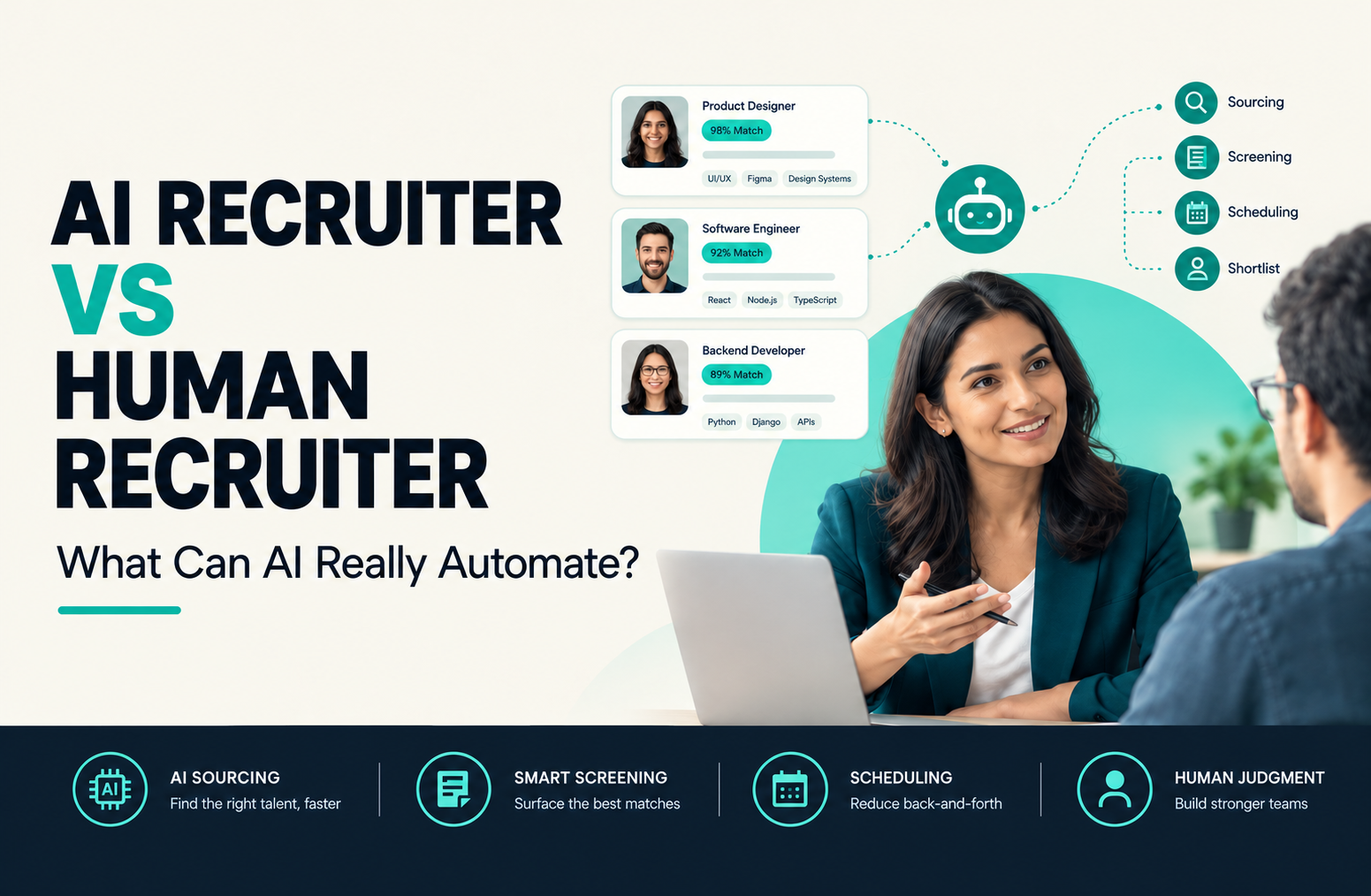
The AI recruiting tools market in 2026 has grown quickly, but for most hiring teams, it has also become harder to navigate. There are more tools than ever, each promising automation, speed, and better hiring outcomes. But when you start evaluating them, the differences are not always clear. Almost every platform uses similar language to describe itself, calling itself AI-powered, agentic, or end-to-end. These terms sound advanced, but they rarely explain what the tool actually does inside your hiring process.

This is where the confusion begins. Two tools may describe themselves in the same way, yet solve completely different problems. One may focus on sourcing candidates from multiple platforms, another may automate interviews, and another may simply help rank resumes within an existing system. On paper, they look similar. In practice, they operate at very different stages of hiring. When teams evaluate tools without understanding this difference, they often end up with overlapping systems or missing capabilities that matter more.

The real issue is not the number of tools available, but how they are positioned. The market is organised around broad categories and marketing language, while hiring itself follows a much more practical flow. Recruiting is not a single activity. It is a sequence of steps, from finding candidates to engaging them, screening them, and moving them through the process. Each step has its own challenges, and not every tool is designed to handle all of them.

This is why many teams feel that even after investing in AI tools, their hiring process still feels fragmented. They may have a strong sourcing tool but no efficient way to screen candidates at scale. Or they may have an interview automation platform but still depend on manual outreach to bring candidates into the funnel. In some cases, they adopt multiple tools that work well individually but do not connect smoothly, creating more operational complexity instead of reducing it.

A more effective way to approach this is to move away from labels and focus on function. Instead of asking whether a tool is an AI recruiting platform, it is more useful to ask what part of the hiring process it improves and how it fits into your existing workflow. Once you look at tools through this lens, the market becomes easier to understand. Patterns start to emerge, and you can see that most tools fall into a few clear categories based on what they actually do.

This guide is built on that idea. Rather than repeating vendor claims or listing tools without context, it breaks the market down into functional categories and explains where each type of tool adds value. The goal is to help you make decisions based on how hiring actually works, so you can choose tools that solve real problems instead of adding more layers of complexity.

78%

Recruiters say screening is the biggest bottleneck

3x

Faster hiring with AI automation

How to Use This Guide to Evaluate AI Recruiting Tools

Choosing the right AI recruiting tool is not just about comparing features or pricing. The real challenge is understanding how each tool fits into your hiring process. Without that clarity, it is easy to get influenced by demos, product claims, or feature lists that look impressive but do not solve your actual problem.

This guide is designed to give you a more practical way to evaluate tools. Instead of looking at them as standalone products, it helps you see them as parts of a hiring workflow.

Start with Your Hiring Bottleneck, Not the Tool

Most teams begin their search by looking at tools. A more effective starting point is your hiring challenge.

Think about where your process is slowing down. In some cases, the issue is not getting enough candidates. In others, it is handling too many candidates without an efficient way to screen them. Sometimes the problem lies in low response rates or delays in scheduling.

Each of these problems requires a different type of solution.

If your challenge is sourcing, you need tools that can consistently bring in relevant candidates. If your challenge is screening, you need systems that can evaluate candidates quickly and accurately. If your challenge is coordination, then engagement and scheduling tools become more important.

When you start with the bottleneck, the decision becomes clearer. You are no longer trying to choose the “best” tool overall, but the most relevant tool for your situation.

Understand What Each Tool Actually Replaces

Another useful way to evaluate tools is to ask what part of your current process they replace or improve.

Some tools replace manual sourcing by automatically finding candidates across platforms. Others replace initial screening calls by using AI to conduct structured interviews. Some tools reduce back-and-forth communication by automating outreach and scheduling.

If a tool does not clearly replace a manual step or improve a measurable outcome, it may not add much value.

This perspective also helps avoid overlap. Many teams end up using multiple tools that perform similar functions because they did not clearly define what each tool is responsible for.

Evaluate Tools by Function, Not Labels

One of the biggest sources of confusion in this space is how tools are labelled.

Terms like “AI recruiting platform” or “end-to-end solution” are often used broadly. But in reality, most tools specialise in a specific part of hiring.

That is why this guide groups tools into categories based on function. These categories reflect what the tool actually does in the workflow, not how it is marketed.

When you compare tools within the same category, the differences become more meaningful. You can evaluate things like depth of capability, ease of use, and how well the tool integrates into your process.

Expect Overlap, But Identify the Core Strength

Most modern tools do more than one thing. A sourcing tool may include basic outreach features. An interview platform may provide some level of candidate evaluation beyond interviews.

However, each tool usually has a core strength where it performs best.

Identifying that primary strength is important. It tells you where the tool will deliver the most value and where it may fall short.

Relying on secondary features instead of core strengths is a common mistake. It often leads to using a tool for something it was not designed to do effectively.

Build a Stack, Not a Collection of Tools

In practice, most hiring teams use a combination of tools rather than a single platform.

The goal is not to use as many tools as possible, but to create a setup where each tool fits into the overall workflow without creating friction.

A typical setup might include a sourcing tool, a screening or interview tool, and an ATS. In some cases, engagement tools are added to improve communication and candidate experience.

The key is integration and flow. Tools should work together in a way that reduces manual effort, not increase it.

Keep It Simple and Scalable

It is easy to overcomplicate your hiring stack, especially when tools offer multiple features.

A simpler setup is often more effective. It is easier to manage, easier to train teams on, and easier to scale as hiring volume increases.

As your needs evolve, you can expand your stack gradually. Starting with a clear structure makes those decisions easier later.

The purpose of this guide is not just to explain different tools, but to help you evaluate them with more clarity.

When you approach the market with a structured mindset, a few things change. You focus less on marketing language and more on actual function. You compare tools within the right context. And most importantly, you make decisions based on your hiring needs rather than general trends.

With this foundation in place, the next step is to break down the main categories of AI recruiting tools and understand where each one fits in the hiring process.

AI recruiting tools workflow explained

AI recruiting workflow from sourcing to screening

Category 1: AI Interview Platforms (Phone and Video)

AI interview platforms are one of the most visible categories in the current recruiting landscape, largely because they directly replace a part of the hiring process that has traditionally been time-intensive the initial screening conversation.

At a basic level, these tools conduct structured interviews with candidates using AI instead of a human interviewer. The interaction can happen over phone, video, or web-based interfaces. Candidates respond to pre-configured questions, and the system evaluates those responses based on a defined scoring framework.

While the concept sounds straightforward, the actual value of these platforms depends heavily on how they are used and where they fit into your hiring process.

What These Tools Actually Do in Practice

In most workflows, AI interview platforms sit between sourcing and final interviews.

Once candidates enter the pipeline, the tool takes over the first layer of evaluation. Instead of recruiters spending hours on screening calls, the AI handles this step by asking consistent, role-specific questions and capturing structured responses.

This creates two immediate benefits. First, it reduces manual effort, especially in high-volume hiring scenarios. Second, it introduces consistency in how candidates are evaluated, since every candidate is assessed against the same criteria.

Most platforms also generate summaries or scores based on candidate responses, which recruiters can review before deciding who to move forward. This helps prioritise candidates instead of reviewing each one from scratch.

Some tools extend beyond basic Q&A by including features like:

  • Voice-based interviews that simulate phone calls
  • Video responses with behavioural analysis
  • Multilingual support for broader candidate pools
  • Integration with ATS systems for workflow continuity

When implemented well, these tools can significantly reduce time-to-screen and improve process consistency.

Where They Add the Most Value

AI interview platforms are particularly effective in environments where screening volume is high and criteria are clearly defined.

For example, in roles like customer support, sales, operations, or logistics, where large numbers of candidates apply and evaluation criteria are relatively structured, these tools can handle a large portion of the initial workload.

They also help in standardising evaluation across recruiters. Instead of different recruiters asking different questions or applying slightly different judgment, the AI ensures that every candidate goes through the same process.

Another important advantage is speed. Candidates can complete interviews asynchronously, without waiting for recruiter availability, which helps move the pipeline faster.

What These Tools Do Not Solve

Despite their capabilities, AI interview platforms are often misunderstood as complete hiring solutions.

They are not designed to solve sourcing challenges. If your pipeline lacks quality candidates, these tools will not fix that problem.

They also do not replace deeper evaluation stages, such as final interviews, cultural fit assessment, or complex decision-making. Their primary role is to filter and structure early-stage evaluation.

In addition, their effectiveness depends on how well the questions and scoring criteria are defined. If the evaluation framework is vague or poorly designed, the output will reflect that.

Key Players and How They Differ

This category includes tools like ConverzAI, Tenzo AI, HeyMilo, Alex, and similar platforms.

While they share a common purpose, they differ in areas such as:

  • format of interaction (voice, video, or hybrid)
  • whether interviews are live or asynchronous
  • depth of scoring and evaluation logic
  • integration with ATS and other systems
  • support for multilingual or global hiring

These differences matter because they affect how well the tool fits into your existing workflow.

Where Full-Stack Platforms Differ

One important distinction to understand is the difference between standalone interview tools and full-stack recruiting platforms.

Most tools in this category focus only on screening. They assume candidates are already in your pipeline and focus on evaluating them.

Full-stack platforms extend beyond this.

For example, instead of only conducting interviews, they also handle sourcing, outreach, and scheduling. This means the same system can bring candidates into the pipeline, engage them, screen them, and move them forward.

This reduces the need for multiple tools and creates a more connected workflow, especially for teams handling large volumes of candidates.

Questions to Ask Before Choosing an AI Interview Tool

Before selecting a platform in this category, it is important to evaluate how well it aligns with your hiring needs.

Some practical questions to consider include:

  • How does the tool evaluate candidate responses, and how transparent is the scoring?
  • Can the interview process be customized for different roles?
  • Does it support both inbound and outbound candidate interactions?
  • How well does it integrate with your existing ATS or sourcing tools?
  • Can it handle the scale of your hiring volume without delays?

These questions help move the evaluation from features to actual usability.

AI interview platforms are powerful tools for improving efficiency and consistency in early-stage screening. However, they are most effective when used as part of a broader hiring system rather than as standalone solutions.

Understanding their role clearly helps you use them where they add value, without expecting them to solve problems they are not designed for.

In the next section, we will look at sourcing and outreach tools, which address a different but equally important part of the hiring process — bringing candidates into the pipeline in the first place.

Category 2: Sourcing and Outreach Tools

If AI interview platforms help you evaluate candidates, sourcing and outreach tools solve a different and equally important problem how candidates enter your pipeline in the first place.

For many teams, this is where the biggest gap exists.

You can have the best screening process in place, but if you are not consistently bringing in relevant candidates, the rest of the system does not matter. This is why sourcing tools are often the starting point in a recruiting stack.

What These Tools Actually Do in Practice

Sourcing tools are designed to identify potential candidates across different platforms and bring them into your pipeline. Outreach tools then help you engage those candidates at scale.

Traditionally, sourcing involved manual searches across job boards, LinkedIn, and internal databases. Recruiters would build Boolean queries, filter profiles, and reach out individually. AI changes this by automating parts of that process.

Modern sourcing tools can:

  • Scan large candidate databases across multiple platforms
  • Match profiles to job requirements using AI
  • Suggest candidates based on past hiring patterns
  • Automate initial outreach messages with some level of personalisation

Outreach tools extend this further by managing communication across channels such as email or LinkedIn, often through automated sequences.

Together, these tools aim to increase both the volume and relevance of candidates entering your funnel.

Active vs Passive Candidate Sourcing

One of the most important distinctions in this category is between active and passive candidates.

Passive candidates are those who are not actively looking for a job but may be open to opportunities. Platforms like LinkedIn are primarily built around this type of sourcing.

Active candidates, on the other hand, are those currently searching for jobs. They are typically found on job boards and tend to respond faster because they are already in a decision-making mindset.

Most traditional sourcing tools lean heavily toward passive candidates. This works well for certain roles, especially senior or specialised positions where proactive outreach is necessary.

However, for high-volume or time-sensitive hiring, relying only on passive candidates can slow down the process.

This is where sourcing strategy becomes important. The effectiveness of a tool depends not just on how many profiles it can access, but on the type of candidates it helps you reach.

Where These Tools Add the Most Value

Sourcing and outreach tools are most valuable when your primary challenge is pipeline generation.

If you are not getting enough qualified candidates through inbound applications, these tools help expand your reach. They also help maintain consistency in outreach, ensuring that candidates are contacted in a structured way rather than through ad hoc efforts.

They are particularly useful for:

  • Roles that require proactive talent search
  • Teams scaling hiring across multiple roles
  • Situations where response rates need improvement

Automation also plays a key role here. Instead of manually tracking follow-ups or managing conversations across different channels, outreach tools centralise and streamline communication.

What These Tools Do Not Solve

Despite their importance, sourcing tools are often misunderstood as complete hiring solutions.

They are effective at bringing candidates into the pipeline, but they do not evaluate candidates in depth. Once a candidate responds, you still need a structured way to screen and assess them.

This is where many teams face a disconnect.

They invest heavily in sourcing but rely on manual processes for screening, which creates bottlenecks later in the funnel. The result is a pipeline that grows quickly but is difficult to manage efficiently.

Key Players and How They Differ

This category includes tools like LinkedIn Recruiter, hireEZ, SeekOut, Gem, and similar platforms.

The differences between them often come down to:

  • Database size and freshness
  • Depth of integration with platforms like LinkedIn
  • Level of automation in outreach
  • Quality of personalisation in messaging
  • Tracking and analytics capabilities

Some tools focus more on sourcing, others on outreach, and some attempt to combine both.

Where Full-Stack Platforms Change the Approach

One limitation of most sourcing tools is that they stop at the point of engagement.

They help you find and contact candidates, but once a candidate responds, the next steps screening, scheduling, evaluation are handled elsewhere.

This creates a fragmented workflow.

Full-stack platforms take a different approach by connecting sourcing directly with screening and engagement.

Instead of just identifying candidates, they also:

  • Initiate conversations across multiple channels
  • Conduct initial screening through AI (phone, video, or web)
  • Move candidates forward without manual coordination

This reduces the gap between sourcing and evaluation, which is where many hiring delays occur.

Questions to Ask Before Choosing a Sourcing Tool

To evaluate tools in this category effectively, it helps to focus on practical questions:

  • Does the tool prioritise active candidates, passive candidates, or both?
  • How does it personalise outreach, and how effective is that personalisation?
  • Which platforms does it source from, and how current is the data?
  • Can it manage communication across multiple channels or only one?
  • How easily does it integrate with your screening and ATS systems?

These questions help you assess whether the tool fits your hiring model, rather than just its feature set.

Sourcing and outreach tools play a critical role in building your candidate pipeline, but they are only one part of the hiring system.

Their effectiveness depends on how well they connect with the rest of your process. A strong sourcing strategy combined with efficient screening and evaluation is what ultimately drives better hiring outcomes.

In the next section, we will look at assessment and skills testing tools, which focus on evaluating candidate capabilities beyond initial screening.

Most AI recruiting tools don’t fail because of technology. They fail because they are used in the wrong part of the hiring process.

Category 3: Assessment and Skills Testing Tools

Once candidates enter your pipeline and pass initial screening, the next question becomes more specific: can they actually do the job?

This is where assessment and skills testing tools come in.

While AI interview platforms focus on structured conversations, assessment tools are designed to evaluate real capability. They test how candidates think, solve problems, and perform tasks that are directly related to the role.

In many hiring processes, this is the stage where decisions start becoming more data-driven.

What These Tools Actually Do in Practice

Assessment tools provide structured ways to evaluate candidate skills through tests, simulations, or work samples.

Depending on the role, this could include:

  • coding challenges for technical roles
  • case studies or problem-solving exercises
  • situational judgment tests
  • role-specific tasks that mirror real job scenarios

The goal is to move beyond resumes and self-reported experience and see how candidates perform when given a task.

Most platforms also provide scoring frameworks, benchmarks, and sometimes comparative insights across candidates. This helps standardise evaluation and reduce subjectivity in decision-making.

Where They Add the Most Value

Assessment tools are most valuable when hiring decisions depend heavily on measurable skills.

For technical roles such as engineering or data science, these tools are often essential. They allow teams to evaluate coding ability, logical thinking, and problem-solving in a structured way.

They are also useful in roles where practical ability matters more than experience on paper. For example, in analytics, design, or operations roles, a well-designed task can reveal more than a resume ever could.

Another advantage is consistency. Every candidate is evaluated using the same criteria, which reduces variation across interviewers and improves fairness in the process.

What These Tools Do Not Solve

Despite their strengths, assessment tools are not designed to manage the full hiring process.

They do not bring candidates into the pipeline. They also do not handle outreach, engagement, or scheduling. Their role is focused on evaluation, not pipeline management.

In addition, over-reliance on assessments can create friction in the candidate experience. Lengthy or poorly designed tests may discourage candidates from completing the process, especially in competitive markets.

This is why these tools work best when used selectively, at the right stage of hiring, rather than as the first interaction.

Key Players and How They Differ

This category includes platforms like TestGorilla, Codility, HackerRank, and Predictive Index.

The differences between these tools typically come down to:

  • Breadth and quality of test libraries
  • Ability to customise assessments for specific roles
  • Support for different types of skills (technical vs behavioural)
  • Reporting and benchmarking capabilities
  • Compliance and adverse impact documentation

Some tools specialise in technical roles, while others provide broader assessments across multiple job functions.

Role-Specific vs Generic Assessments

One important distinction in this category is between generic and role-specific assessments.

Generic assessments test broad abilities such as cognitive skills or personality traits. These can be useful for early filtering but may not reflect actual job performance.

Role-specific assessments, on the other hand, are designed around real tasks that candidates would perform in the job. These tend to be more predictive of success but require more effort to design and implement.

The choice between the two depends on your hiring needs, but in most cases, role-specific evaluations provide more meaningful insights.

Where Full-Stack Platforms Fit In

Most assessment tools operate as standalone systems. Candidates are invited to complete tests, and results are reviewed separately from other parts of the hiring process.

This creates another point of fragmentation.

Full-stack platforms aim to reduce this by integrating assessment into the broader workflow. Instead of sending candidates to a separate system, evaluation can happen within the same flow as screening and engagement.

For example, after initial screening, candidates can be routed into role-specific evaluations without leaving the platform. This improves continuity and reduces drop-offs.

Questions to Ask Before Choosing an Assessment Tool

To evaluate tools in this category effectively, focus on how well they align with your hiring needs:

  • Are the assessments relevant to the actual tasks in the role?
  • Can tests be customised, or are they limited to pre-built templates?
  • How long do assessments take, and how does that impact candidate experience?
  • Does the tool provide clear and actionable scoring insights?
  • How easily does it integrate with your existing hiring workflow?

These questions help ensure that the tool adds value without creating unnecessary friction.

Assessment and skills testing tools are powerful for improving the quality of hiring decisions, especially in roles where capability matters more than credentials.

However, they are most effective when used as part of a broader system. They should complement sourcing and screening, not replace them.

Used correctly, they add depth to your evaluation process. Used in isolation, they can slow things down.

In the next section, we will look at ATS platforms with AI features systems that sit at the center of many hiring workflows and are evolving to include AI-driven capabilities.

Category 4: ATS Platforms with AI Features

For most hiring teams, the Applicant Tracking System (ATS) is the core of the recruitment process. It is where candidates are stored, tracked, and moved through different stages of hiring. Over the past few years, many ATS platforms have added AI features, positioning themselves as more intelligent and automated systems.

At first glance, this seems like a natural evolution. If the ATS already manages the workflow, adding AI should make the process faster and more efficient. But in practice, the role of AI within ATS platforms is more limited than it appears.

What These Tools Actually Do in Practice

ATS platforms with AI features primarily focus on improving internal workflows rather than transforming the hiring process end-to-end.

Typical AI capabilities within an ATS include:

  • Resume parsing and candidate scoring
  • Ranking candidates based on job fit
  • Suggesting matches from existing databases
  • Basic automation of screening or filtering

These features help recruiters manage large volumes of applications more efficiently. Instead of manually reviewing every resume, the system highlights candidates who appear to be a better match.

AI in ATS systems also helps with organisation. It keeps candidate data structured, tracks progress across stages, and provides visibility into the pipeline.

Where They Add the Most Value

ATS platforms are essential for maintaining order in the hiring process.

They are particularly valuable for:

  • Tracking candidates across multiple roles
  • Ensuring compliance and record-keeping
  • Managing collaboration between recruiters and hiring managers
  • Maintaining a central database of candidates

The addition of AI improves efficiency within this system. It reduces manual effort in sorting and prioritising candidates and helps recruiters focus on higher-value tasks.

For teams already using an ATS, these AI features can be a useful enhancement rather than a complete change.

What These Tools Do Not Solve

Despite adding AI capabilities, ATS platforms are not designed to handle the entire recruiting workflow.

They do not actively bring in new candidates. Most ATS systems rely on inbound applications or external sourcing tools to populate the pipeline.

Their AI features are also generally limited to assisting with existing data. They help organise and rank candidates, but they do not replace processes like outreach, engagement, or structured screening.

This creates an important distinction.

An ATS manages candidates who are already in your system. It does not generate demand or handle the full journey from sourcing to evaluation.

Why ATS AI Is Often Overestimated

Many teams assume that upgrading their ATS or enabling AI features within it will significantly improve hiring outcomes.

While it does improve efficiency, it does not fundamentally change how candidates enter or move through the pipeline.

If your main challenge is sourcing or screening at scale, ATS AI alone will not solve it. It optimises what you already have but does not create new capability.

This is why teams often complement ATS systems with additional tools that handle sourcing, screening, or engagement more directly.

Key Players and How They Differ

This category includes platforms like Greenhouse, Lever, Ashby, Workday Recruiting, and iCIMS.

The differences between these systems typically come down to:

  • Integration ecosystem with other tools
  • User experience for recruiters and hiring managers
  • Depth of analytics and reporting
  • Compliance and data management capabilities
  • Flexibility in workflow configuration

While AI features are becoming more common, they are usually not the primary differentiator between these platforms.

ATS vs AI Recruiting Platforms: An Important Distinction

It is important to distinguish between ATS platforms with AI features and dedicated AI recruiting tools.

An ATS is primarily a system of record. It stores and organises candidate information.

AI recruiting platforms, on the other hand, are designed to automate and execute parts of the hiring process, such as sourcing, outreach, or screening.

Confusing the two can lead to gaps in your hiring setup. Relying only on an ATS may leave sourcing and screening challenges unaddressed.

Where Full-Stack Platforms Fit In

Full-stack recruiting platforms aim to bridge the gap between execution and management.

Instead of relying on separate tools for sourcing, screening, and tracking, they connect these functions into a single workflow.

For example, candidates can be sourced, engaged, screened, and then synced into the ATS automatically. This reduces manual handoffs and improves visibility across the entire process.

For teams handling high volumes or complex workflows, this integration becomes particularly valuable.

Questions to Ask Before Choosing or Upgrading an ATS

When evaluating ATS platforms with AI features, it helps to focus on practical considerations:

  • Does the AI meaningfully improve screening, or just assist with ranking?
  • How well does the ATS integrate with sourcing and screening tools?
  • Can it support your hiring volume without slowing down workflows?
  • Does it provide clear visibility into candidate progress and pipeline health?
  • How flexible is it in adapting to different hiring processes?

These questions help you assess whether the ATS supports your overall hiring strategy, not just internal organisation.

ATS platforms remain a critical part of any recruiting setup, but their role is often misunderstood.

They are designed to manage and organise hiring workflows, not to replace sourcing or screening processes. The addition of AI improves efficiency, but it does not eliminate the need for specialised tools in other parts of the funnel.

Understanding this distinction helps you build a more balanced and effective recruiting stack.

In the next section, we will look at candidate engagement tools, which focus on communication, scheduling, and keeping candidates moving through the hiring process.

Category 5: Candidate Engagement Tools

After sourcing and screening, one of the most overlooked parts of hiring is what happens in between communication.

This is where many hiring processes slow down.

Candidates drop off because they don’t hear back in time. Interviews get delayed due to scheduling gaps. Follow-ups are missed. Even strong pipelines lose momentum simply because communication is inconsistent.

Candidate engagement tools are designed to solve this layer of the hiring process.

What These Tools Actually Do in Practice

Candidate engagement tools focus on managing communication between recruiters and candidates throughout the hiring journey.

They are typically used to:

  • Automate interview scheduling and rescheduling
  • Send reminders and updates to candidates
  • Handle initial queries through chatbots
  • Manage follow-ups and nurture campaigns
  • Keep candidates informed about their status

Some tools also support conversational interfaces, where candidates can interact with a chatbot to get updates or schedule interviews without needing a recruiter’s involvement.

In many cases, these tools operate across multiple channels such as email, SMS, and sometimes messaging platforms, helping maintain consistent communication.

Where They Add the Most Value

These tools are most valuable in reducing delays and improving candidate experience.

In high-volume hiring, managing communication manually becomes difficult. Recruiters spend a significant amount of time coordinating schedules, sending reminders, and following up with candidates.

Automation in this area creates immediate efficiency gains.

It also improves response rates. Candidates are more likely to stay engaged when communication is timely and clear. Faster scheduling also reduces the risk of losing candidates to competing offers.

Another important benefit is consistency. Every candidate receives the same level of communication, regardless of recruiter workload.

What These Tools Do Not Solve

Candidate engagement tools are not designed to evaluate or source candidates.

They do not assess skills, conduct deep screening, or generate new candidates. Their role is to support the process, not drive it.

This is an important distinction.

If your primary challenge is finding or evaluating candidates, these tools alone will not solve it. They are most effective when combined with sourcing and screening systems.

Key Players and How They Differ

This category includes tools like Paradox (Olivia), GoodTime, and engagement modules built into ATS platforms.

The differences between them often come down to:

  • Scheduling capabilities and automation depth
  • Chatbot sophistication and conversational quality
  • Support for multiple communication channels
  • Integration with ATS and other systems
  • Ability to handle high volumes of candidates

Some tools focus primarily on scheduling, while others extend into broader engagement and communication workflows.

The Limitation of Standalone Engagement Tools

While these tools improve communication, they often operate as an additional layer on top of existing systems.

This can create fragmentation.

For example, sourcing may happen in one tool, screening in another, and engagement in a third. Even if each tool performs well individually, the overall process may still feel disconnected.

This is especially noticeable in fast-paced hiring environments, where coordination across tools becomes a bottleneck.

Where Full-Stack Platforms Change the Flow

Full-stack recruiting platforms approach engagement differently by embedding it directly into the hiring workflow.

Instead of treating communication as a separate layer, it becomes part of the process itself.

For example:

  • Candidates can be contacted immediately after sourcing
  • Screening can happen within the same interaction
  • Scheduling can be handled automatically based on candidate responses

This reduces delays and keeps candidates moving through the pipeline without requiring manual coordination at each step.

It also improves visibility, since all interactions happen within a single system.

Questions to Ask Before Choosing an Engagement Tool

To evaluate tools in this category effectively, consider how well they support your workflow:

  • Does the tool automate scheduling fully, or does it still require manual intervention?
  • Can it communicate across multiple channels or is it limited to one?
  • How natural and effective are chatbot interactions?
  • Does it integrate smoothly with your sourcing and screening tools?
  • Can it handle the scale of your hiring needs without delays?

These questions help ensure that the tool improves efficiency without adding complexity.

Candidate engagement tools play an important role in keeping the hiring process moving smoothly.

They reduce delays, improve communication, and enhance candidate experience. However, they are not standalone solutions.

Their real value comes when they are connected to sourcing and screening processes, creating a continuous flow rather than isolated steps.

With all five categories now covered, the next step is to bring everything together and understand how to build a recruiting stack that fits your specific hiring needs.

How to Build the Right AI Recruiting Stack

Once you understand the different categories of AI recruiting tools, the next step is deciding how to combine them into a system that actually works for your team.

This is where many hiring teams struggle.

The challenge is not the lack of tools, but deciding how many you actually need and how they should work together. It is easy to assume that more tools mean better outcomes, but in reality, adding tools without a clear structure often creates more complexity than value.

The goal is not to build a large stack. It is to build a connected one.

Start with Your Hiring Model, Not the Tool

The right stack depends on the type of hiring you are doing.

Different hiring environments have different needs. A team hiring for high-volume operational roles will face very different challenges compared to a team hiring for specialised or leadership positions.

For example, in high-volume hiring, the main bottleneck is usually screening and speed. You need to handle large numbers of candidates quickly and consistently. In this case, tools that automate interviews and scheduling become critical.

In contrast, for specialised roles, the challenge is often finding the right candidates rather than evaluating large volumes. Here, sourcing tools play a more important role, and the need for automation in screening may be lower.

Understanding this difference helps you prioritise correctly.

Common Stack Patterns That Work in Practice

While every organisation is different, most effective setups follow a few practical patterns.

For high-volume hiring roles such as retail, logistics, or customer support, a combination of an AI interview platform and an ATS is often enough. The focus is on speed, consistency, and handling large pipelines efficiently.

For technical roles, the stack usually includes an AI interview platform, a technical assessment tool, and an ATS. This ensures that candidates are not only screened efficiently but also evaluated on their actual skills.

For professional or specialist roles, sourcing tools become more important. In these cases, teams often combine a sourcing platform with an AI interview tool and an ATS to balance pipeline generation and evaluation.

For senior or executive hiring, automation plays a smaller role. Sourcing tools and an ATS are usually sufficient, as these roles require more personalised evaluation and interaction.

For staffing agencies, especially those handling multiple clients and high volumes, a more integrated approach works better. Combining sourcing, screening, outreach, and engagement into a single system reduces operational complexity and improves speed.

Why Fewer Tools Often Work Better

One of the most common mistakes is trying to cover every possible use case with separate tools.

While each tool may perform well individually, managing multiple systems creates challenges:

  • Data is spread across platforms
  • Workflows become fragmented
  • Recruiters spend time switching between tools
  • Integration issues slow down the process

Over time, this reduces efficiency instead of improving it.

A smaller number of well-integrated tools is usually more effective than a large collection of disconnected ones.

Integration Matters More Than Features

When evaluating tools for your stack, integration should be a primary consideration.

Even the most advanced tool loses value if it does not connect well with the rest of your system. Data should flow smoothly from sourcing to screening to evaluation without requiring manual intervention.

This is especially important for maintaining visibility. Recruiters and hiring managers should be able to see the full candidate journey without switching between multiple systems.

Where Full-Stack Platforms Fit In

Full-stack recruiting platforms are designed to simplify this complexity.

Instead of combining multiple tools, they bring sourcing, outreach, screening, and engagement into a single workflow. This reduces the need for integrations and creates a more unified system.

For teams handling high volumes or managing multiple roles simultaneously, this approach can significantly improve efficiency.

It also reduces the learning curve for recruiters, since they do not need to manage multiple platforms or processes.

Build for Today, Not for Every Possible Scenario

Another common tendency is to plan for future needs instead of current challenges.

While it is important to think ahead, building a stack for every possible scenario often leads to unnecessary complexity.

A better approach is to focus on your current bottleneck and choose tools that solve it effectively. As your hiring needs evolve, you can expand or adjust your stack accordingly.

Building the right AI recruiting stack is less about choosing the most advanced tools and more about creating a system that fits your hiring process.

When tools are aligned with your workflow, integrated properly, and focused on solving real problems, they create efficiency and clarity.

When they are added without structure, they create friction.

The difference comes from how you approach the decision.

In the next section, we will look at another important factor that is often overlooked: the total cost of ownership and what it actually takes to run these tools effectively over time.

Feature NinjaHire Typical Tools
Candidate Sourcing Multi-source (Indeed, Monster, etc.) Single platform
AI Screening Phone, video, web Limited
Outreach Email, SMS, Phone Email only

Why Many AI Recruiting Tools Fail to Deliver Results

By now, it’s clear that there is no shortage of AI recruiting tools in the market. Most of them promise faster hiring, better candidates, and less manual work. Yet many teams find that after implementation, the expected impact doesn’t fully materialise.

The issue is rarely that the technology doesn’t work. More often, it’s a mismatch between what the tool is designed to do and what the team expects it to solve.

Understanding where things typically go wrong can help you avoid the same outcomes.

Buying Based on Features Instead of Workflow Fit

One of the most common mistakes is choosing tools based on feature lists rather than how they fit into the hiring process.

A tool may offer advanced capabilities, but if those capabilities don’t address your main bottleneck, the impact will be limited. For example, investing in sophisticated screening technology will not help if your primary challenge is sourcing candidates.

When tools are selected without clear alignment to workflow needs, they tend to be underused or misused.

Expecting One Tool to Solve Everything

Another common expectation is that a single tool will handle the entire hiring process.

While some platforms position themselves as end-to-end solutions, most tools are built with a specific focus. Even broader platforms have strengths in certain areas and limitations in others.

When expectations are not aligned with actual capabilities, teams either over-rely on the tool or become frustrated with its limitations.

A more effective approach is to understand what each tool is designed to do and use it accordingly.

Poor Integration Between Tools

Even when the right tools are selected, lack of integration can create problems.

If sourcing, screening, and engagement tools do not connect smoothly, data has to be moved manually, workflows become fragmented, and delays increase. This reduces the efficiency gains that AI is supposed to deliver.

Integration is often treated as a secondary consideration during buying decisions, but it has a direct impact on how well the system works in practice.

Overcomplicating the Tech Stack

It is easy to assume that adding more tools will improve outcomes.

In reality, too many tools can create confusion. Recruiters have to learn multiple systems, switch between platforms, and manage different workflows. This increases cognitive load and reduces overall efficiency.

A simpler, well-connected setup is often more effective than a complex stack of specialised tools.

Weak Implementation and Setup

Even the best tools require proper setup.

If scoring criteria are unclear, workflows are not defined, or teams are not trained properly, the tool will not perform as expected. For example, an AI screening system is only as good as the questions and evaluation framework it uses.

Implementation is not just about activating a tool. It involves aligning it with your hiring process and ensuring that it is used consistently.

Ignoring Candidate Experience

Many tools focus on internal efficiency but overlook how candidates experience the process.

If interactions feel robotic, responses are delayed, or the process is unclear, candidates may disengage. This affects conversion rates and ultimately hiring outcomes.

Tools should not only make the recruiter’s job easier but also create a smoother experience for candidates.

Lack of Continuous Evaluation

AI tools are not set-and-forget systems.

Their performance depends on how they are used and how well they are adapted over time. Without regular evaluation, teams may continue using a setup that is no longer effective.

Tracking outcomes, reviewing workflows, and making adjustments are essential for maintaining performance.

What to Take Away from This Section

Most AI recruiting tools fail not because they lack capability, but because they are not used in the right context.

When tools are aligned with actual hiring needs, integrated properly, and implemented thoughtfully, they can deliver significant value. When they are chosen based on trends or features alone, they often fall short.

The difference lies in how decisions are made.

In the final section, we will bring everything together and simplify how to approach AI recruiting tools so you can make clearer, more confident decisions.

Key Takeaway: Choose Tools Based on What They Actually Do, Not What They Claim

The AI recruiting tools market will continue to grow, and with it, the number of platforms claiming to transform hiring. But the core challenge will remain the same separating what sounds impressive from what actually works.

By this point, one thing should be clear.

AI recruiting tools are not one category. They are a collection of different systems, each designed to solve a specific part of the hiring process. Some help you find candidates, some help you evaluate them, some help you manage workflows, and some focus on communication.

When these tools are understood and used correctly, they can significantly improve speed, consistency, and overall hiring outcomes. When they are misunderstood or misapplied, they add complexity without delivering real value.

The difference comes down to how you approach the decision.

Instead of starting with tools, start with your hiring process. Identify where things slow down, where effort is being spent, and where outcomes can be improved. Then choose tools that directly address those areas.

It is also important to be realistic about what each tool can do. No platform is perfect, and most are designed with a specific focus. Understanding that focus helps you use the tool effectively rather than expecting it to solve everything.

Another key factor is how your tools work together. A well-connected system where sourcing, screening, and engagement flow smoothly will always perform better than a collection of disconnected tools, even if each one is strong on its own.

This is where many teams begin to shift their approach over time. Instead of adding more tools, they look for ways to simplify their stack, reduce overlap, and improve integration. In some cases, this leads to adopting more unified platforms that bring multiple functions into a single workflow.

Ultimately, the goal is not to use AI for the sake of it. The goal is to make hiring more effective.

When you focus on function over labels, clarity over complexity, and outcomes over features, the decisions become easier. And the tools you choose start to work the way they are supposed to  as enablers of better hiring, not obstacles to it.

AI recruiting tools are software platforms that automate different parts of the hiring process, including sourcing, screening, interviewing, and candidate engagement. The best way to choose the right tool is to identify your hiring bottleneck and select a solution that improves that specific stage rather than relying on general claims like “AI-powered” or “end-to-end.”

Compare AI Recruiting Tools Based on What Actually Matters

If you’re evaluating tools and want a clearer breakdown of how different platforms compare in real workflows, you can explore detailed comparisons here:

These comparisons focus on actual capabilities sourcing, screening, outreach, and integrations so you can see which tool fits your hiring needs more clearly.