.png)
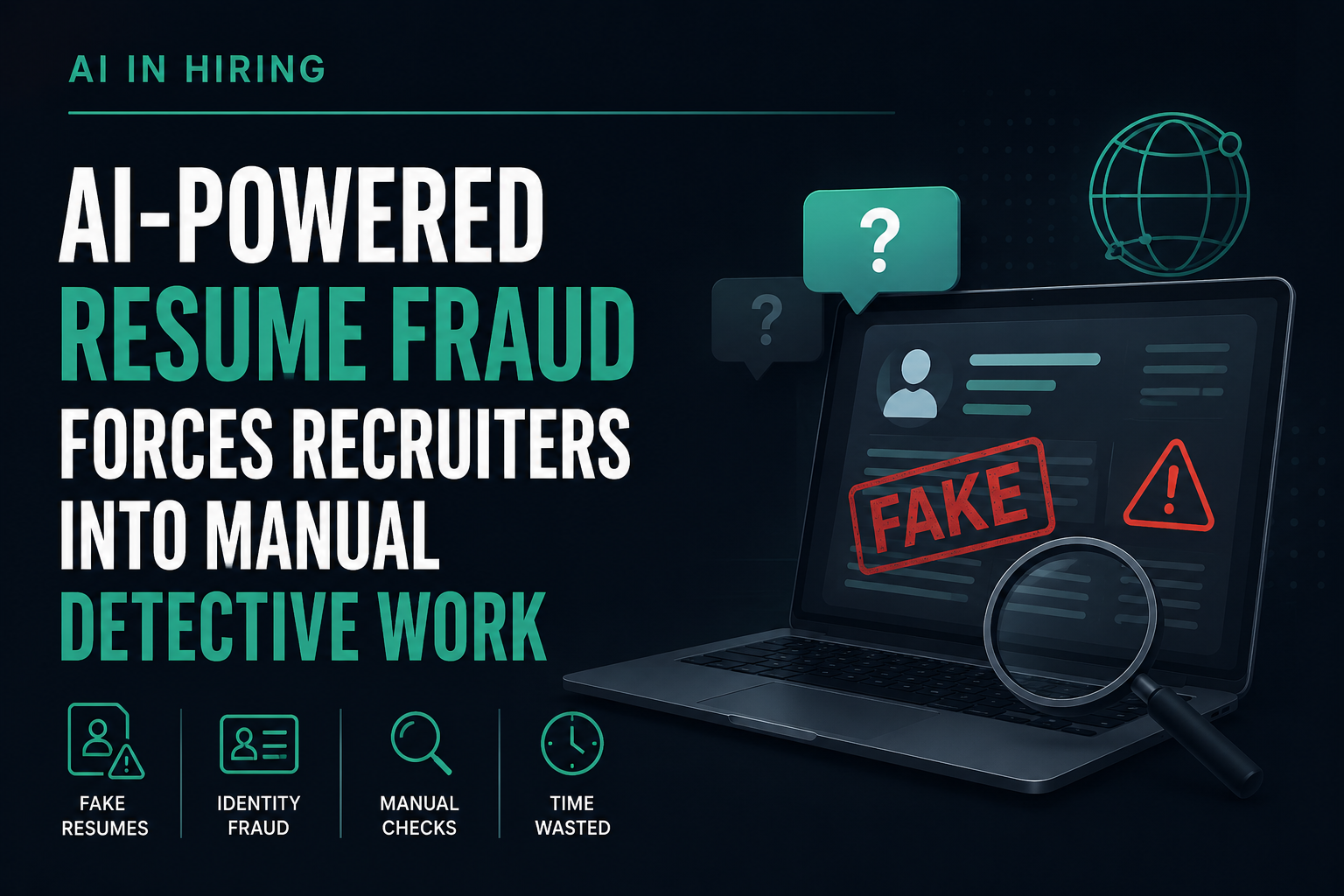
AI-Powered Resume Fraud Forces Recruiters Into Manual Detective Work

May 30, 2026
Enterprise recruiting has fundamentally transformed, but not in the manner corporate leaders anticipated. While the market initially celebrated generative artificial intelligence as an efficiency tool for talent acquisition teams, it has simultaneously democratized high-fidelity deception for malicious actors. Recruiters are no longer spending their days evaluating culture, assessing real strategic capability, or building executive relationships. Instead, they find themselves acting as amateur investigators and forensic document screeners, buried under a structural wave of industrialized candidate manipulation.
This development has broken conventional workflows. The ease with which large language models generate immaculate, algorithmically targeted resumes means that applicant tracking systems (ATS) are routinely ranking unverified, synthetic profiles above legitimate human talent. When these deceptive candidate pools advance into remote interview funnels, internal teams face severe coordination strain, lost product engineering cycles, and compliance liabilities. Candidate verification can no longer be treated as an administrative, post-offer formality; it has evolved into a critical threat vector for corporate security and operational capacity.
Data from the Association of Certified Fraud Examiners (ACFE) and recent Staffing Industry Analysts reviews show that specialized technical sectors are facing unprecedented security pressures, with a verified increase in identity proxy setups and fabricated employment backgrounds. To protect corporate operations, talent acquisition leaders must move past manual detective work and deploy robust, real-time candidate identity verification infrastructure at the absolute point of application entry.
Executive Operational Insight
Relying on manual human observation to identify AI-generated profiles is an inefficient use of corporate resources. Modern, malicious applications contain no glaring typographical or historical alignment errors. Securing an enterprise pipeline requires automated, upstream cryptographic identity authentication integrated directly into the initial recruitment technology stack.
The Resume Fraud Crisis Hiding in Plain Sight
Industrialized Candidate Fraud refers to the organized deployment of generative text, synthetic identity networks, and digital proxy structures to pass early-stage applicant tracking and assessment filters under entirely fabricated professional personas.
Traditional indicators of resume padding have been replaced by multi-layered identity fabrication. Fraudulent syndicates construct cohesive digital footprints, including synthetic professional profiles and automated reference response channels, allowing fake candidates to blend seamlessly with real applicants.
Because AI eliminates visual anomalies and structural tells from fraudulent documents, recruiters must shift from superficial visual reviews to automated cryptographic verification.
The contemporary challenge is completely different from historical resume inflation. In previous years, candidate fraud consisted of minor timeline rounding, unearned title padding, or exaggerated software proficiencies. These instances were easily exposed during initial screens or standard employment checks. Today, global enterprise operations encounter entirely synthetic professional identities designed to mirror the exact requirements of open corporate requisitions.
These sophisticated profiles rely on complex networks of digital supporting evidence. Fraud rings generate fake work histories with active digital presences, complete with realistic corporate domains, fake LinkedIn profiles with interconnected networks, and fabricated technical certifications. When human recruiters attempt to screen these applications, they face high-quality professional documents that easily rank at the top of keyword-reliant sorting tools, making manual screening incredibly difficult and slow.
| Operational Vector | Traditional Resume Fraud | AI-Powered Resume Fraud |
|---|---|---|
| Document Creation | Manual edits, visible layout inconsistencies, exaggerated durations. | Flawless generative text optimized specifically to rank high in automated ATS scoring models. |
| Background Footprint | Unverified or self-reported references that are easily cross-checked. | Coordinated corporate shell domains, fake LinkedIn groups, and automated email answering loops. |
| Identity Validation | Genuine individuals presenting personal historical timelines. | Synthetic identities combining real personal identifiers with completely fictional work experience. |
| Interview Evasion | Candidate relies on charm or basic interview prep to hide skill gaps. | Live proxy interviewers, real-time deepfakes, and automated off-screen generative answer tools. |
| Detection Efficacy | High via traditional manual resume checks or casual phone screens. | Extremely low; requires dedicated, real-time cryptographic candidate verification systems. |
What Is AI-Powered Resume Fraud?
AI-Powered Resume Fraud is the use of automated machine learning tools and generative text platforms to create, optimize, and submit fabricated or heavily manipulated candidate documents that pass initial automated recruitment filters.
Modern resume fraud combines advanced text generation with digital identity masking, allowing unqualified individuals or third-party syndicates to secure sensitive corporate positions by completely bypassing traditional evaluation protocols.
Treating candidate validation as an afterthought leaves enterprises highly vulnerable to severe data security breaches and significant financial and operational losses.
To implement an effective corporate defense strategy, human resource leaders must understand the structural scale of modern identity fraud. This is not isolated to single candidates looking to optimize their resumes. Instead, organized networks utilize automated application programs to submit thousands of custom-tailored resumes every single day across global corporate career portals. These systems adapt their text inputs instantly to match corporate performance criteria, making candidate fraud detection exceptionally hard for standard screening teams.
Why Recruiters Are Becoming Investigators
This rise in sophisticated deception has turned the typical corporate recruiter's workday into a manual investigation process. Instead of focusing on evaluating strategic capabilities, assessing leadership skills, or building deep talent pipelines, recruiters are spending hours manually verifying files and validating applicant details.
In a standard, unautomated enterprise workflow, this manual checking requires considerable effort. Sourcing teams find themselves trying to verify passport documents, cross-checking immigration statuses through complex USCIS registries, and reviewing physical driver's licenses and green cards over video calls to confirm baseline employment eligibility. This manual approach creates significant process bottlenecks, introduces a high margin for human error, and drags recruiters away from high-value strategic work.
| Verification Area | Manual Human Task Loading | Operational Risks & Vulnerabilities |
|---|---|---|
| Document Verification | Recruiters visually check passports, visas, or IDs during standard video calls. | High risk of missing professional digital forgeries and manipulated metadata. |
| Immigration Status Validation | Manually entering tracking numbers into public federal status databases. | Data entry delays and a total lack of live biometric verification. |
| Historical Experience Checks | Calling reference numbers and searching public registries to confirm defunct corporate entities. | Vulnerable to coordinated fake reference domains and automated voice loops. |
| Identity Continuity Tracking | Manually checking if the person on the screen matches past assessment submissions. | Highly vulnerable to proxy interview handoffs between evaluation rounds. |
The Background Check Timing Problem
The Background Check Timing Blind Spot is the structural gap that occurs when organizations delay identity and background verification until a conditional offer is extended, leaving the entire interview loop exposed to fraud.
Traditional screening vendors require multiple business days to process data lookups and institutional records after a candidate accepts an offer. This downstream timeline allows fake candidates to consume expensive panel evaluation hours and management resources before the fraud is caught.
To prevent significant resource waste and pipeline distortion, enterprises must move verification to the absolute front of the recruiting funnel.
The primary reason AI-powered candidate fraud creates such severe operational damage is the late-stage placement of traditional screening checks. When an enterprise allows unverified applications to move all the way through technical assessments, engineering presentations, and senior executive interviews, the business is investing thousands of dollars in unvetted data profiles. If the background provider flags a synthetic identity or a fake work history weeks later, the company has wasted substantial time and must restart the hiring loop from scratch.
| Hiring Pipeline Stage | Resource Investment per Candidate | Downstream Cost Exposure If Fraud Is Caught Late |
|---|---|---|
| Initial Recruiter Screen | 1 to 2 human sourcing hours. | Low baseline labor waste; minor impact on pipeline capacity. |
| Technical / Coding Test | Assessment evaluation licenses and scoring hours. | Moderate cost waste; potential compromise of internal question banks. |
| Panel Interview Loop | 3 to 6 hours of senior engineering and leadership cycles. | High impact; significant loss of core project delivery momentum. |
| Executive Review | Strategic director alignment and compensation planning. | Critical; extended open vacancies directly increase overall organizational vacancy costs. |
How AI Makes Fraud Harder to Detect
The integration of advanced automated systems into candidate manipulation strategies has completely eliminated the standard red flags that screening teams relied on for decades. Malicious actors no longer make noticeable mistakes in their applications. Instead, they leverage specialized software layers to create perfect professional personas that easily deceive standard visual checks.
To explore how these technical deceptive mechanisms function in modern workflows, leaders can review AI resume fraud detection protocols. Understanding these vectors highlights why manual screening methods are no longer sufficient:
- Automated Career Engineering: Large language models scrape real employee data from targeted enterprises, generating highly complex, realistic professional timelines that map perfectly onto internal team profiles.
- Synthetic Identity Networks: Fraud syndicates blend genuine, stolen personal identification markers with fictional employment records, complete with active corporate domains and digital footprints that fool automated database lookups.
- Live Video Face-Swapping: Using real-time digital video filters, proxy interviewers can map an expert's face over an unqualified candidate's stream during live technical challenges.
- AI Speech-to-Text Coaching: Applicants utilize hidden background tools that convert an interviewer's voice to text instantly, streaming ideal, contextual technical answers to an off-screen display in under two seconds.
When an application contains perfect formatting, verifiable public data coordinates, and smooth conversational phrasing, relying on basic human intuition or visual checks to flag deception becomes completely ineffective. This dynamic requires companies to adopt automated applicant fraud detection systems that analyze deep, technical data patterns.
The Hidden Cost of Manual Fraud Investigation
The financial impact of this shift extends far beyond simply making a bad hire. For a scaling enterprise, the true drain of manual verification work shows up across multiple operational areas, reducing talent acquisition capacity and dragging down business momentum.
When an internal talent team is forced to spend hours tracking down references, validating document legitimacy, and manually auditing candidate profiles, their core productivity drops. Deloitte human capital research indicates that excessive process friction directly extends overall time-to-fill metrics, resulting in prolonged vacancies that cost companies substantial revenue daily. Furthermore, forcing real, premium talent to navigate slow, disjointed manual checking processes damages the employer brand, causing top candidates to drop out and choose more agile competitors.
| Risk Category | Operational Leakage Elements | Estimated Financial Cost Impact |
|---|---|---|
| Internal Productivity Losses | Wasted principal engineer hours, recruiter investigation cycles, and duplicate scheduling tasks. | $45,000 to $95,000 per technical requisition loop |
| Vacancy Delays | Delayed project deployment timelines and team strain due to extended open roles. | $5,000 to $15,000 per day for key technical vacancies |
| Data Security Risks | Unauthorized access to corporate source repositories by unvetted offshore syndicates. | $250,000 to $2,000,000+ per security compromise |
| Compliance Liabilities | Fines related to inaccurate work authorizations and compromised government contract audits. | $50,000 to $300,000 per statutory audit failure |
Why Traditional Verification Methods Are Failing
Legacy Verification Vulnerability represents the complete failure of manual document reviews and slow database lookups to identify high-fidelity, AI-generated professional credentials.
Traditional verification workflows rely on human resource professionals manually evaluating PDF attachments and clicking through public registries. This approach cannot scale against automated bot networks that submit thousands of high-quality, customized fraudulent applications simultaneously across large corporate portals.
To defend modern pipelines from advanced technological fraud, enterprises must replace manual checks with automated, cryptographic candidate authentication infrastructure.
The core limitation of legacy verification methods is their total dependence on manual human processing. When sourcing teams attempt to handle modern candidate fraud detection through visual inspections, they are fundamentally unequipped to spot professional digital forgery. Highly sophisticated fraud ring operators regularly manipulate metadata, alter digital identity records, and construct coordinated network platforms that look entirely legitimate to a human screener, introducing significant vulnerabilities into the hiring process.
Proactive Verification: The New Standard
To protect global recruitment networks from these advanced techniques, leading organizations are abandoning reactive checking models. Modern enterprise security requires moving to a proactive candidate authentication model, where candidate identity verification is executed instantly at the very first point of applicant interaction.
This automated approach uses advanced machine learning layers to analyze technical indicators completely invisible to human screeners. Proactive verification engines calculate automated fraud scores based on comprehensive data cross-referencing, network routing traces, browser fingerprint tracking, and behavioral telemetry analysis. This continuous verification layer allows platforms to isolate and filter out deceptive profiles instantly, protecting recruiter time and securing talent pipelines without adding manual work to internal teams.
| Operational Vector | Traditional Post-Offer Screening | Proactive Real-Time Verification Infrastructure |
|---|---|---|
| Funnel Placement | Late-stage; executed after extending a conditional job offer. | Early-stage; automated verification at the moment of application. |
| Processing Speed | 3 to 10 business days of manual follow-ups and lookups. | Instant; comprehensive validation completed in under 60 seconds. |
| Identity Security | Relies on unverified self-reported records without biometric checks. | Live biometric facial tracking cross-referenced with government registries. |
| Recruiting Impact | High risk of late-stage candidate drop-off and lost internal hours. | Protects recruiter capacity by ensuring only verified talent enters the loop. |
| Tech Defenses | Completely blind to deepfakes, AI text coaching, and bot scripts. | Advanced behavioral and technical anomaly engines block modern fraud. |
Building a Fraud-Resistant Recruiting Process
To help enterprise organizations deploy secure, highly efficient, and automated recruitment pipelines, we developed The Candidate Trust Framework™. This operational roadmap moves candidate authentication to the very front of the hiring process, transforming how companies manage talent risk.
The Candidate Trust Framework™
An enterprise architecture for secure, automated talent acquisition operations.
Verify Early
Embed automated identity validation checks into your initial application process. Confirm candidate authenticity before investing recruiter hours or scheduling live interview panels.
Verify Automatically
Remove manual document verification tasks from your HR teams. Deploy secure, cloud-native verification APIs that cross-reference identities and credentials instantly behind the scenes.
Verify Continuously
Track candidate continuity across every evaluation loop. Ensure the exact individual who completed early assessments is the same person who shows up on screen for interviews and log into networks on day one.
Verify Across Systems
Connect your candidate verification data directly with your core tech stack, ensuring seamless data flows across your ATS, VMS, and internal IT access management systems.
Verify Before Investment
Make identity and credential authentication a required step before opening access to paid testing platforms, case study materials, or senior management panel loops.
| Implementation Phase | Core Engineering Action | Target Operational Metric |
|---|---|---|
| Phase I: Sourcing Protection | Connect automated verification APIs directly into application portals. | Instant filtering of automated application bots and synthetic profiles. |
| Phase II: Evaluation Security | Launch biometric liveness checking layers across virtual interview channels. | Complete elimination of real-time deepfakes and proxy interviewers. |
| Phase III: Onboarding Integration | Sync verified identity profiles with corporate data provisioning tools. | Zero identity discrepancies at corporate network access activation. |
The Future of Candidate Authentication
Looking out toward 2030, the methods used to manage trust in recruitment will move completely away from static documents and unverified self-reported resumes. As generative AI makes artificial profiles indistinguishable from genuine ones, enterprise security will require decentralized, continuous identity models.
Future talent networks will leverage cryptographically signed blockchain credentials issued directly by universities, past employers, and government agencies. Candidates will manage their validated histories within secure digital wallets, sharing immediate, certified access with enterprise employers during applications. This shift will render traditional background checks obsolete, replacing slow manual reviews with instantaneous, cryptographically verified trust that protects organizations from sophisticated global fraud networks.
"As generative AI platforms continue to evolve, traditional text documents can no longer serve as the foundation for corporate hiring trust. Modern talent acquisition security requires a permanent transition toward real-time candidate authentication infrastructure."
Furthermore, high-volume staffing agencies and vendor management ecosystems (VMS) are restructuring their supplier guidelines to address these challenges. Because staffing networks operate in high-speed environments where speed-to-submittal is a key metric, they are primary targets for organized proxy candidate networks. Moving forward, global enterprises will require all recruitment suppliers to connect their talent submissions with verified applicant fraud detection software before profiles ever reach internal hiring managers.
Why Trust Is Becoming Recruiting Infrastructure
In a world saturated with AI-generated text, trust cannot be treated as a casual soft skill; it must be built directly into your recruitment technology infrastructure. Organizations that continue to rely on manual detective work or late-stage compliance audits will face rising costs, prolonged hiring delays, and serious data vulnerabilities. Conversely, companies that prioritize automated candidate verification early build highly competitive talent acquisition lifecycles.
Moving candidate identity verification and resume fraud detection to the very front of the recruitment funnel ensures total process integrity. This transformation frees sourcing professionals from tedious checking work, allowing teams to focus exclusively on engaging real, high-performing human talent. Modern recruiting platforms like NinjaHire support this evolution, providing the continuous automation and cryptographic verification required to protect recruiter capacity, ensure absolute corporate compliance, and build trustworthy human capital pipelines at scale.
Frequently Asked Questions
Secure Your Enterprise Recruiting Infrastructure
Relying on manual human observation to identify AI-generated candidate fraud drains your talent acquisition capacity and exposes your organization to severe compliance and security risks. Protect your business with real-time, automated verification.
Discover how modern recruiting teams identify stronger candidates, reduce manual verification work, and build more trustworthy hiring pipelines with AI-powered recruiting infrastructure.
Experience NinjaHire Infrastructure