Multi-agent AI recruiting is a design approach in which several specialized AI agents each handle one stage of the hiring workflow and pass structured information between them. One agent sources candidates, another manages outreach, a third runs screening. The work is divided and sequenced, with recruiters setting criteria and reviewing output.
The distinction matters because most hiring delays come not from a shortage of tools but from the gaps between them, where a recruiter exports a list, rewrites a message, or retypes notes into an ATS. Multi-agent systems target those gaps. Whether they close them depends on configuration and oversight, not agent count.
What is multi-agent AI recruiting?
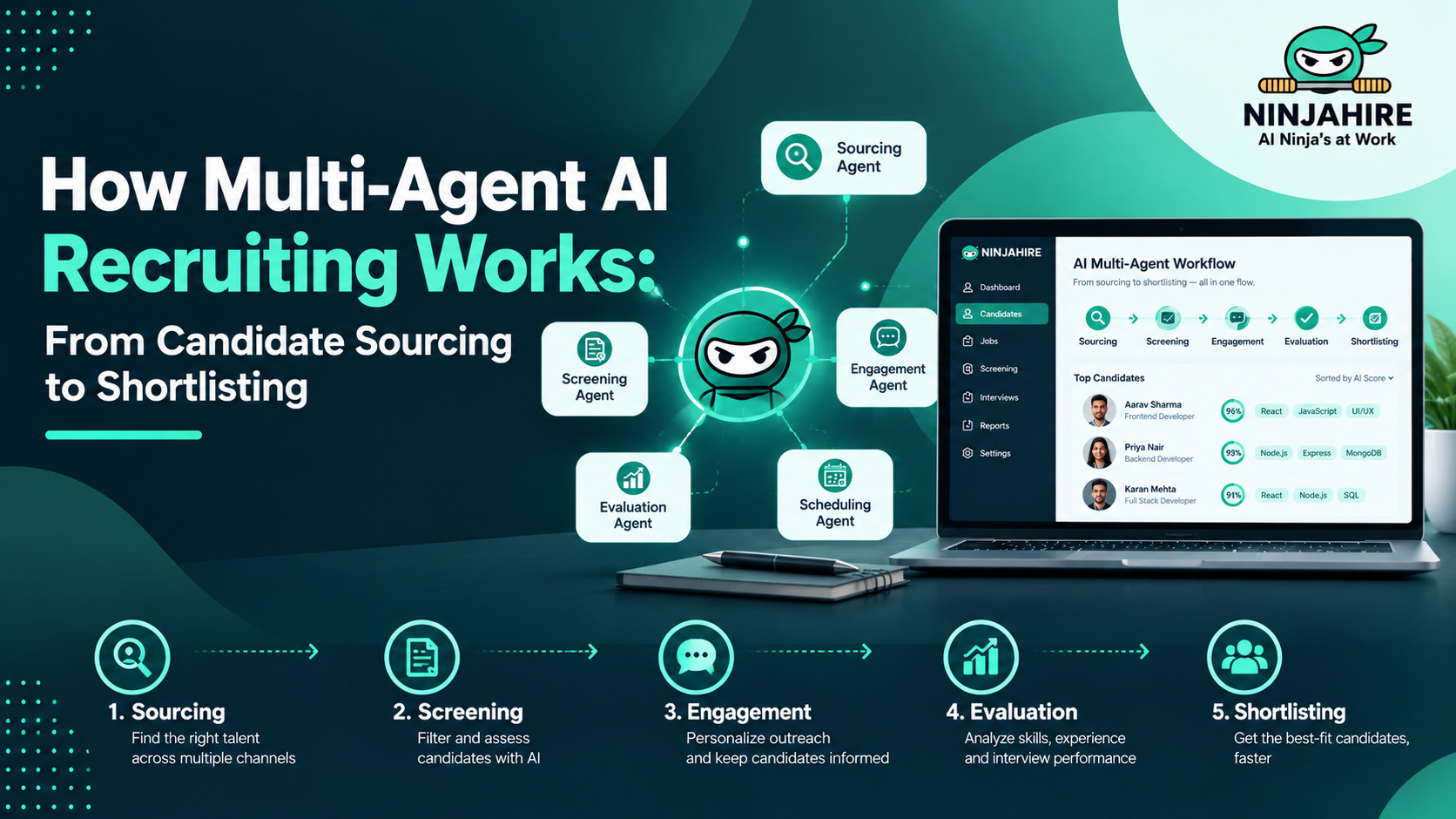
A multi-agent system assigns each workflow stage to an agent with a narrow, defined job, then connects them so one agent's output becomes the next one's input. A typical division covers role intake, sourcing, outreach, screening, and shortlist preparation.
This differs from a single AI tool in scope and continuity. A single-agent tool solves one bottleneck, such as first-round phone screens, then hands the result back. In a multi-agent system, criteria set at intake travel through every later stage, so the screening rubric reflects the requirements used to search.
It also differs from rules-based ATS automation, which fires a fixed action when a condition is met. Agents receive an objective and some latitude in pursuing it, which helps when inputs vary and hurts when criteria are vague.
One caution matters: "multiple agents" does not necessarily mean multiple independent AI models. Some platforms run distinct models, others one model under different instructions and permissions. The architecture organizes work; it is not evidence of better outcomes. Under the Uniform Guidelines on Employee Selection Procedures, a tool's reputation, descriptive label, or promotional literature is explicitly not accepted as evidence that it is valid for a job.
How the workflow works from sourcing to shortlisting
The model below is illustrative, not a description of any single product.
1. Capture the role requirements
Intake records the job title, must-have skills, location, pay range, shift pattern, certifications, and knockout criteria. Inflated requirements produce a poor search and an unreliable screen, which agent coordination cannot correct.
2. Identify candidates across permitted sources
A sourcing agent searches the sources the agency is licensed to use: its ATS or CRM records, job boards, and contracted talent databases. Internal records are often the highest-yield layer, since prior applicants are already known. Several platforms now treat candidate rediscovery as the first layer rather than an afterthought.
3. Match profiles against job criteria
Candidates are ranked against the requirements captured at intake. The design question is which criteria carry weight and whether a recruiter can adjust them. Opaque scoring is hard to defend or improve.
4. Run personalized outreach
An outreach agent contacts candidates across the agency's channels and schedules follow-ups. Content and cadence should stay under recruiter control, and candidates need a route to a human.
5. Collect and organize responses
Replies, availability, pay expectations, and documents are captured in structured form and written back to the candidate record. This handoff breaks most often: without carried-forward context, screening starts from scratch.
6. Conduct structured screening
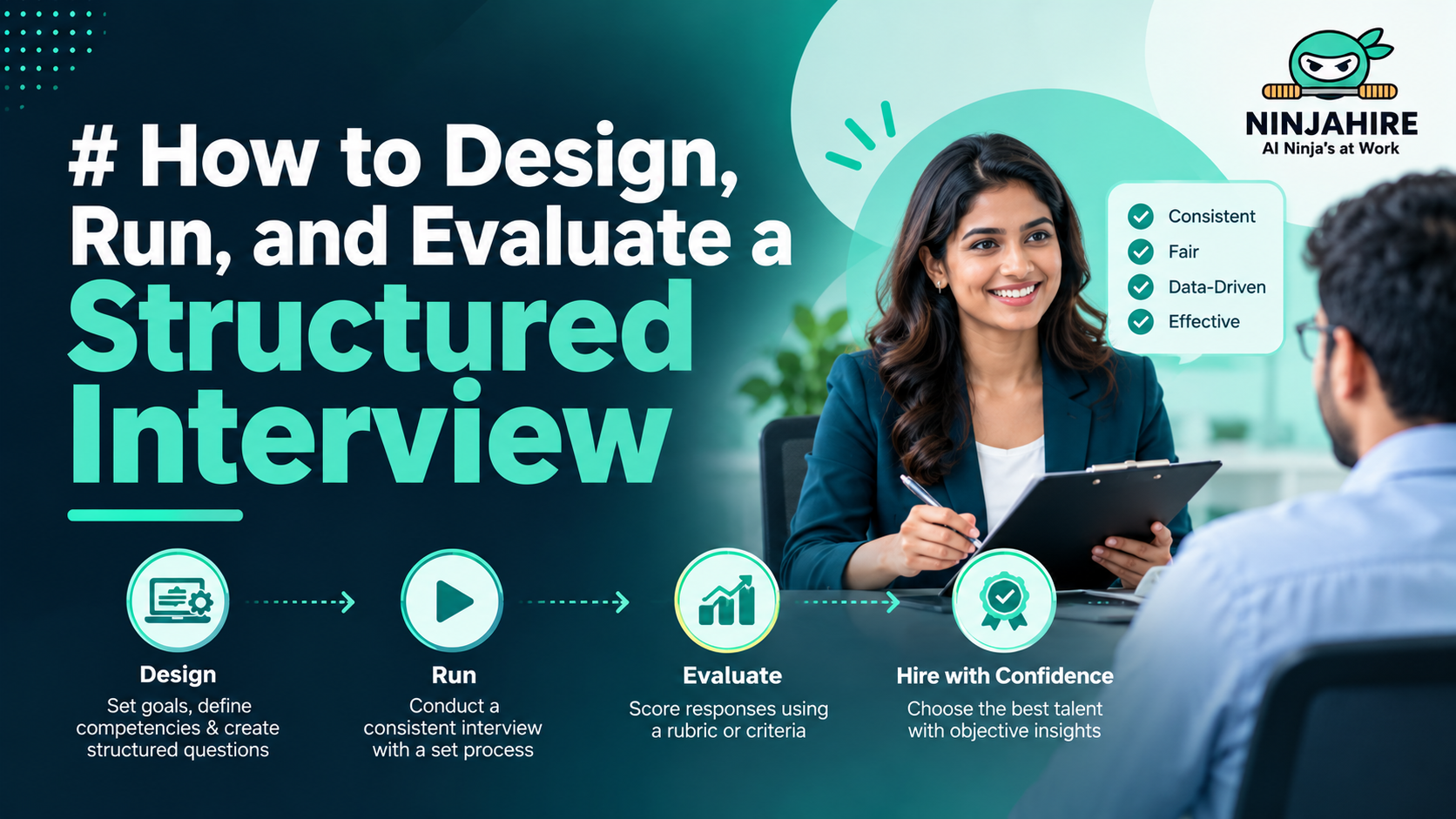
A screening agent runs a consistent, job-related interview by phone, video, or chat, scoring answers against a rubric. This is where legal exposure concentrates, because a screen that filters candidates is a selection procedure. A structured scorecard keeps each result reviewable.
7. Prepare the shortlist for review
Scores, transcripts, and summaries are assembled into a shortlist for recruiter review. Exceptions, such as a strong candidate failing one knockout question, should route to a person, not drop silently.
The decisive choices are where structured information passes and where a human must approve before work continues. Both are configuration decisions, not automatic properties of a multi-agent setup.
Example workflow: a warehouse associate role
This example is hypothetical, illustrating sequence and handoffs. It is not a reported result.
An agency receives a requisition for 30 warehouse associates across two shifts, with forklift certification required for a third of the roles. At intake, the recruiter sets certification as a knockout and makes night-shift availability a scored criterion, not a hard filter.
The sourcing agent searches the ATS first, surfacing prior applicants, then extends to job boards. The outreach agent messages candidates, follows up with non-responders, and logs replies. The screening agent calls respondents, confirms certification, and scores shift availability and equipment experience.
Two exceptions route to the recruiter: a lapsed certification, and a transcript flagged low-confidence on call quality. The recruiter reviews the shortlist and decides submissions. The agents handled volume and record-keeping; the recruiter made every judgment that advanced a candidate.
Benefits for staffing agencies
The realistic gains are operational and depend on good configuration.
- Fewer manual handoffs, since information moves between stages without export steps
- More consistent records, since every candidate meets the same questions and rubric
- Faster response to inbound interest, as outreach does not wait for recruiter availability
- Better coverage of large applicant pools, which manual screening only skims
- More recruiter time for client relationships, negotiation, and closing
These are potential gains, not guarantees. Automating a poorly defined process produces bad shortlists faster. Measure against your own baseline rather than vendor benchmarks, because sourcing volume alone rarely fixes hiring delays when the bottleneck sits further down the funnel.
Multi-agent AI recruiting vs. single-agent tools
| Factor | Single-agent tool | Multi-agent system |
|---|---|---|
| Workflow coordination | Handles one stage; a recruiter moves data to the next step | Stages are linked, and structured output from one agent becomes input for the next |
| Specialization | One general configuration covers the task | Each agent is configured for a narrower job, such as search or structured screening |
| Oversight | One review point, usually at the end | Several review points, one at each handoff, which must be deliberately placed |
| Complexity | Lower setup and easier to troubleshoot | Higher setup cost, and errors can travel downstream if criteria are wrong |
| Best suited for | A single bottleneck, such as first-round phone screens | Repeatable, high-volume requisitions where the same sequence runs often |
Neither is better in the abstract. One clear bottleneck favors a focused tool; a requisition pattern that repeats weekly favors a coordinated workflow.
Risks and best practices
Dividing a workflow into stages also divides the points where something can go wrong. Under the Uniform Guidelines, a selection procedure covers assessment techniques down to informal interviews and unscored forms, so an automated screen counts. A selection rate for any race, sex, or ethnic group below four-fifths of the highest group is evidence of adverse impact, and when the overall process shows adverse impact, individual components are expected to be evaluated separately. In a multi-agent workflow, each filtering stage is one such component.
Practical safeguards:
- Check data freshness, since stale contact records degrade matching quality
- Write job criteria from an analysis of the role, not an aspirational description
- Monitor outcomes stage by stage, not only at the offer
- Confirm consent practices for recorded calls, which vary by state
- Keep scoring explainable enough to say why a candidate ranked where they did
- Tell candidates when AI is used in screening, and offer a path to a person
- Retain transcripts, scores, and configuration versions to reconstruct decisions
- Require human approval before rejection or submission
Obligations differ by jurisdiction. New York City's Local Law 144 requires an automated employment decision tool to undergo a bias audit within one year of use, a published summary, and candidate notice, and it covers employment agencies as well as employers. Agencies working across markets should track AI hiring laws by state. NIST's voluntary AI Risk Management Framework is a useful governance starting point. None of this is legal advice, and automation does not by itself make a process fair.
How to evaluate a multi-agent platform
- Verified capabilities: a live demonstration on a real requisition
- Integrations: which ATS and VMS platforms sync, and whether sync is two-way
- Data handling: where data is stored, how long it is kept, how deletion is processed
- Configurable criteria: rubrics, knockout questions, and weightings editable by your team
- Scoring transparency: ask to see the reasoning behind an individual candidate's score
- Audit trails: transcripts, scores, and config changes retained and exportable
- Recruiter approvals: every point where a candidate advances or is rejected without review
- Reporting: whether outcomes can be analyzed by stage and by candidate group
- Accountability: who is responsible when the system produces a bad outcome
Pin these down at the contract stage: a vendor contract checklist and what to check before buying an ATS-integrated tool prevent most post-rollout surprises.
Where Ninjahire fits
Ninjahire is an AI recruiting platform for staffing agencies built around three specialized agents: Sourcing, Outreach, and Screening. Its AI sourcing works in layers, searching a connected ATS or CRM for candidates already engaged before extending to its talent graph and job boards including Monster, Indeed, ZipRecruiter, Dice, and CareerBuilder. Contact details are enriched by querying multiple providers in sequence.
The AI screening agent conducts structured interviews by phone, video, or web chat, applies customizable rubrics and knockout questions, adapts to each candidate's resume, supports multilingual screening, and returns ranked results with transcripts. Results sync to ATS platforms including Bullhorn, Greenhouse, Lever, iCIMS, and Ceipal, with VMS integrations for Beeline, SAP Fieldglass, and Coupa.
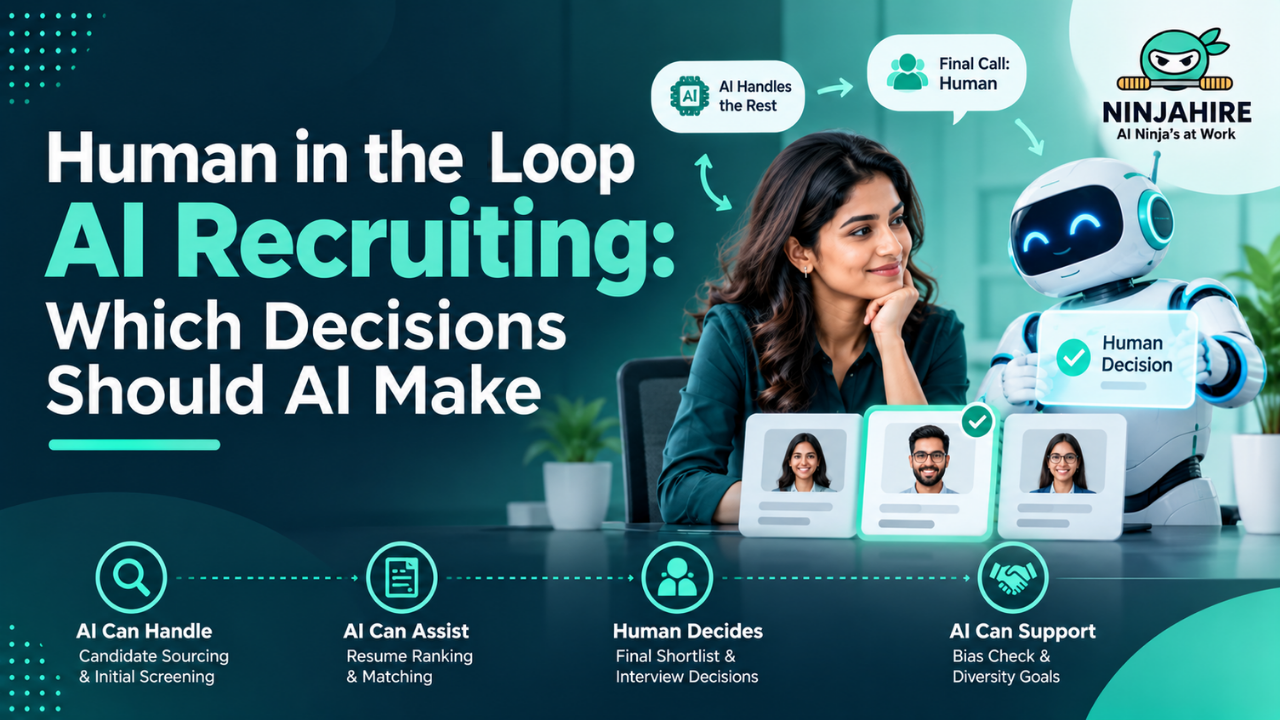
Ninjahire's documentation states the screening agent is not designed to replace recruiters: it handles the first-round interview, scoring, and ranking, while recruiters engage a pre-qualified shortlist. That division, agents on volume and recruiters on judgment, is the one that holds up.
Conclusion
Multi-agent AI recruiting is most useful where the same hiring sequence repeats at volume and the real cost sits in coordination. It is least useful where requisitions are bespoke, criteria unsettled, or the bottleneck is client decision-making.
The architecture guarantees nothing. Outcomes depend on job criteria, the placement of approval points, and whether the agency can explain how a candidate was ranked. Recruiters remain responsible for evaluating candidates and making hiring decisions.
Frequently asked questions
Does multi-agent AI recruiting require multiple separate AI models?
No. Implementation varies. Some vendors run distinct models per task; others one model under different instructions and data permissions. What defines the approach is the division of work and the structured handoffs between stages.
Can AI agents make the final hiring decision?
Responsibility stays with the employer or agency regardless of which tool produced it, and a vendor's assurance does not transfer it. Any workflow allowing automated rejection without review deserves scrutiny.
How does this differ from automation already built into an ATS?
ATS automation is rules-based: a trigger produces a fixed action, such as a templated email at a stage change. Agents pursue an objective with some discretion, which handles variable inputs better but makes clear criteria and review points more important.
What should an agency measure to know whether it is working?
Track time from requisition to first qualified shortlist, submissions per recruiter per week, shortlist-to-interview acceptance rate, and drop-off by stage. Stage-level tracking also shows whether one agent filters too aggressively.
Do staffing agencies need a bias audit for AI screening tools?
It depends where the agency operates. New York City requires an annual independent bias audit, a published summary, and candidate notice, reaching employment agencies as well as employers. Other jurisdictions differ, and some have no AI-specific rule. Confirm with qualified counsel.
See coordinated agents on your own requisitions
Review Ninjahire's AI sourcing and AI screening agent pages, or book a demo to test the workflow against a live role.