Sourcing has become the bottleneck in most recruiting operations. Inbound applications arrive in volume but rarely match hard-to-fill requisitions, and manual Boolean work does not scale across a full desk. AI candidate sourcing software addresses that gap by interpreting a role, searching candidate data at scale, and returning a ranked shortlist. This guide compares ten platforms by what they actually do, explains which features separate them, and sets out a selection framework for staffing agencies and talent acquisition teams.
TL;DR
- AI candidate sourcing tools find and rank potential candidates using profile data, semantic search, and automation — a different job from screening applicants or tracking them through an ATS.
- The right tool depends on where candidates actually live for a given role: a professional network, an open-web index, a job board, or an existing ATS database.
- Database size is the weakest buying signal. Contact accuracy, data freshness, and the ability to act on a shortlist matter more.
- Teams that want sourcing connected to outreach, screening, and interviewing — rather than handed off to a second tool — should evaluate Ninjahire alongside the specialist platforms.
What Is AI Candidate Sourcing Software?
AI candidate sourcing software uses machine learning to interpret a job requirement, search candidate records, and identify people worth contacting — including those who never applied. Core capabilities include AI-powered candidate search, natural-language search that replaces complex Boolean strings, skills and experience matching, passive candidate discovery, candidate database enrichment, and automated sourcing workflows.
It is worth separating three categories that buyers frequently conflate:
- Sourcing software finds candidates and prepares them for contact. Its input is a requisition; its output is a contactable shortlist.
- Screening software evaluates people who are already in the funnel, through resume review, assessments, or AI interviews.
- An applicant tracking system is the system of record. It stores candidates, tracks stages, and manages compliance documentation.
Most sourcing platforms integrate with an ATS rather than replace it. A few — Loxo and Gem among them — now bundle all three.
10 Best AI Candidate Sourcing Tools in 2026
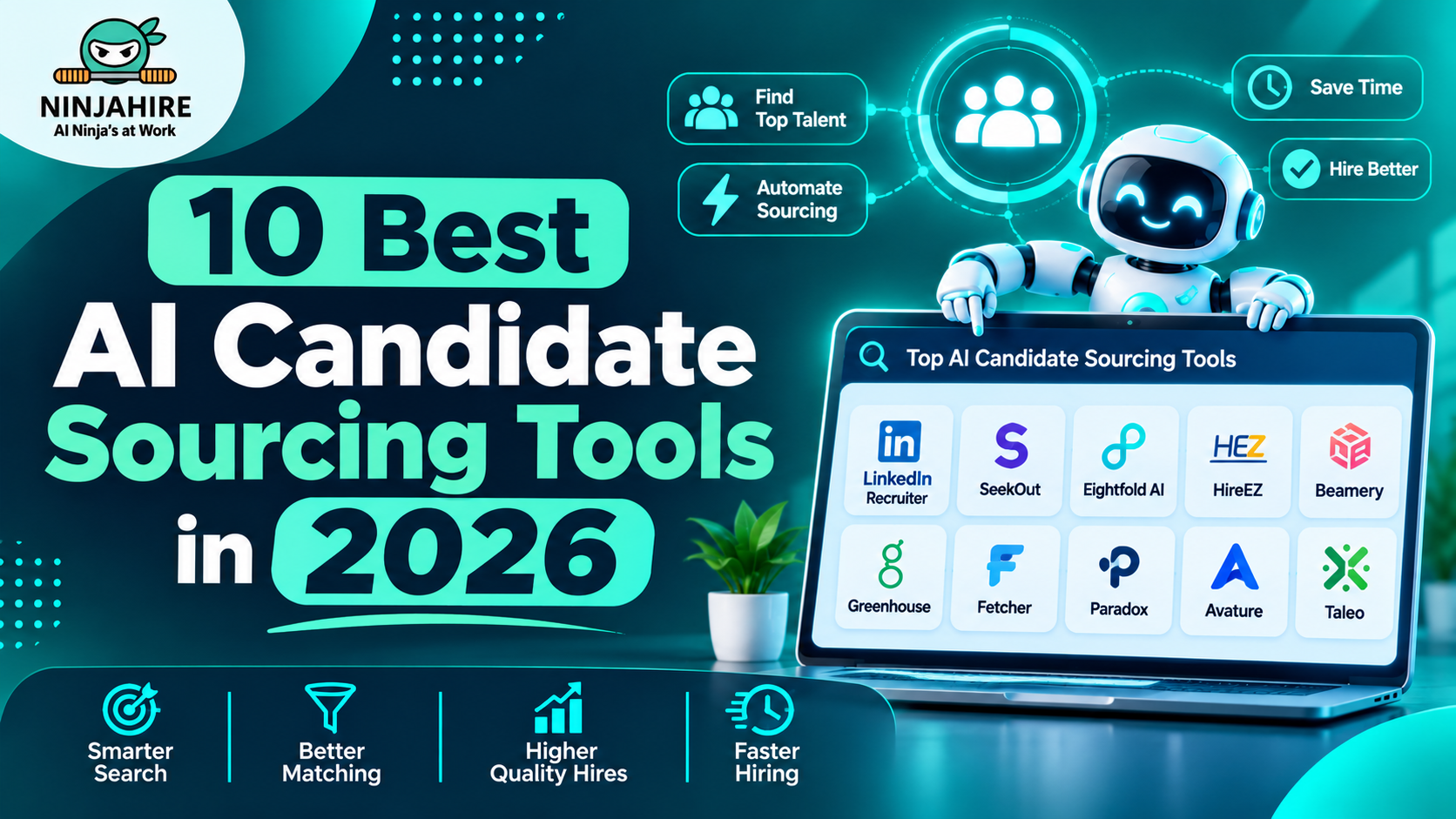
This list is organized by distinct sourcing need rather than ranked, because the strongest tool for technical talent is rarely the strongest tool for high-volume staffing. Verify current features, data coverage, and pricing directly with each vendor before purchase.
| Tool | Best for | Sourcing approach |
|---|---|---|
| Ninjahire | AI-driven recruiting workflows | ATS rediscovery + proprietary graph + job boards |
| LinkedIn Recruiter | Professional-network sourcing | LinkedIn member graph |
| SeekOut | Specialized and technical talent | Large external index + ATS |
| hireEZ | AI sourcing and outreach | Open-web aggregation + CRM |
| Juicebox | Natural-language search | Plain-language queries over an aggregated index |
| Findem | Attribute-based discovery | Career-attribute matching |
| Gem | Sourcing plus pipeline management | Sourcing agent + CRM + analytics |
| Pin | AI-powered candidate sourcing and outreach | AI-assisted candidate search, matching, and automated outreach |
| Loxo | Staffing and executive search | Proprietary graph inside an ATS/CRM |
| Eightfold AI | Enterprise talent intelligence | Skills graph across internal and external talent |
1. Ninjahire — best for AI-driven recruiting workflows. Ninjahire starts sourcing inside the systems a team already owns. It searches the connected ATS or CRM for prior applicants, silver medalists, and past contractors, then expands through its NinjaGraph profile coverage and supported job-board sources including Monster, Indeed, ZipRecruiter, Dice, and CareerBuilder. Multi-provider contact enrichment resolves missing emails and phone numbers before outreach begins. Feature-level comparisons against hireEZ, LinkedIn Recruiter, and Juicebox are published separately.
2. LinkedIn Recruiter — best for professional-network sourcing. LinkedIn Recruiter remains a strong option for sourcing candidates whose professional presence is primarily on LinkedIn. Its AI-powered Hiring Assistant helps recruiters source qualified candidates, draft personalized outreach, prescreen interested candidates, and review applicants. Hiring Assistant is available as a paid add-on to LinkedIn Recruiter and Recruiter Professional Services Plus (RPS+) contracts. It currently supports English and several other languages, although access may vary by customer and rollout.
3. SeekOut — best for specialized and technical talent. SeekOut combines an external index with ATS search and skills-based filtering. The company states coverage of more than one billion profiles and 750-plus enterprise customers, with capabilities spanning intelligent search, applicant evaluation, AI screening, talent rediscovery, and labor market insights. Its strength is depth of signal for engineering, healthcare, and security-cleared roles.
4. hireEZ — best for AI sourcing and outreach. hireEZ covers sourcing, candidate rediscovery, talent CRM, outreach, screening, scheduling, and analytics in one system, organized around an agentic layer called EZ Agent. Its open-web sourcing searches across 40-plus platforms to reach passive candidates without relying on network seat licences. Credit consumption on contact reveals is a recurring buyer consideration.
5. Juicebox — best for natural-language candidate search. Juicebox is built around PeopleGPT, where recruiters describe the person they want in plain English instead of constructing Boolean strings. The company states coverage of more than 800 million profiles across 30-plus sources, alongside outreach sequencing and sourcing agents. Natural-language search is the primary interface here, not a layer on top of filters.
6. Findem — best for attribute-based talent discovery. Findem uses what it calls "3D data" and attribute-based sourcing to analyze candidates beyond resume surface detail, and includes autonomous sourcing agents, diversity analytics, and workforce planning. It pairs external sourcing with ATS rediscovery, surfacing existing database candidates alongside net-new profiles. Useful for executive and niche searches defined by career trajectory rather than title.
7. Gem — best for sourcing and talent pipeline management. Gem has expanded from sourcing and outreach into a full ATS and CRM following its ModernLoop acquisition. Its sourcing agent draws on a company's full ATS and CRM history, including past applications, interviews, and outreach. The differentiator is visibility into what happened to sourced candidates downstream.
8. Pin — best for AI-powered candidate sourcing and outreach. Pin combines AI-powered candidate sourcing with automated outreach to help recruiters build and manage candidate pipelines. Recruiters can search candidate profiles using job descriptions or natural-language criteria, generate relevant shortlists, and engage prospects through automated multi-channel sequences. Its Professional plan also includes team collaboration, a shared inbox, and advanced AI sourcing features. Pin is a suitable option for staffing agencies that want to reduce manual sourcing work while managing multiple recruitment assignments in one platform.
9. Loxo — best for staffing and executive search. Loxo combines ATS, CRM, sourcing, and outreach automation into a single workflow, searching a proprietary graph it describes as 850 million-plus professionals alongside a firm's own database. Native phone, SMS, and email sit inside the platform so outreach history stays attached to candidate records.
10. Eightfold AI — best for enterprise talent intelligence. Eightfold applies skills-based intelligence across recruiting, internal career development, workforce marketplace, and project staffing, with AI-powered matching and rediscovery that identify adjacent and transferable skills across talent pools. It is an enterprise commitment, priced and implemented accordingly.
Key Features to Compare in AI Candidate Sourcing Tools
Evaluate candidate database size and data freshness, natural-language and Boolean search, skills-based matching, passive candidate discovery, contact information accuracy, automated outreach, candidate rediscovery, ATS and CRM integrations, data privacy and compliance, and reporting.
Database size is the metric most often quoted and least often decisive. A vendor index counts records; it does not tell a recruiter how many of those records describe people who hold the required skills today, whether their employment history is current, or whether a deliverable email exists. Two platforms claiming similar coverage can return materially different shortlists for the same requisition. During a trial, run a live open role and measure three things: relevant profiles returned, valid contact rate after enrichment, and reply rate on first outreach.
Data Quality, Compliance, and Pricing
Regulation now shapes sourcing decisions as much as features do, and AI hiring laws vary by state. New York City's Local Law 144 of 2021 prohibits employers and employment agencies from using an automated employment decision tool unless the tool has been subject to a bias audit within one year of use, the audit information is publicly available, and required notices have been provided to candidates or employees. Illinois HB 3773, effective January 1, 2026, amended the Illinois Human Rights Act to address discriminatory effects from AI use in employment decisions and employer notification obligations. Employers should review the statutory requirements and obtain legal guidance on how they apply to their recruitment processes.
Benefits of AI Candidate Sourcing Software
Used well, these platforms reduce manual search effort and shorten the path from requisition to first conversation. They open access to passive talent that never appears in inbound applications, make sourcing output more consistent across recruiters of differing skill levels, and extract value from candidate databases that firms have already paid to build. Outreach automation keeps pipelines moving during busy periods, and attribute-based search helps on hard-to-fill roles where literal title matching fails.
The honest caveat: measured time savings vary widely by role type, data region, and configuration. Treat vendor efficiency figures as claims to test in a pilot, not as forecasts.
How to Choose the Right AI Candidate Sourcing Tool
| Evaluation criterion | What to check |
|---|---|
| Search quality | Does it return relevant candidates for a real, current requisition? |
| Data quality | Are profiles and contact details accurate and recently refreshed? |
| Automation | Does it cover discovery, enrichment, and outreach, or only search? |
| Integration | Does it connect to the existing ATS or CRM, and write back? |
| Scalability | Can it support the team's requisition and outreach volume? |
| Compliance | Are bias audits, data sourcing, and retention documented? |
| Cost | Does total cost, including credits, fit the hiring model? |
| Human oversight | Can recruiters review, correct, and override AI recommendations? |
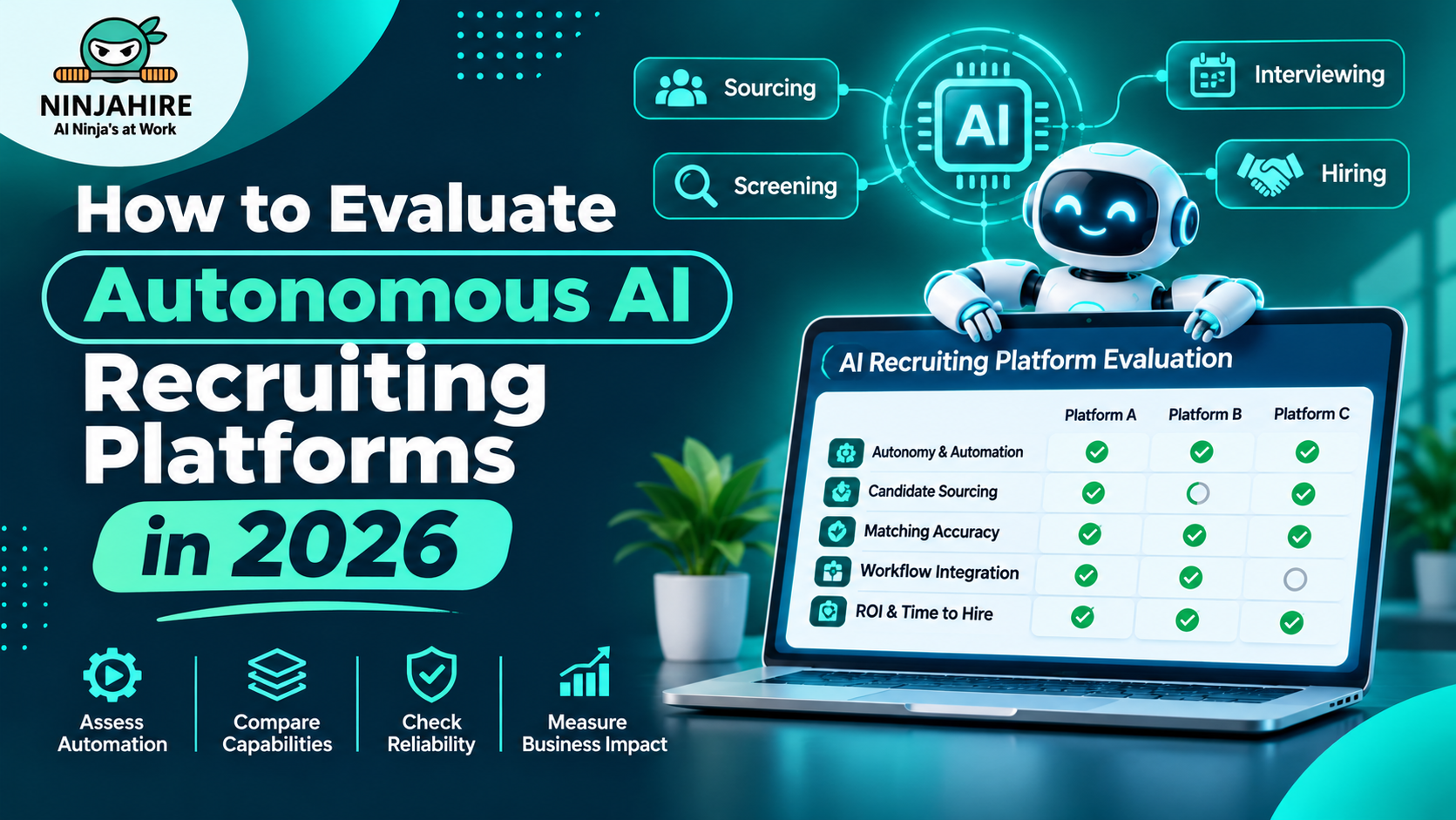
Run the evaluation with one real open role across every shortlisted vendor. Comparing feature lists produces a tie; comparing shortlists for the same requisition produces a decision. At the procurement stage, a vendor contract checklist keeps credit terms, data rights, and exit clauses from being settled late.
How Ninjahire Supports AI-Powered Candidate Sourcing
Ninjahire — Best for Connected AI Sourcing and Recruiting Workflows
Ninjahire combines candidate rediscovery, AI-powered sourcing, contact enrichment, and recruiting automation in one connected workflow. Its sourcing process starts with candidates already available in a connected ATS or CRM and expands to NinjaGraph, a talent graph containing more than 800 million professional profiles, along with supported job-board sources such as Monster, Indeed, ZipRecruiter, Dice, and CareerBuilder.
Its multi-provider waterfall enrichment process helps recruiters identify missing candidate contact details using multiple data providers. Contact availability and enrichment results depend on provider coverage, permissions, geography, and account configuration.
Unlike standalone sourcing tools, Ninjahire connects candidate discovery with outreach and screening through its coordinated AI recruiting agents. Available sourcing channels, ATS/CRM integrations, enrichment levels, and workflow capabilities depend on the subscription plan and account configuration.
Evaluate Ninjahire with a live requisition. Bring one open role and an example ATS workflow to a demonstration, and see where candidates come from, how relevance is ranked, and how they move into outreach and screening. Explore Ninjahire's AI sourcing platform or book a demo.
Frequently Asked Questions
How do AI candidate sourcing tools find passive candidates?
They index publicly available professional data — profiles, personal sites, code repositories, publications, patents — and infer skills and seniority from it, rather than waiting for an application. Semantic matching then ranks those people against a requisition, so someone who has never heard of the role can still surface.
Can AI sourcing tools identify candidates outside professional networking platforms?
Yes. Open-web platforms aggregate from dozens of public sources, and several also search job-board databases and an organization's own ATS. Network-native tools cannot. If a role depends on candidates who maintain little network presence — skilled trades, clinical staff, many warehouse and logistics roles — coverage breadth should be tested directly during a trial.
How can recruiters validate the accuracy of AI-generated candidate matches?
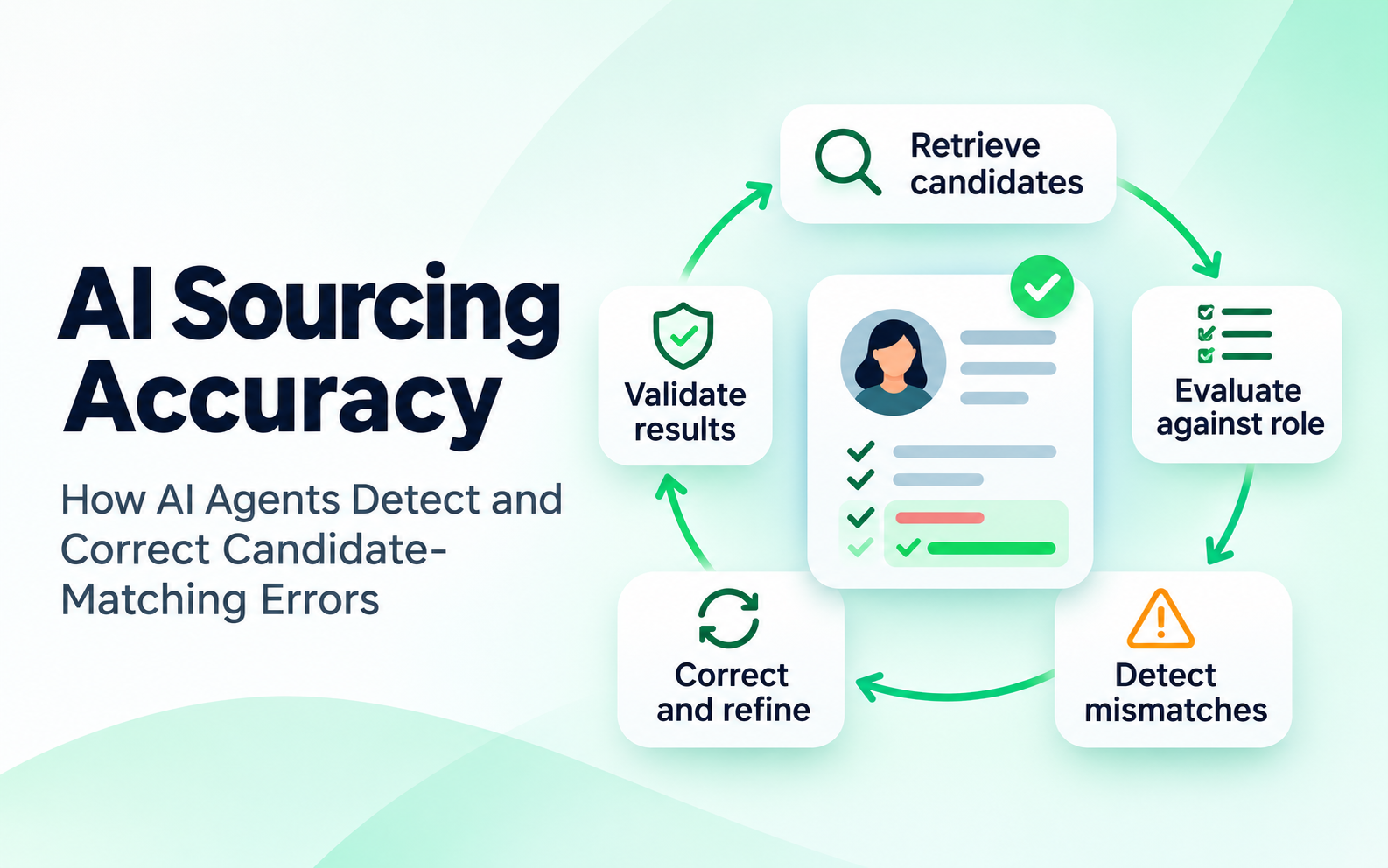
Ask the tool to show its reasoning: which required criteria appear satisfied, which are unverified, and what evidence supports each. Then sample manually. Review 20 matches against the requisition, record how many a recruiter would genuinely contact, and repeat the exercise across each shortlisted vendor using the same role.
Do AI candidate sourcing tools replace an applicant tracking system?
Usually not. Most are built to integrate with an ATS and write results back to it. A few, such as Loxo and Gem, include ATS functionality. Replacing a system of record carries compliance and data-migration consequences that sit well beyond a sourcing decision.
How should staffing agencies measure the ROI of candidate sourcing software?
Track cost per qualified conversation rather than cost per profile. Combine valid enrichment rate, outreach reply rate, submittal rate, and time to first submittal, then compare against the fully loaded cost of the manual sourcing hours the tool replaces. Measure over at least one full requisition cycle.