.png)
Case Study
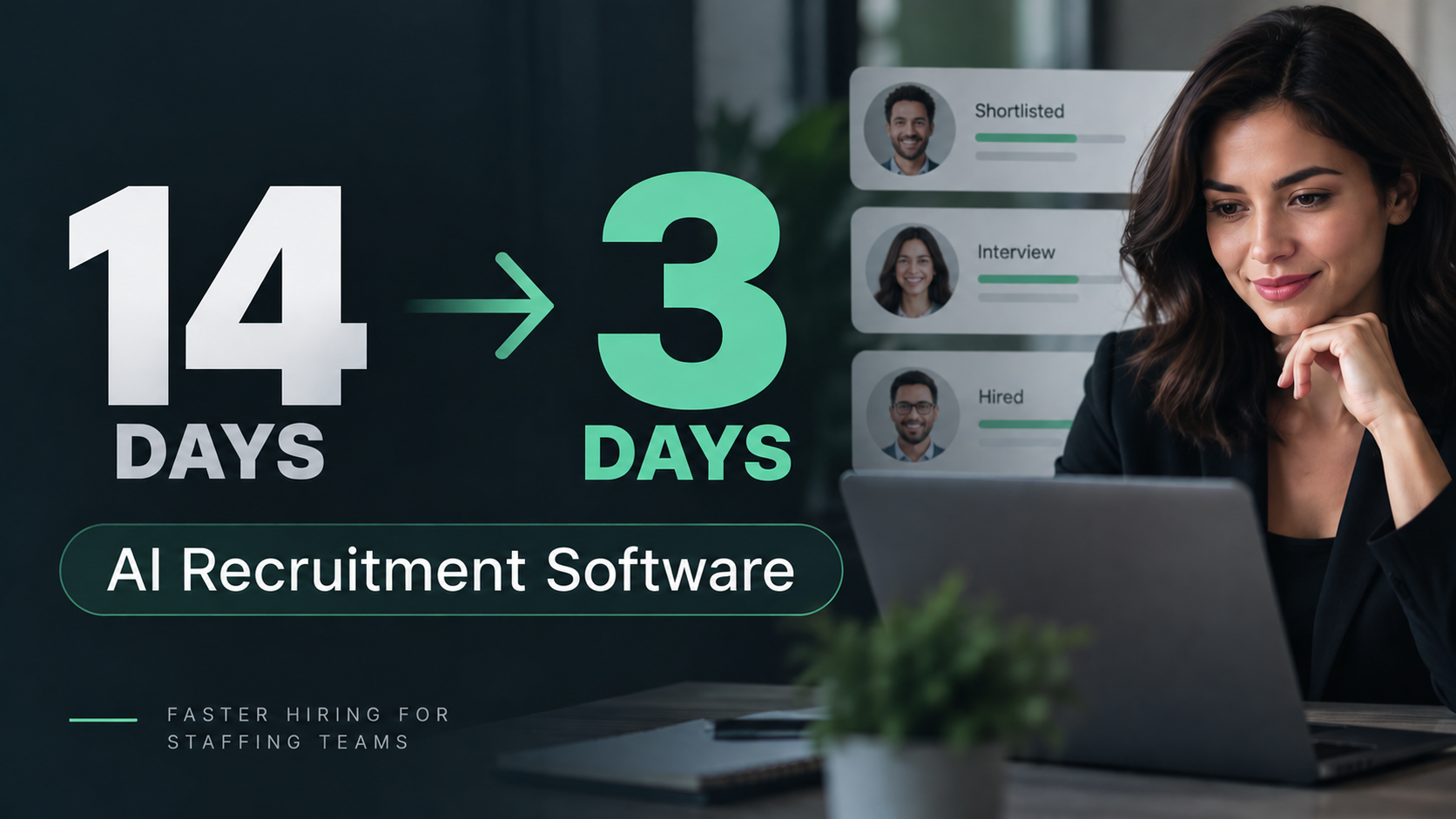
One recruitment workflow went from a 14-day average time-to-hire down to 3 days after AI recruitment software was introduced into the parts of the process that were slowing everything down: candidate sourcing, candidate matching, and initial screening. This case study walks through what changed, why it worked, and what recruiters still handle themselves.
Fourteen days is not an unusual number for a staffing desk juggling several open requisitions. It is also not a fixed cost of doing business. In this case, the delay was not caused by a lack of candidates or a lack of effort. It was caused by how much recruiter time was tied up in searching, reviewing, and re-reviewing candidates before a single qualified person made it to a client. Once AI recruitment software took over the repetitive front-end work, the same requisition moved from job order to hire in three days.
AI Recruitment Software Case Study: 14 Days to 3 Days
The short version: a recruitment team reduced time-to-hire from 14 days to 3 days by automating candidate sourcing, matching, and first-pass screening with AI recruitment software, while recruiters kept control of shortlisting, client communication, and final hiring decisions.
A time-to-hire reduction of roughly 79% for a comparable recruitment workflow.
| Metric | Before AI Recruitment Software | After AI Recruitment Software |
|---|---|---|
| Average time-to-hire | 14 days | 3 days |
| Candidate sourcing | Manual search across databases | AI-assisted sourcing and rediscovery |
| Candidate matching | Manual comparison against job requirements | AI-assisted matching against requirement criteria |
| Initial screening | Manual resume review and first-round calls | AI-assisted resume and candidate screening |
| Recruiter role | Sourcing, reviewing, screening, and deciding | Reviewing shortlists, engaging candidates, deciding |
This is not a claim that every requisition will move this fast, or that every staffing desk will see identical numbers. Results depend on hiring volume, role complexity, and how a team's existing workflow is set up. What this case study shows is what happens when the repetitive front half of a recruitment process, sourcing, matching, and first-pass screening, gets handled by AI recruitment software instead of by a recruiter working through it manually, one profile at a time.
What Is AI Recruitment Software?
AI recruitment software is a category of recruiting technology that uses machine learning and natural language processing to handle repetitive parts of the hiring workflow, including candidate sourcing, resume parsing, candidate matching, and initial screening. Instead of a recruiter manually searching, reviewing, and shortlisting every candidate, the software surfaces and ranks qualified candidates so the recruiter can focus on evaluation, outreach, and closing.
How AI Recruitment Software Works
The workflow generally follows a consistent pattern, regardless of the specific platform:
- Job requirement: A recruiter enters or uploads the job requirement, including must-have skills, experience level, and other criteria.
- Candidate sourcing: The software searches internal databases, prior applicants, and connected candidate pools to find people who match.
- Candidate matching: Candidates are ranked based on how closely their experience, skills, and background line up with the requirement.
- Candidate screening: Resumes and profiles are parsed and evaluated against the criteria the recruiter set, flagging strong matches and filtering out clear mismatches.
- Candidate outreach: Initial messages go out to qualified candidates to confirm interest and availability.
- Interview or phone screening: Structured first-round conversations, sometimes AI-assisted, confirm fit before a recruiter invests time.
- Recruiter review: A recruiter reviews the shortlist, not the entire raw candidate pool, and decides who moves forward.
- Hiring decision: The recruiter and hiring manager make the final call, informed by a much smaller and more relevant set of candidates.
The software does the searching and filtering. The recruiter still does the judging.
Why the Recruitment Process Was Taking 14 Days
Fourteen days did not happen because recruiters were slow. It happened because too much of that time was spent on work that had to be redone for every single requisition, regardless of how similar it was to the last one.
A typical manual workflow looked something like this. A job requirement comes in. A recruiter searches the ATS or database, often across multiple saved searches and boolean strings, to build a candidate pool. That pool then needs to be reviewed one profile at a time, since resume formats vary and relevant experience is not always where it should be. Once a shortlist is built, outreach begins, and that outreach often needs several follow-ups before a candidate responds. Screening calls get scheduled around recruiter availability and candidate availability, which rarely line up quickly. Each handoff between these stages, from sourcing to review to outreach to screening, adds waiting time on top of the actual work.
None of these steps are wasteful on their own. The problem is volume. A recruiter working several open requisitions at once is repeating this same manual sequence for each one, and the repetitive parts, searching and reviewing, consume hours that could otherwise go toward candidate conversations and client updates. The delay was structural, not a matter of effort.
Where AI Recruitment Software Changed the Workflow
This is where the actual time savings came from. Each of these areas removed a specific bottleneck from the process.
AI Candidate Sourcing
Manually searching a database for every new requisition, even a similar one, takes time and depends on how the search terms are structured. AI candidate sourcing searches across the existing candidate database, prior applicants, and connected sources automatically, surfacing people who match the requirement without a recruiter building a search from scratch each time. Recruiters still decide which sources to search and set the criteria; the software handles the retrieval.
AI Candidate Matching
Once candidates are sourced, someone has to determine who is actually relevant. AI candidate matching compares each candidate's experience, skills, and history against the job requirement and ranks the pool accordingly. This replaces the manual work of opening and comparing dozens of profiles one at a time. Recruiters still review the ranked list and can adjust criteria if the matches are too broad or too narrow.
AI Resume Screening
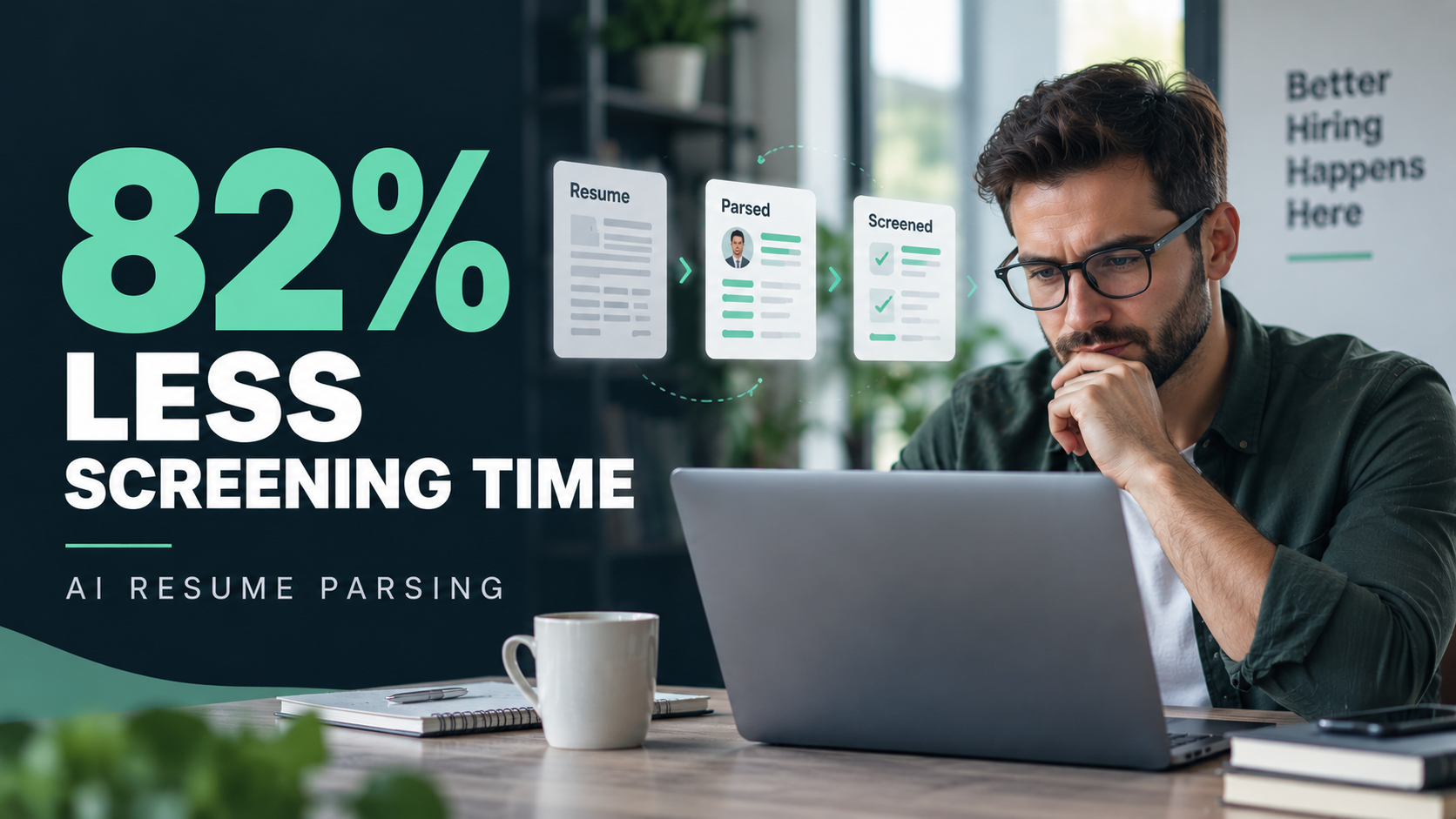
Resume formats are inconsistent, and reading through them individually is one of the slower parts of any recruitment process. AI resume screening parses resumes for relevant experience, skills, and qualifications, and flags candidates who meet the baseline criteria. It reduces the amount of manual reading required before a recruiter decides who is worth a conversation.
AI Candidate Screening
Beyond the resume itself, screening also involves confirming things like availability, work authorization, salary expectations, and basic qualifications. AI candidate screening handles this first pass through structured questions, so recruiters are not spending time on conversations that end because of a basic mismatch that could have been caught earlier.
AI Outreach and Candidate Engagement
Reaching candidates and getting a response is often slower than the actual search. AI outreach automation sends initial messages and follow-ups to shortlisted candidates, which keeps the process moving without a recruiter manually tracking who has and hasn't responded. Recruiters still handle the substantive conversations once a candidate responds.
AI Phone Screening and Interviews
Scheduling and conducting a first-round screening call for every candidate in a pool takes recruiter hours that don't scale well with volume. AI phone screening and interview tools handle structured first-round questions, so recruiters spend their time on the candidates who have already cleared a baseline, rather than screening everyone equally regardless of fit.
Recruiter-in-the-Loop Workflow
None of the steps above remove the recruiter from the process. The software handles retrieval, ranking, and first-pass filtering. The recruiter still reviews the shortlist, has the substantive candidate conversations, manages client communication, and makes the final call on who gets submitted and who gets hired. The time savings come from not having to do the repetitive work before that judgment happens.
Curious what this would look like for your own recruitment workflow?
See where NinjaHire could save your team timeThe Recruitment Workflow Before and After AI
Laying the two workflows side by side shows where the time actually came out of the process.
Before: Manual Workflow
- Job requirement received
- Manual search across database
- Manual profile review
- Shortlist built by hand
- Manual outreach and follow-up
- Manual screening calls
- Interview scheduling
- Hire
After: AI-Assisted Workflow
- Job requirement received
- AI candidate sourcing
- AI candidate matching
- AI screening (resume and candidate)
- Recruiter review of shortlist
- Interview
- Hire
| Stage | Before | After |
|---|---|---|
| Sourcing | Manual, requirement by requirement | Automated, pulling from existing and new sources |
| Review | Recruiter reads every profile | AI ranks candidates; recruiter reviews shortlist |
| Screening | Full manual screening for most candidates | AI handles first-pass screening |
| Handoffs | Multiple manual handoffs between stages | Fewer handoffs; recruiter enters at review stage |
How AI Recruitment Software Reduced Time-to-Hire from 14 Days to 3
Saying "AI is faster" does not explain much on its own. The actual reduction came from removing several specific waiting points in the workflow, not from any single change.
Faster candidate discovery meant the sourcing stage, which used to take a meaningful chunk of the 14 days on its own, happened almost immediately once the requirement was entered. Less manual profile review meant recruiters were not opening and closing dozens of resumes to find the handful that mattered. Faster candidate qualification meant the software was filtering for basic fit before a recruiter's time was involved at all.
Faster initial screening removed another block of hours that used to be spent confirming details like availability or work authorization one conversation at a time. Fewer manual handoffs meant the process did not stall while a shortlist sat waiting for someone to start outreach, or while outreach sat waiting for a recruiter to schedule the next call. And because recruiters were reviewing a smaller, pre-qualified pool instead of a raw one, recruiter review itself took less time and produced a faster decision on who to move forward.
None of these individually explains a drop from 14 days to 3. Together, they remove enough sequential waiting time that a process which used to take two weeks moves in three days. That is roughly a 79% reduction in time-to-hire for this workflow.
What Changed for Recruiters?
The clearest change was in how recruiter time got spent, not in how much recruiters worked. Less time went into repetitive searching across databases for candidates who might already have existed in prior searches. Less time went into manually reading resumes that did not end up being relevant. Less time went into first-pass screening calls that ended quickly because of a basic mismatch.
That freed-up time went toward the parts of the job that actually require a person: real conversations with qualified candidates, client updates on requisition progress, and closing candidates who had already been vetted for fit. Recruiters were not doing less work. They were doing less of the repetitive part and more of the part that depends on judgment and relationships.
Why AI Recruitment Software Matters for Staffing Agencies
Staffing agencies operate under a different kind of pressure than an internal talent acquisition team. Requisitions are often urgent, client expectations around turnaround time are explicit, and a desk is usually managing several open roles at once rather than one at a time. That makes the cost of a slow front-end process higher.
AI recruitment software for staffing agencies matters because it directly addresses that volume problem. Faster response to urgent requisitions means a desk can act on a new job order the same day instead of a few days later. Faster candidate submissions mean agencies are more competitive on roles where clients are working with multiple firms. Faster candidate qualification means fewer submissions get rejected for basic mismatches that a first-pass screen would have caught.
It also changes what an agency's existing candidate database is worth. A large database that recruiters cannot search efficiently is underused. AI-assisted sourcing and rediscovery make it possible to actually surface qualified candidates who are already in the system, rather than relying on new outreach for every requisition. The net effect is more recruiter capacity without adding headcount, and more consistent handling of high-volume periods without the process breaking down under load.
What Features Should AI Recruitment Software Have?
Not every platform that claims to use AI actually removes bottlenecks from the workflow. Here is what to look for.
| Feature | Why It Matters |
|---|---|
| AI candidate sourcing | Removes manual search time for every new requisition |
| Candidate matching | Ranks candidates against requirement criteria instead of leaving recruiters to compare manually |
| Resume parsing | Turns inconsistent resume formats into structured, comparable data |
| AI resume screening | Filters for baseline qualifications before recruiter time is spent |
| AI candidate screening | Confirms availability, authorization, and expectations early |
| AI phone screening | Handles structured first-round questions at volume |
| AI interviews | Supports early-stage evaluation without requiring recruiter time for every candidate |
| Candidate outreach | Keeps initial contact and follow-up moving without manual tracking |
| Candidate rediscovery | Surfaces qualified people already in the database instead of starting from zero |
| Recruitment workflow automation | Reduces manual handoffs between stages |
| ATS integration | Keeps candidate and requisition data in one place instead of creating duplicate systems |
| Recruiter analytics | Shows where time is actually going, stage by stage |
| Human approval and control | Keeps final decisions with the recruiter, not the software |
AI Recruitment Software vs. an ATS: What's the Difference?
An applicant tracking system is built to organize and track candidates through a hiring pipeline: storing resumes, logging stages, and managing requisition data. AI recruitment software is built to do the active work of finding, matching, and screening candidates before they enter that pipeline. Many teams use both together, with the ATS as the system of record and the AI layer handling the front-end sourcing and screening work.
| Capability | ATS | AI Recruitment Software |
|---|---|---|
| Primary function | Track candidates through hiring stages | Source, match, and screen candidates |
| Candidate sourcing | Typically manual | Automated |
| Resume review | Manual, recruiter-driven | AI-assisted parsing and screening |
| Data storage | System of record | Often integrates with the ATS rather than replacing it |
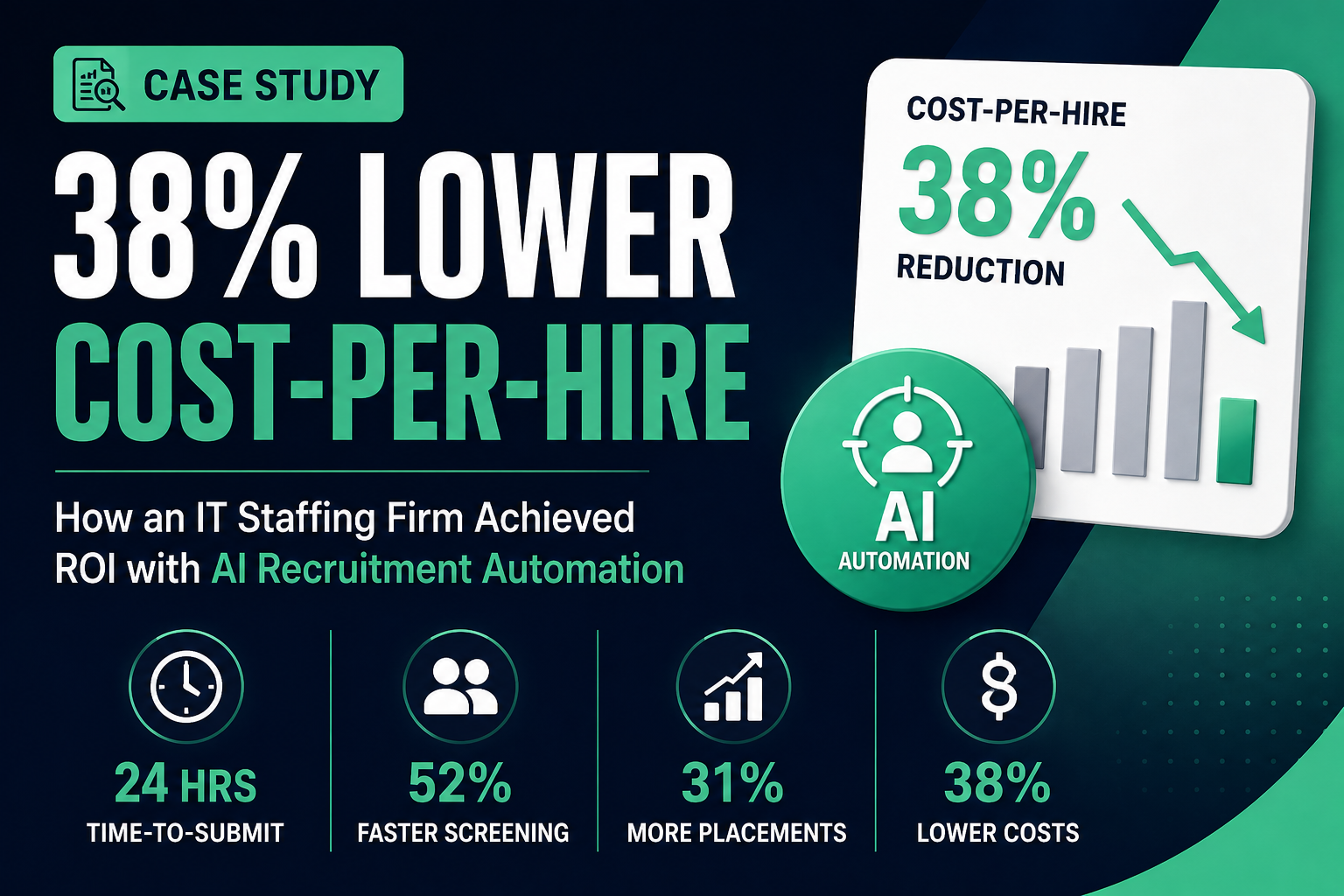
For a closer look at how this distinction plays out in a real workflow, this AI recruitment ROI case study covers how an IT staffing firm approached the same question.
How to Measure the ROI of AI Recruitment Software
The 14-to-3-day result in this case study only means something because time-to-hire was tracked consistently before and after the workflow changed. Any team evaluating AI recruitment software should set up that same kind of before-and-after measurement rather than relying on a general sense that things feel faster.
The metrics worth tracking include:
- Time-to-hire
- Time-to-submit
- Time-to-shortlist
- Screening time per candidate
- Recruiter hours per requisition
- Candidates sourced per requisition
- Qualified candidates per recruiter
- Candidate response rate
- Interview scheduling time
- Placements per recruiter
- Cost-per-hire
This case study does not report values for most of these because they were not part of the measured result. What it does show is why they matter: without a baseline, it is difficult to know whether a new tool is actually changing the workflow or just adding a new step to the same one. Tracking time-to-hire before and after is the most direct way to see whether AI recruitment software is having a real effect.
Is AI Recruitment Software Right for Your Staffing Agency?
This kind of workflow change tends to matter most for teams that are already dealing with volume. If your desk is regularly running multiple open requisitions, working from a large existing candidate database, doing repeated searches for similar roles, or spending a large share of the week on screening rather than candidate conversations, the repetitive parts of the process are likely where the time is going.
It also matters more for agencies handling urgent requisitions, where clients expect fast submissions and a slow front-end process directly costs business. High-volume staffing, IT staffing, and other roles with recurring skill profiles tend to see the clearest benefit, since sourcing and matching criteria repeat across similar requisitions.
On the other hand, a team handling a small number of highly specialized, low-volume searches, where every requisition is genuinely unique and manual sourcing is already targeted, may not see AI recruitment software as the most urgent investment. In that case, the manual process may already be reasonably efficient relative to the volume involved. The clearest signal is whether your team is repeating the same manual steps across requisitions often enough that automating them would free up meaningful time.
Frequently Asked Questions
What is AI recruitment software?
AI recruitment software is recruiting technology that uses machine learning to automate repetitive hiring tasks, including candidate sourcing, resume parsing, candidate matching, and initial screening. It helps recruiters find and qualify candidates faster while keeping final hiring decisions with the recruiter.
How does AI recruitment software work?
It takes a job requirement, searches candidate databases and connected sources, ranks candidates by fit, and screens them against baseline criteria like skills and availability. Recruiters then review a shortlist instead of a full, unfiltered candidate pool.
How does AI recruitment software reduce time-to-hire?
It removes manual work from sourcing, matching, and first-pass screening, which are typically the slowest and most repetitive parts of a recruitment workflow. Recruiters spend less time searching and reviewing, and more time on candidate conversations and decisions.
Can AI recruitment software reduce time-to-hire from 14 days to 3 days?
In this case study, a recruitment workflow moved from a 14-day average time-to-hire to 3 days after AI recruitment software was introduced into sourcing, matching, and screening. Results can vary based on hiring volume, role complexity, candidate availability, and how a team's workflow is structured.
What can AI recruitment software automate?
It can automate candidate sourcing, candidate matching, resume parsing, resume screening, candidate screening, outreach and follow-up messaging, and first-round phone or interview screening. It does not automate final hiring decisions.
Does AI recruitment software replace recruiters?
No. It handles repetitive, high-volume tasks like sourcing and first-pass screening. Recruiters still review shortlists, conduct substantive candidate conversations, manage client relationships, and make final hiring decisions.
What features should AI recruitment software have?
Look for AI candidate sourcing, candidate matching, resume parsing, AI resume and candidate screening, AI phone screening, outreach automation, candidate rediscovery, workflow automation, ATS integration, recruiter analytics, and clear human approval controls over final decisions.
Is AI recruitment software useful for staffing agencies?
Yes, particularly for agencies managing high recruitment volume, large candidate databases, or urgent requisitions. It helps recruiters respond faster, submit qualified candidates sooner, and make better use of existing candidate data without adding headcount.
How do you measure the ROI of AI recruitment software?
Track metrics like time-to-hire, time-to-submit, screening time, recruiter hours per requisition, candidates sourced per requisition, and cost-per-hire before and after adoption. Comparing these consistently is what makes a result like 14 days to 3 days meaningful rather than anecdotal.
What is the difference between AI recruitment software and an ATS?
An ATS tracks candidates through hiring stages and stores requisition data. AI recruitment software actively sources, matches, and screens candidates before they enter that pipeline. Many teams use both, with the ATS as the system of record and AI handling the front-end work.
The Bottom Line
The move from 14 days to 3 days was not about asking recruiters to work harder. It was about removing repetitive work from the recruitment workflow: manual sourcing, manual resume review, and manual first-pass screening, so the process could move at the pace of the candidates who were actually a fit.
AI recruitment software helped move sourcing, matching, and screening work faster while keeping recruiters involved in the decisions that require human judgment: who to submit, who to hire, and how to handle the client relationship. That combination, faster front-end work with the same level of recruiter oversight, is what produced the result in this case study.
See Where AI Could Save Your Recruiting Team Time
See how NinjaHire can help automate repetitive sourcing, screening and recruiting workflows without taking recruiters out of the process.
Try NinjaHire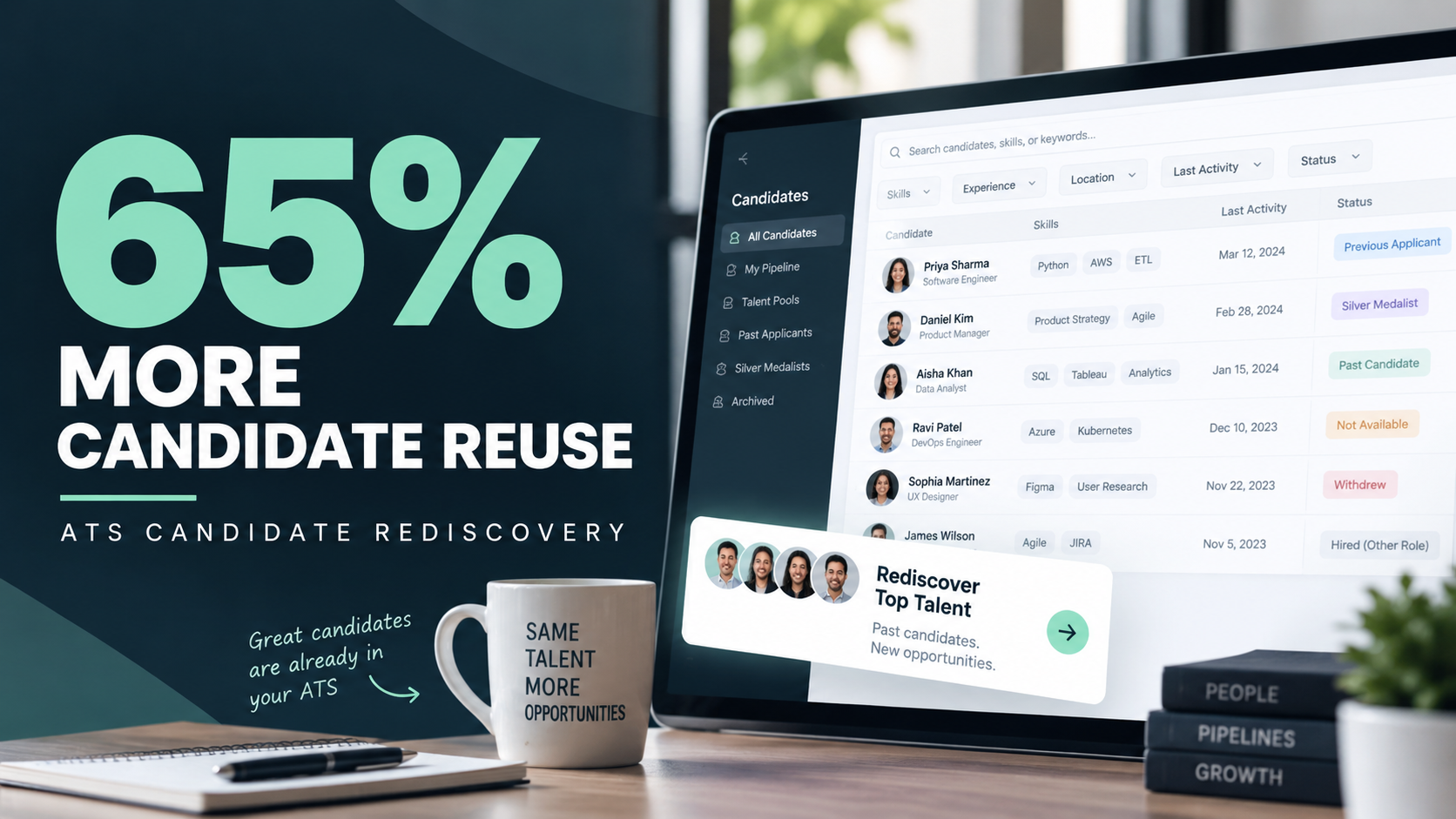






.jpg)