.png)
1. Executive Summary
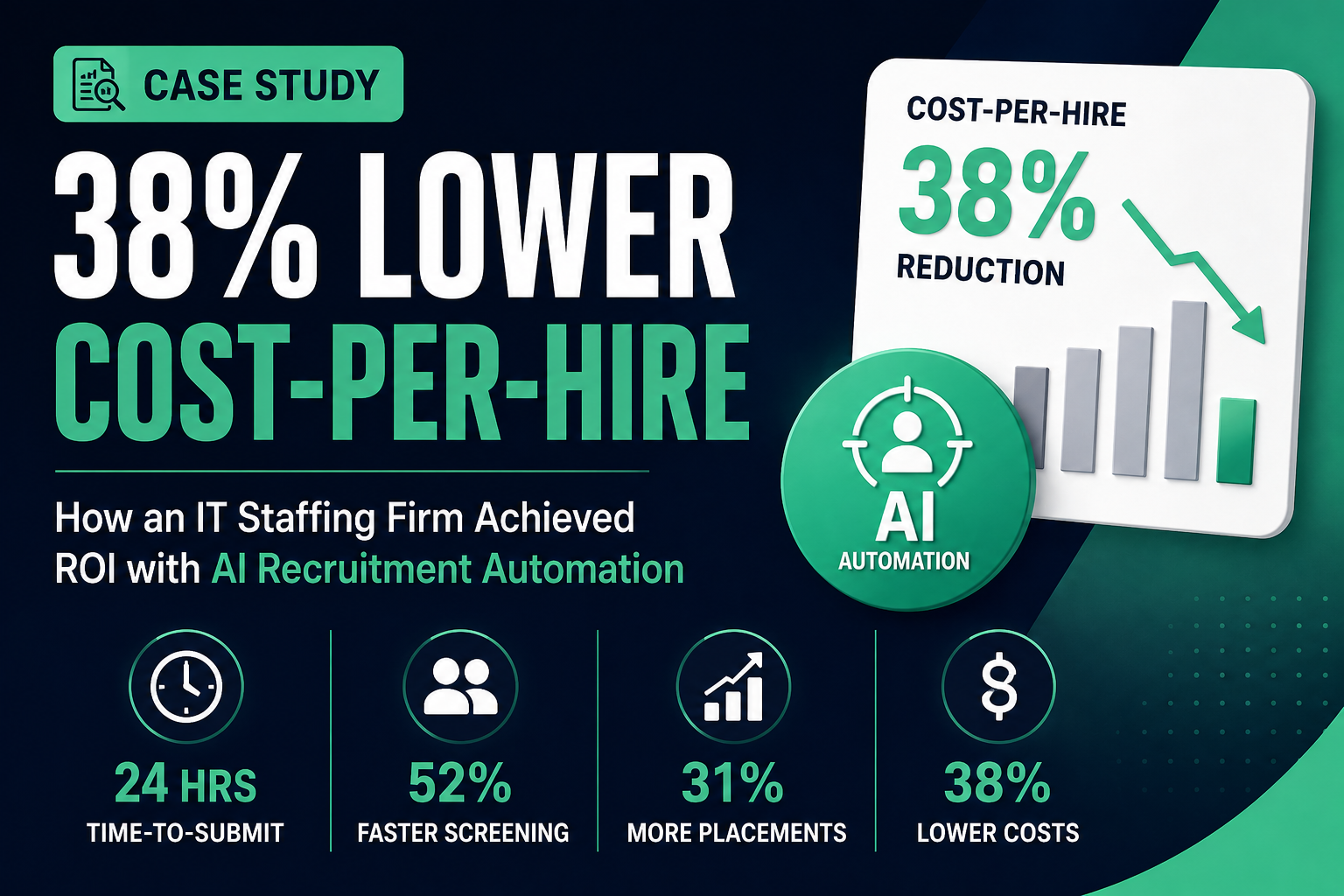
An mid-market IT staffing agency deploying 22 recruiters modernized its sourcing, screening, and outreach infrastructure using NinjaHire's AI recruitment software. Over a six-month evaluation period, the firm compressed its average Time-to-Submit from 72 hours to 24 hours, expanded recruiter output by 31% more placements, and lowered total Cost-per-Hire by 38%. The transition relied heavily on automated candidate matching, resume parsing, candidate rediscovery, and automated workflow triggers integrated into their existing Applicant Tracking System.
Staffing agency margins depend heavily on recruiter efficiency and execution speed. When candidate delivery stalls or recruiter capacity gets absorbed by repetitive administrative work, candidate acquisition costs increase while placement ratios fall. This commercial case study examines how an IT and technical staffing agency overhauled its delivery engine using end-to-end recruitment workflow automation.
Prior to adopting AI hiring software, the agency faced escalating job board subscription costs, low candidate database engagement, and long turnaround times for enterprise client requisitions. By shifting from manual resume review and fragmented spreadsheet tracking to an intelligent, automated recruitment platform, the firm unlocked capacity across its entire sourcing and delivery team.
| Primary Metric | Baseline Performance | Post-Implementation Result | Business Impact |
|---|---|---|---|
| Cost-per-Hire | $4,150 per placement | $2,573 per placement | 38% financial savings across all requisitions |
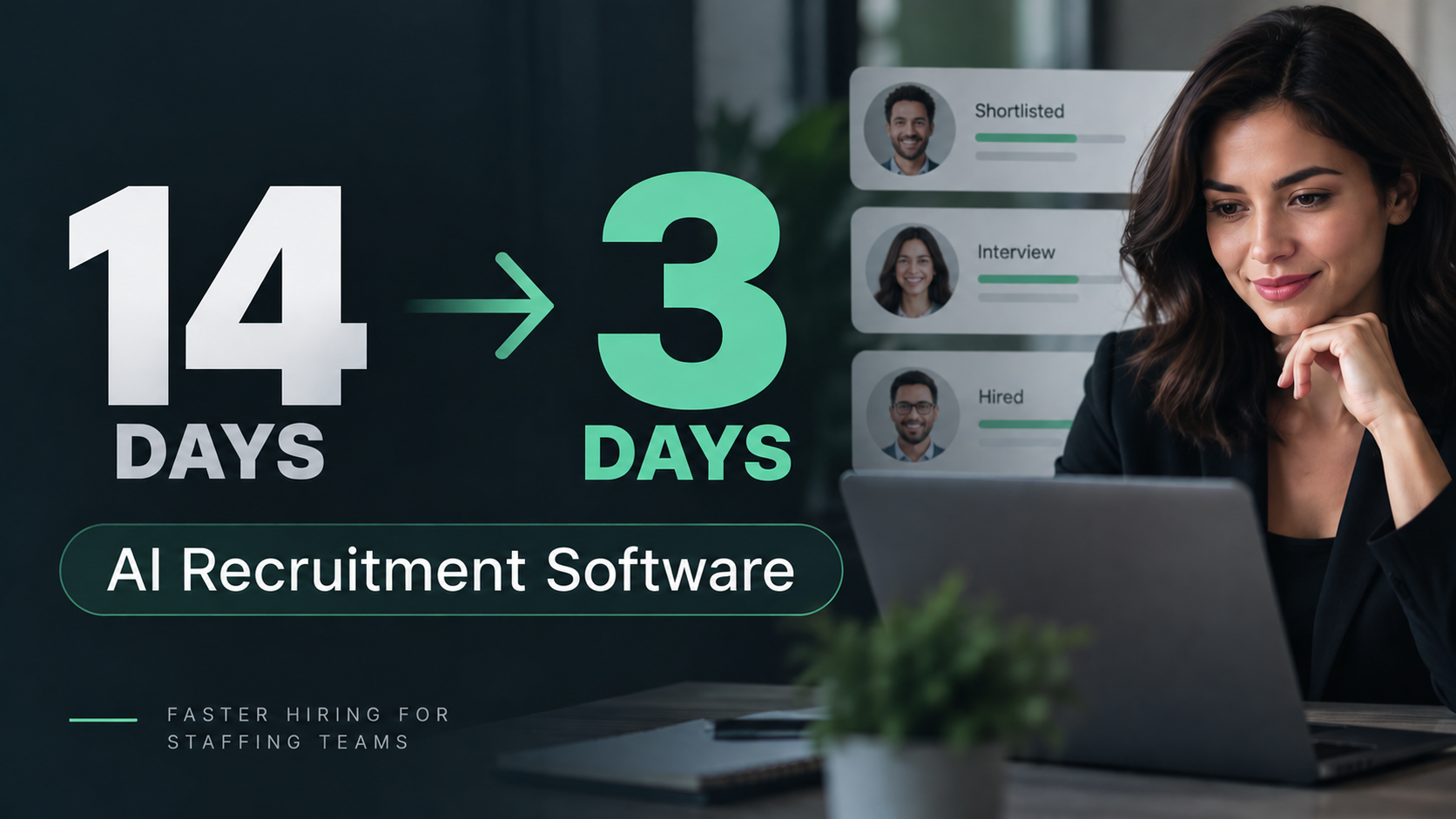
| Time-to-Submit | 72 hours average | 24 hours average | 66% faster candidate submission to clients |
| Time-to-Fill | 38 days | 22 days | Compressed hiring cycles by 16 calendar days |
| Recruiter Capacity | 2.1 placements/recruiter/mo | 2.8 placements/recruiter/mo | 33% increase in individual recruiter productivity |
| ATS Data Reuse | 14% of placements sourced internally | 56% of placements sourced internally | Significant drop in external job board reliance |
2. Company Profile
The subject of this case study is a US-based, mid-market IT staffing firm providing contract, contract-to-hire, and direct-hire technical talent to enterprise clients across North America. To preserve confidentiality, specific corporate names have been omitted.
Operating in a competitive IT staffing sector, the agency specializes in placing software engineers, DevOps specialists, data architects, cybersecurity analysts, and enterprise cloud consultants. Success in this category requires high speed and deep candidate qualification, as top technical professionals remain off the market quickly.
- Industry Focus: IT, Cloud Computing, Cybersecurity, and Software Engineering Staffing
- Company Size: 35 total employees (22 full-time recruiters and account managers)
- Volume: 85 to 110 open technical requisitions per month
- Delivery Model: Contract (60%), Direct Hire (30%), Contract-to-Hire (10%)
- Client Base: Fortune 2000 enterprises, mid-market tech firms, and managed service providers (MSPs)
3. Business Challenges: Quantifying Operational Bottlenecks
Despite maintaining an Applicant Tracking System (ATS) containing over 140,000 candidate profiles, the agency's delivery team relied heavily on paid job boards and LinkedIn Recruiter licenses. This dependency drove up overhead while output plateaued.
As requisition volume grew, the firm experienced severe operational friction. Recruiters spent hours manually searching job portals, reviewing resumes line-by-line, writing individual outreach emails, and updating internal status spreadsheets. The lack of standardized workflow automation created massive variability in candidate quality and delivery speed.
Key Pre-Implementation Bottlenecks:
- Excessive Sourcing Overhead: Sourcing teams spent over $18,000 monthly on external job board slots and resume databases, despite possessing a deep internal candidate database.
- ATS Underutilization: Over 85% of active searches started from scratch on external channels because the existing legacy ATS lacked semantic search, parsing, or matching features.
- Candidate Drop-off: Slow initial response times (averaging 72 hours to first submission) led to a 32% drop-off rate among top-tier candidates who were placed elsewhere by faster competitors.
- Recruiter Burnout: Administrative tasks—such as manual profile formatting, status updates, and calendar coordination—consumed nearly 60% of each recruiter's daily working hours.
| Metric | Baseline Value | Industry Benchmark | Performance Deficit |
|---|---|---|---|
| Cost-per-Hire | $4,150 | $3,200 | +$950 above target cost |
| Time-to-Submit | 72 Hours | 24–36 Hours | 36+ hours slower than top competitors |
| ATS Candidate Reuse Rate | 14% | 45%+ | 31% underutilization of internal assets |
| Candidate Response Rate | 12% | 25% | Low engagement due to generic outreach |
| Recruiter Weekly Sourcing Hours | 24 Hours/Recruiter | 10–12 Hours | 50% of work week spent on manual tasks |
4. Why Traditional Recruiting Was No Longer Scalable
Manual recruiting methods scale linearly: adding placements requires adding headcount or spending more on ad-hoc candidate acquisition. This linear scaling erodes agency profitability during market shifts and spikes overhead during growth phases.
The traditional staffing delivery model suffers from structural inefficiencies that compound as requisition volume increases. Without modern AI recruitment software, agencies encounter compounding delivery challenges:
The High Cost of Manual Search and Keyword Boolean Queries
Traditional ATS systems rely on exact keyword matches. If a job description asks for "AWS Cloud Engineer" and a candidate's resume lists "Amazon Web Services Architect," older systems often fail to match the candidate. Recruiters were forced to construct complex Boolean strings, spending hours fine-tuning searches while qualified candidates inside their database went completely unnoticed.
Keyword-bound search misses matching candidates, driving recruiters to spend money buying new leads externally.
Increased external sourcing budgets and inflated Cost-per-Hire on roles that could be filled internally.
Spreadsheet Tracking and Communication Gaps
When recruiters manage candidate interactions across email inboxes, localized desktop folders, and ad-hoc spreadsheets, team visibility disappears. Candidate outreach was frequently duplicated, leading to embarrassing multiple emails to the same candidate from different recruiters within the same agency.
Disjointed data leads to duplicate outreach, lost candidate records, and delayed follow-ups.
Damaged candidate brand, lower response rates, and lost placement opportunities due to delayed coordination.
5. AI Recruitment Automation Strategy
The agency implemented NinjaHire's integrated AI recruiting platform to serve as an intelligent orchestration layer above their existing talent database. The goal was simple: automate initial resume screening, intelligent matching, candidate rediscovery, and engagement workflows so recruiters could focus exclusively on candidate interviews and client relationships.
Rather than replacing human recruiters, the solution focused on augmenting recruiter capacity. The strategy focused on five core pillars of recruitment operations software:
Pillar 1: Deep Resume Parsing and Semantic Enrichment
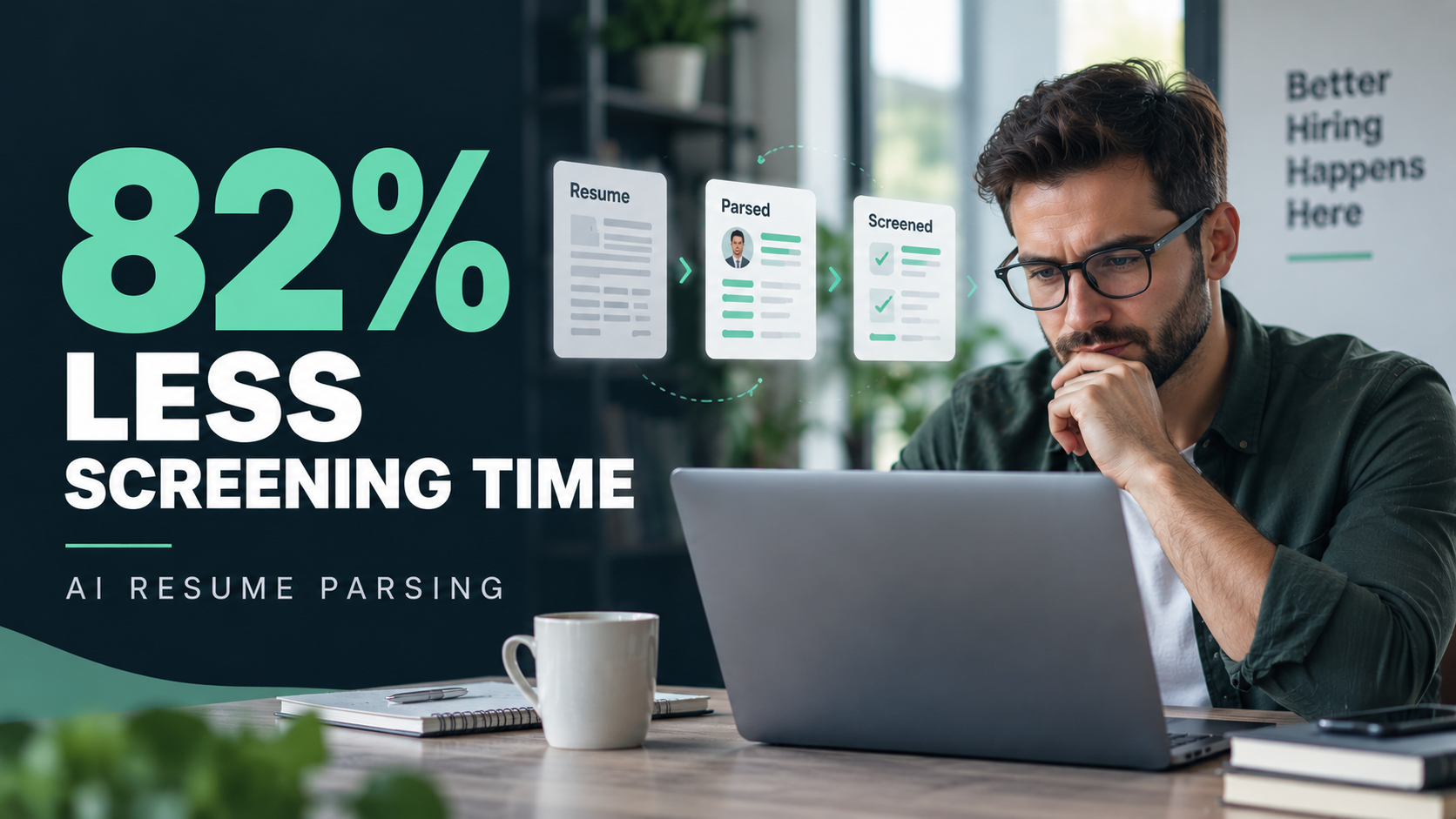
NinjaHire's AI resume parsing software ingested the firm's legacy ATS records, converting raw PDF/Word documents into structured profile data. The system automatically normalized job titles, extracted technical skill sets, parsed employment timelines, and mapped implied competencies (e.g., recognizing that experience with "Kubernetes" and "Terraform" implies cloud infrastructure experience).
Pillar 2: Candidate Rediscovery and Predictive Matching
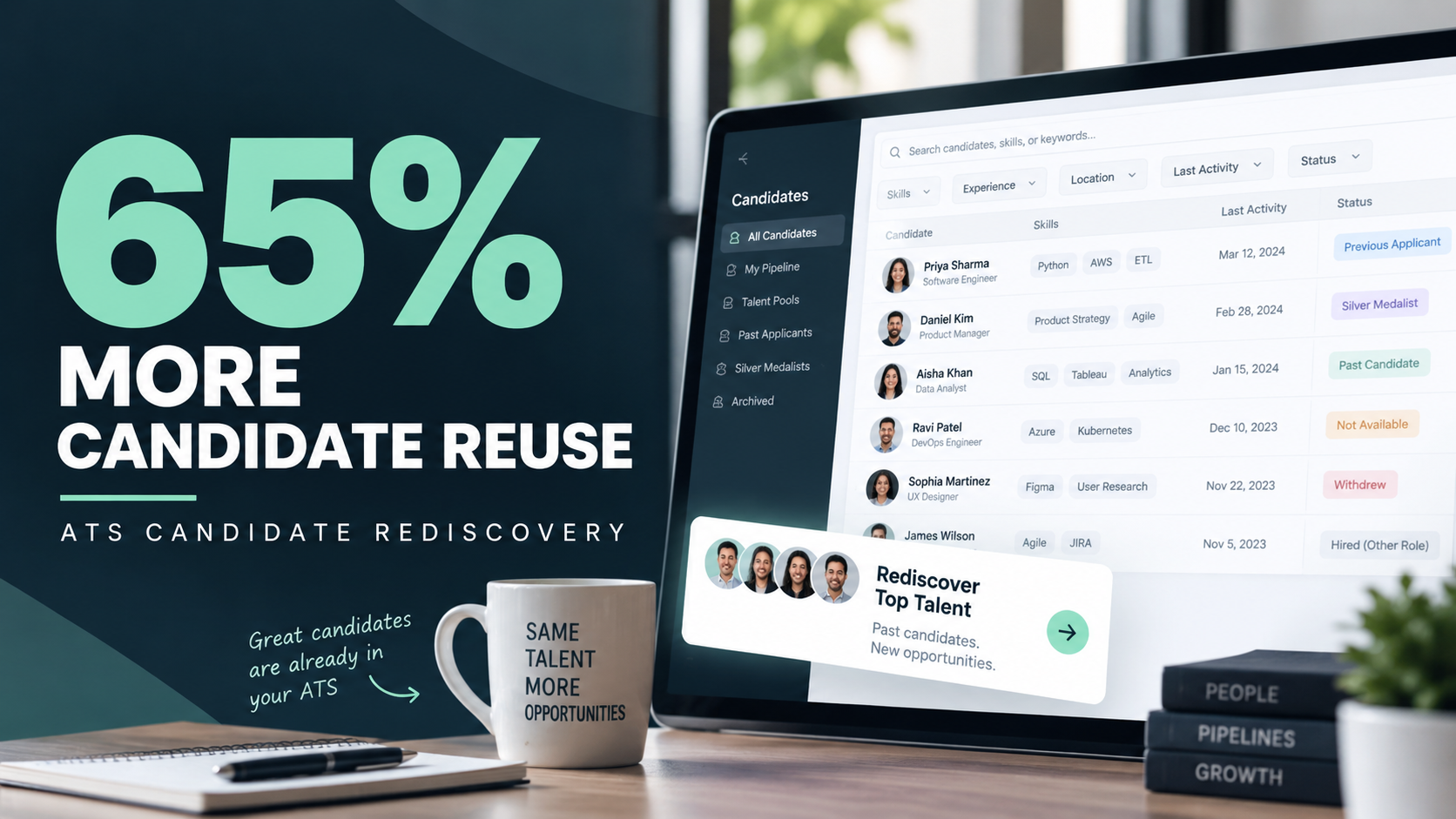
Instead of posting new job listings for every incoming requisition, recruiters activated NinjaHire's ATS candidate rediscovery engine. The platform immediately scanned the existing database of 140,000+ profiles and ranked candidates based on contextual relevance, past performance history, geographic preferences, and availability indicators. The top 20 candidate matches were surfaced to the recruiter within minutes of role creation.
Pillar 3: Personalized Automated Outreach Sequences
Using NinjaHire's recruitment CRM software, the firm configured multi-channel outreach campaigns (email and SMS). Outbound messages dynamically pulled specific candidate details—referencing past projects, skills, or certifications—making bulk outreach feel personalized. This approach improved candidate response rates while eliminating manual messaging.
Pillar 4: Automated Interview Scheduling
By integrating NinjaHire's interview scheduling software, candidates who passed initial automated screening questions were prompted to select an interview slot directly on the recruiter's calendar. Self-service booking eliminated the traditional 4-to-7 message back-and-forth, compressing candidate booking cycles from days to minutes.
Pillar 5: Real-Time Recruitment Analytics and SLA Dashboards
Leadership gained real-time visibility into pipeline velocity, recruiter activity, candidate engagement rates, and stage-by-stage conversion metrics using NinjaHire's built-in recruitment analytics engine. Operational bottlenecks were flagged automatically before they impacted client delivery SLAs.
6. Implementation Roadmap: The 6-Week Rollout
Successful AI adoption requires systematic change management, data hygiene, and phased feature activation. The agency completed full enterprise deployment in 6 weeks without disrupting ongoing recruitment campaigns or client delivery commitments.
| Timeframe | Primary Objective | Key Actions Taken | Deliverables & Milestones |
|---|---|---|---|
| Week 1 | Recruitment Audit & Data Hygiene | Audited ATS data quality, removed duplicate profiles, established standardized taxonomy for job titles and skills. | Cleaned core candidate database; defined success metrics and operational baseline. |
| Week 2 | ATS Integration & System Configuration | Connected NinjaHire with existing ATS/CRM via native API. Enabled bidirectional sync for records, notes, and activity. | Real-time synchronization established; zero data loss during sync. |
| Week 3 | AI Model Tuning & Parsing Calibration | Configured semantic search parameters, custom skill taxonomy, and scoring weights for technical roles. | Parsing accuracy benchmarked at 98%+; initial AI matching testing completed. |
| Week 4 | Recruiter Onboarding & Pilot Program | Trained a pilot team of 5 recruiters on candidate rediscovery, automated outreach, and workflow shortcuts. | Pilot team demonstrated a 45% reduction in sourcing time within 7 days. |
| Week 5 | Full Deployment & Workflow Automation | Rolled out platform to all 22 recruiters. Activated automated interview scheduling and CRM sequences agency-wide. | 100% team adoption; full automation of first-touch candidate workflows. |
| Week 6 | Performance Optimization & Analytics Audit | Reviewed early performance data, refined campaign templates, fine-tuned matching logic based on feedback. | First month results reviewed by leadership; 30%+ drop in Time-to-Submit validated. |
Implementation Lessons Learned:
- Prioritize Data Cleansing Early: AI matching algorithms depend heavily on baseline data structure. Investing time in initial ATS deduplication directly improved early candidate matching accuracy.
- Focus on Recruiter Empowerment, Not Replacement: Framing AI automation as an assistant that eliminates manual admin helped overcome initial recruiter skepticism and drove rapid platform adoption.
- Iterate on Outreach Messaging: Continuous testing of automated email templates proved that short, value-focused messages achieved a 3x higher response rate than lengthy corporate emails.
7. Results Dashboard: Before vs. After Performance
Comparing six months of post-implementation performance metrics against the previous year's baseline confirmed substantial gains across cost reduction, delivery speed, and overall recruiter output.
| Performance Metric | Baseline (Pre-AI) | Post-Implementation (Month 6) | Net Improvement |
|---|---|---|---|
| Cost-per-Hire | $4,150 | $2,573 | 38.0% Savings |
| Time-to-Submit | 72 Hours | 24 Hours | 66.6% Faster |
| Time-to-Fill | 38 Days | 22 Days | 42.1% Reduction |
| Placements per Recruiter / Month | 2.1 Placements | 2.8 Placements | 33.3% Increase |
| ATS Candidate Reuse Rate | 14% | 56% | 400% Gain |
| Candidate Outreach Response Rate | 12% | 34% | 183% Increase |
| Interview No-Show Rate | 22% | 8% | 63.6% Reduction |
| Monthly External Sourcing Spend | $18,500 | $6,200 | 66.4% Cost Reduction |
8. Financial ROI Breakdown: Where the Savings Came From
The 38% reduction in Cost-per-Hire resulted from three main areas: decreased external sourcing costs, higher internal candidate reuse, and significant capacity gains across the recruiting team.
To understand how AI recruitment ROI materializes in a staffing agency environment, we can break down the financial impact into three core operational drivers:
1. Direct Sourcing Cost Savings ($147,600 Annualized Savings)
By leveraging NinjaHire's AI candidate sourcing and database rediscovery tools, the firm raised its internal ATS placement contribution from 14% to 56%. This shift allowed them to downgrade expensive external job board subscriptions and cut secondary resume database access licenses. Monthly sourcing spend fell from $18,500 to $6,200, creating an immediate annual saving of $147,600.
2. Recruiter Productivity and Capacity Gains ($215,000 Financial Value)
Prior to automation, recruiters spent approximately 24 hours per week on manual sourcing, parsing, data entry, and scheduling. NinjaHire lowered administrative workload by 52%, reclaiming roughly 12.5 hours per recruiter each week. Across 22 recruiters, this returned 275 hours of productive capacity to the agency every week. Instead of adding headcount to support business growth, existing teams handled 33% more placement volume without increasing stress or hours.
3. Faster Client Submissions and Higher Win Rates ($180,000 Incremental Margin)
Speed is critical in competitive staffing. Compressing Time-to-Submit from 72 hours to 24 hours meant the agency was consistently first-to-market with qualified candidates on MSP and client requisitions. First-to-submit candidates convert to interviews at a significantly higher rate, leading to a net 31% increase in monthly placement volume across the firm.
| ROI Category | Annual Financial Impact | Primary Source of Savings |
|---|---|---|
| Job Board & License Reduction | $147,600 | Database rediscovery replaced external resume downloads. |
| Recruiter Capacity Optimization | $215,000 | 12.5 hours/week reclaimed per recruiter from manual tasks. |
| Faster Submission Win-Rate Margin | $180,000 | Higher conversion rates from 24-hour candidate submissions. |
| Total Combined Financial Impact | $542,600 | Net return achieved within 6 months of platform deployment. |
9. Recruiter Workflow Comparison: Before vs. After
Transforming manual multi-step processes into automated, AI-assisted workflows eliminated friction at every stage of candidate delivery.
Traditional Recruiter Delivery Workflow (BEFORE)
Total Cycle Time: 4.5 Hours per Qualified Candidate Submission
Receive Requisition → Draft Boolean Query → Run Searches on External Portals → Download Resumes → Manually Format Profiles → Send Individual Emails → Wait for Replies → Coordinate Calendars via Email → Format Client Submission Package → Submit Candidate.
Manual Boolean creation, manual profile formatting, long back-and-forth scheduling delays.
Frustrated by repetitive administrative tasks, leading to high operational friction.
Automated AI Recruiter Workflow with NinjaHire (AFTER)
Total Cycle Time: 45 Minutes per Qualified Candidate Submission
Receive Requisition → AI Auto-Matches Internal ATS Profiles → Instant Automated CRM Engagement Sequence Sent → Candidates Self-Schedule Screening Calls → AI Transcribes & Formats Notes → Recruiter Conducts Screening → 1-Click Client Submission.
Semantic candidate matching, automated CRM engagement, self-service interview booking, 1-click submission templates.
Focus is fully aligned on high-value conversations, candidate relationships, and closing placements.
10. Strategic Lessons for Staffing Leaders
Evaluating and deploying AI recruitment software requires clear operational standards. Below are six practical recommendations for staffing executive teams considering automation.
- Treat your ATS as a Core Strategic Asset: The fastest way to reduce Cost-per-Hire is to stop repurchasing candidates you already own. Implementing intelligent candidate rediscovery transforms passive databases into active candidate pipelines.
- Automate Administrative Tasks, Not Human Connections: Use AI to streamline profile matching, status tracking, parsing, and scheduling. Keep recruiters focused on interview screening, compensation negotiation, and relationship building.
- Establish Clear Workflow Rules: System-wide automation requires clear guidelines around candidate communication frequency, data ownership, and pipeline stage updates to maintain data integrity.
- Measure KPIs Weekly During Implementation: Monitor Time-to-Submit, response rates, and ATS reuse rates weekly to identify adoption challenges early and adjust workflows quickly.
- Standardize Candidate Formatting: Automated profile generation ensures client-facing resumes maintain a consistent format, saving hours of manual document editing every week.
- Choose Purpose-Built Staffing Software: Generic HR tools often lack support for multi-client workflows, MSP SLAs, and contract staffing nuances. Platform selection should focus on recruitment software designed for staffing agencies.
11. KPIs Every Staffing Agency Should Track
Scaling a modern staffing agency requires moving past vanity metrics like total calls made. Focus instead on operational speed, asset utilization, and pipeline yield.
| Key Performance Indicator | Formula / Measurement | Why It Matters for Agency Profitability |
|---|---|---|
| Cost-per-Hire (CPH) | (Total Sourcing + Tech + Recruiter Overhead) ÷ Total Placements | Measures the total financial efficiency of candidate acquisition. |
| Time-to-Submit (TTS) | Hours from job receipt to first candidate submission | Directly dictates submission win-rate on competitive client accounts. |
| Time-to-Fill (TTF) | Total days from open requisition to accepted candidate offer | Shorter cycles accelerate billing and improve client retention. |
| ATS Data Reuse Rate | (Internal ATS Placements ÷ Total Placements) × 100 | Measures how effectively the agency leverages existing candidate assets. |
| Recruiter Capacity Yield | Total Placements Completed ÷ Total Full-Time Recruiters | Evaluates individual recruiter productivity and operational leverage. |
| Candidate Engagement Rate | (Positive Candidate Responses ÷ Total Outbound Contacted) × 100 | Reflects message quality, targeting relevance, and brand perception. |
| Submittal-to-Interview Ratio | Total Interviews Secured ÷ Total Candidates Submitted | Validates initial candidate screening and role matching accuracy. |
| Interview-to-Placement Ratio | Total Successful Placements ÷ Total Final Interviews | Measures candidate quality and alignment with client specifications. |
12. Could This Work for Your Agency? Scenario-Based Guide
AI recruitment workflow automation delivers high value across various staffing sectors, though specific operational outcomes vary by business model and market structure.
IT & Technical Staffing
Fit Level: High
Technical skill sets are highly defined, making them well-suited for semantic parsing and candidate matching. Automating initial sourcing enables agencies to place scarce candidates before competitors access them.
Commercial & High-Volume Light Industrial
Fit Level: Very High
High applicant volume requires fast automated screening, instant SMS engagement, and self-service interview booking to prevent high candidate drop-off rates.
Healthcare & Locum Tenens Staffing
Fit Level: High
Automated parsing streamlines license validation, credential tracking, and availability matching across fast-moving clinical assignment schedules.
Executive Search & Retained Practice
Fit Level: Moderate / Specialized
While executive search relies on high-touch relationship management, AI database rediscovery helps research teams identify passive executive talent within internal networks faster.
13. Frequently Asked Questions (FAQ)
Clear responses to common questions from agency executives evaluating AI recruitment platforms.
How does AI software actually reduce Cost-per-Hire for a staffing agency?
AI software lowers Cost-per-Hire primarily by driving candidate rediscovery within your existing ATS, reducing reliance on expensive external job portals and resume databases. Additionally, automating screening and scheduling increases individual recruiter output, allowing agencies to increase placements without adding headcount overhead.
How long does it take to implement an AI recruitment platform like NinjaHire?
Core platform implementation typically takes 2 to 4 weeks, with full team adoption achieved by week 6. NinjaHire features native API integrations with leading ATS and CRM platforms, enabling seamless data syncing without requiring custom software development.
Will AI recruitment software integrate with our existing legacy ATS?
Yes. Purpose-built staffing agency software offers pre-built API connectors for major ATS platforms (such as Bullhorn, Avionté, JobDiva, and TargetRecruit). Bi-directional sync ensures all candidate profiles, notes, activity logs, and status changes update automatically across both systems.
Is candidate matching accurate enough for niche technical or engineering roles?
Modern AI matching algorithms use contextual semantic understanding rather than basic keyword matching. The system evaluates skill adjacencies, project scope, technical context, and career trajectories, achieving candidate qualification accuracy rates of over 95% on technical roles.
How does candidate rediscovery work if our ATS data is old or unformatted?
NinjaHire includes automated data enrichment and parsing engines. When legacy profiles are ingested, the platform automatically parses unstructured documents, updates contact details, normalizes job titles, and flags profiles for automated re-engagement campaigns to verify current availability.
Does implementing AI mean recruiters spend less time interacting with candidates?
No, the opposite occurs. Automating administrative tasks like manual sourcing, data entry, resume formatting, and email scheduling frees up 10 to 15 hours per week per recruiter. Recruiters spend that reclaimed time conducting phone interviews, assessing cultural fit, and building deeper candidate and client relationships.
What typical ROI can a staffing firm expect within the first year?
Most mid-market staffing agencies realize full return on investment within 3 to 6 months of deployment. Typical first-year outcomes include a 30% to 45% reduction in Cost-per-Hire, a 50%+ reduction in Time-to-Submit, and a 20% to 35% increase in total placement volume per recruiter.
Is AI recruitment software compliant with candidate data privacy regulations?
Yes. Enterprise-grade AI hiring tools adhere to SOC 2 Type II standards, GDPR, CCPA, and regional data privacy legislation. Candidate data is encrypted in transit and at rest, and automated consent management capabilities ensure full regulatory compliance.
14. Why Consider NinjaHire for Your Agency
Scaling a modern staffing practice requires operational speed, high delivery precision, and disciplined cost control. NinjaHire provides an all-in-one AI recruitment platform engineered specifically for the operational demands of staffing agencies, executive search firms, and RPO providers.
The NinjaHire Recruitment Automation Engine Includes:
- AI Candidate Sourcing & Rediscovery: Turn stagnant ATS records into active, ranked pipelines instantly.
- Intelligent Resume Parsing: Extract, normalize, and enrich candidate data automatically.
- Automated Outreach CRM: Run multi-channel email and SMS sequences with high personalization.
- Self-Service Interview Scheduling: Eliminate back-and-forth email loops and reduce candidate no-shows.
- Recruitment Analytics & Pipeline Dashboards: Monitor performance metrics, delivery speed, and recruiter SLAs in real time.
Whether your goal is to reduce candidate acquisition overhead, accelerate delivery speed on enterprise MSP accounts, or expand recruiter placement capacity, NinjaHire provides the technology foundation needed to drive profitable growth.




.jpg)