.png)
How a Staffing Agency Filled 75 Technical Roles in 30 Days Using AI
October 8, 2026

A data-backed breakdown showing how a mid-sized IT staffing firm modernized its candidate search, cut time-to-submit to 4.2 hours, and boosted recruiter output without increasing team size.
Executive Summary
Facing tight turnaround windows across Managed Service Provider (MSP) and Vendor Management System (VMS) accounts, a mid-sized US IT staffing agency required a faster way to source qualified technical talent. Traditional Boolean queries and manual resume evaluations were causing delivery delays, high job board expenses, and candidate drop-off.
By implementing AI staffing software to automate job parsing, internal candidate matching, and preliminary phone screens, the agency turned its historic candidate database into its primary sourcing channel.
About the Client
The client is a mid-sized US IT staffing agency operating nationwide. The firm deploys 28 full-time delivery recruiters and account managers who handle high-volume contract and contract-to-hire technical requisitions for enterprise clients.
Their primary focus spans DevOps, cybersecurity, cloud engineering, data engineering, and SAP consulting. Despite maintaining an internal database of over 150,000 historic candidate profiles built over a decade, recruiters routinely started every search on paid job boards due to limited native search capabilities within their ATS.
The Challenge
In competitive contract staffing, submission speed determines vendor win rates. The agency faced structural operational bottlenecks that capped monthly placement volume and squeezed operating margins.
Manual Search Complexity
Recruiters spent up to 60% of their day writing complex Boolean strings across external job boards, creating inconsistent candidate coverage and duplicate effort across the team.
Database Underutilization
Because traditional keyword searches missed qualified candidates with variations in job titles or phrasing, millions of historic candidate records sat dormant inside their CRM.
Submission Lag
Evaluating hundreds of resumes manually led to a 48-hour average submission window. Slower response times meant top candidates were often snapped up by competing agencies.
High Job Board Costs
Over-reliance on external platforms drove monthly job board subscription and resume database access costs to unsustainable levels, cutting into contract margins.
The Existing Recruitment Process
Prior to integrating an AI recruiting solution, delivery recruiters followed a manual, multi-step process for every open requirement:
This linear pipeline created severe drag during initial sourcing and preliminary screening, preventing recruiters from scaling their desk capacity without adding extra hours.
The Solution
The firm selected an integrated AI recruiting CRM platform designed to automate initial sourcing, screening, and database synchronization.
Intelligent Resume Parsing
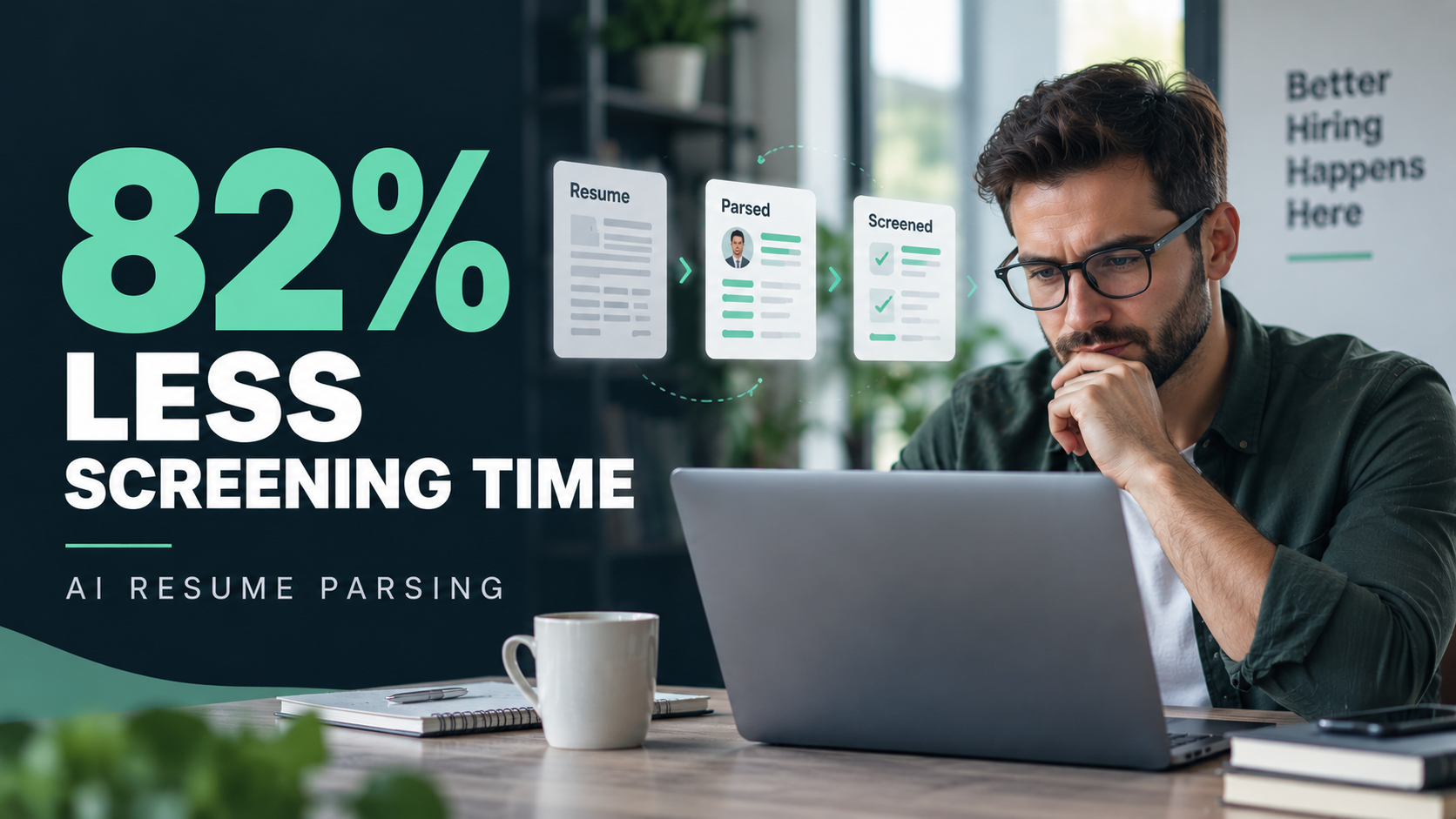
Advanced AI resume parsing software automatically extracts technical frameworks, skill variations, tenure, and project context from inbound files and historic records.
Semantic Search & Matching
Using contextual evaluation rather than strict keyword matching, semantic search evaluates technical skill relationships to surface matched internal profiles instantly.
Automated Outreach & Screening
Matched candidates receive personalized, multi-channel outreach. Interested talent completes an initial assessment via conversational AI phone screening software to verify availability and technical alignment.
Two-Way ATS Sync
Screening scores, updated resumes, and communication logs sync automatically back to primary systems like Bullhorn or JobDiva without manual data entry.
Implementation Timeline
The system was deployed across four weeks to avoid interrupting active client delivery.
Week 1: Setup & API Integration
Connected ATS API credentials, mapped custom VMS fields, and set up secure data parsing protocols.
Week 2: Team Training
Onboarded 28 recruiters on semantic search queries, candidate evaluation dashboards, and candidate match workflows.
Week 3: Campaign Launch
Activated automated email and SMS re-engagement sequences alongside automated phone screening modules for active technical roles.
Week 4: Optimization
Refined matching parameters based on candidate submission feedback and established team productivity benchmarks.
Results
Within 30 days of full deployment, the agency recorded substantial gains across speed, candidate database reuse, and total placements. Note: Operational figures below represent illustrative examples based on standard implementation benchmarks.
| Metric Category | Baseline Process | With AI Automation | Operational Impact |
|---|---|---|---|
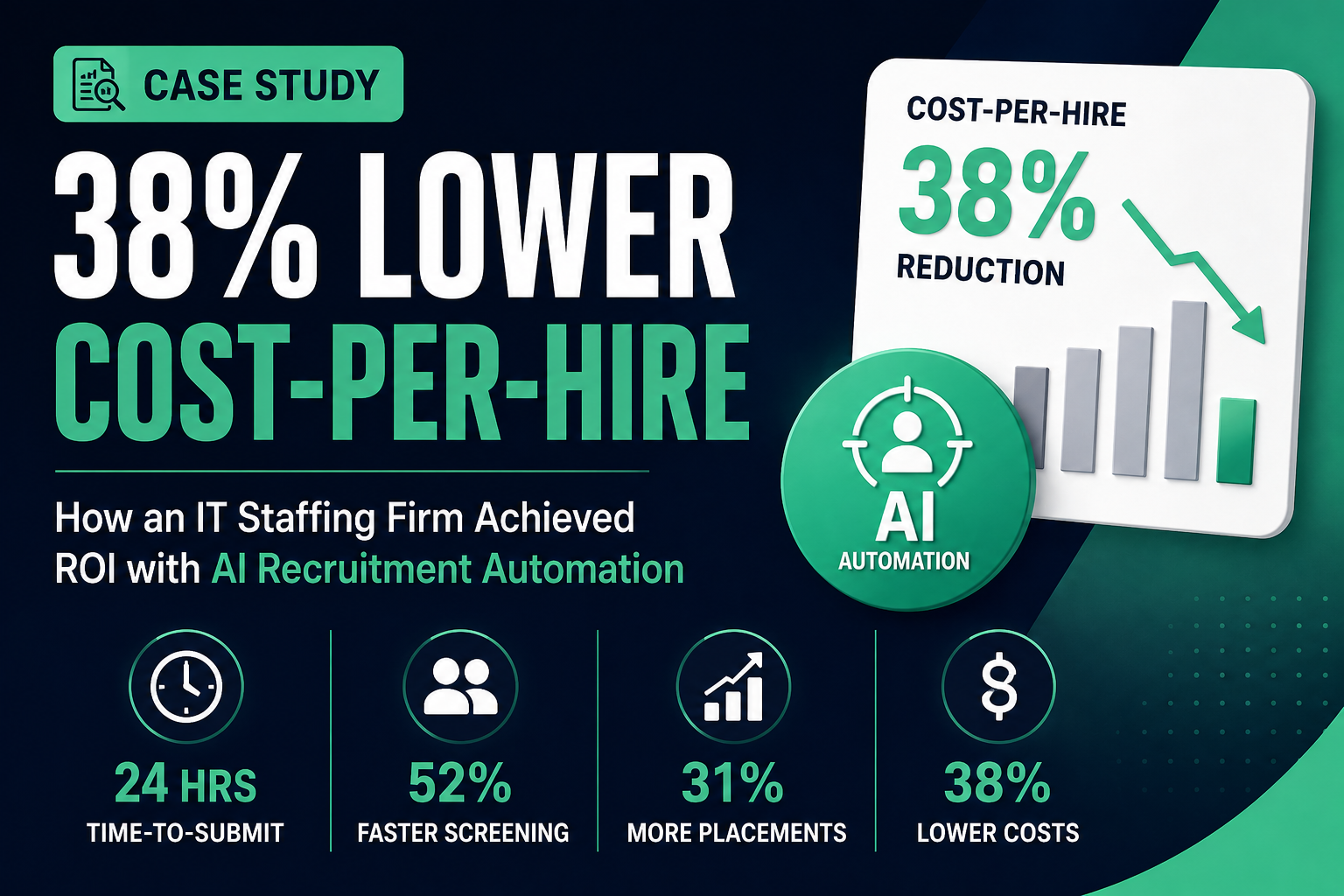
| Average Time-to-Submit | 48 Hours | 4.2 Hours | 91% Reduction |
| Average Time-to-Fill | 28 Days | 11 Days | 60% Acceleration |
| ATS Database Reuse | 12% of hires from ATS | 64% of hires from ATS | 5.3x Increase in Candidate Rediscovery |
| Monthly External Job Board Spend | $18,500 / month | $6,200 / month | 66% Cost Savings |
| Candidate Response Rate | 14% (Manual Emails) | 42% (Automated Multichannel) | 3x Higher Engagement |
| Recruiter Placement Capacity | 1.8 Placements / Recruiter / Mo | 3.8 Placements / Recruiter / Mo | 111% Productivity Increase |
Key Impact Areas
Recruiter Capacity & Workday Efficiency
Automating early-stage sourcing and initial screenings saved each recruiter roughly 15 hours per week. Delivery teams redirected this time toward in-depth candidate conversations and client account growth.
Submission Accuracy & Match Quality
Using ATS candidate matching ensured candidate skills, pay expectations, and work authorizations were verified before profile presentation. Client interview request rates on submitted profiles rose significantly as a result.
Database Monetization
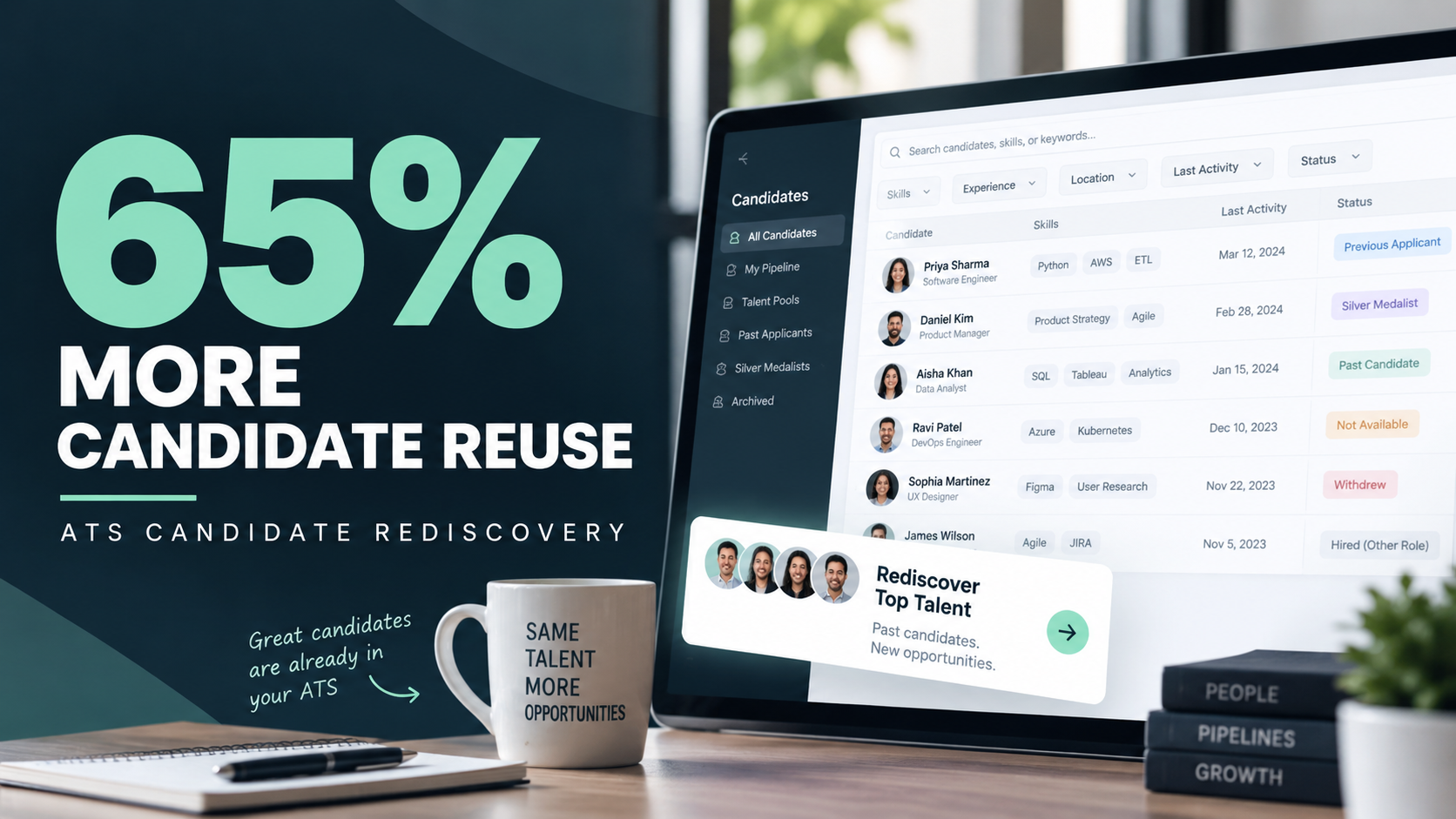
Deploying candidate rediscovery software enabled the firm to monetize years of historical candidate data, slashing reliance on third-party job board databases and reducing monthly vendor software spend.
Recruiter Perspective
User adoption was high because the tool addressed everyday operational friction rather than adding administrative steps.
Business Impact
Modernizing delivery workflows provided measurable strategic advantages across commercial accounts, particularly when navigating enterprise recruiting automation for MSP & VMS hiring.
Margin Expansion: Filling 75 technical roles in 30 days without adding recruiter headcount allowed placement revenue to grow while operational overhead remained stable.
Higher VMS Scorecard Rankings: Reducing submission times to under 5 hours placed the agency at the top of competitive enterprise VMS vendor scorecards, earning them priority access to new requisitions.
Improved Client Satisfaction: Consistent submission speed and candidate match precision strengthened relationships with enterprise hiring managers, leading to higher contract renewal rates.
Lessons Learned
Staffing leaders planning a similar workflow transformation should keep three core principles in mind:
1. Maintain ATS Data Hygiene: Matching algorithms work best when candidate contact info and employment history are correctly structured upon ingestion.
2. Keep Recruiters at the Center: Use automation to streamline administrative tasks, but leave final qualification, relationship building, and offer negotiation to human recruiters.
3. Take a Phased Deployment Approach: Roll out automation tools to specialized desks (e.g., Cloud or Infrastructure) first to establish operational playbooks before expanding company-wide.
How NinjaHire Supports Staffing Workflows
NinjaHire delivers an all-in-one AI recruitment automation platform built specifically for staffing agencies and high-volume delivery teams.
AI Resume Parsing & Matching
Extract technical expertise accurately and evaluate candidate profiles against job requirements using AI resume screening software.
Candidate Rediscovery
Surface dormant talent in existing databases and trigger automated re-engagement sequences using specialized talent pool management software.
Conversational Screening
Pre-qualify technical candidates automatically on core competencies, location preferences, and compensation expectations to accelerate candidate submissions.
Native ATS Integrations
Connect natively with leading staffing platforms including Bullhorn, CEIPAL, JobDiva, Avionté, Recruit CRM, Greenhouse, and Lever.
Frequently Asked Questions
Can AI staffing software reduce overall time-to-fill?
Yes. Automating initial candidate search, semantic matching, and preliminary phone screens reduces total hiring cycles from weeks to days.
Does AI software replace human recruiters?
No. AI automation handles repetitive tasks like data entry, resume parsing, and scheduling, allowing recruiters to spend more time interviewing candidates and serving clients.
How long does implementation typically take?
Most implementations take between 1 and 3 weeks. Pre-built API connectors integrate smoothly with your existing ATS without disrupting day-to-day work.
Does NinjaHire integrate with ATS platforms like Bullhorn or JobDiva?
Yes. NinjaHire offers native API integrations for major staffing systems including Bullhorn, CEIPAL, JobDiva, Avionté, Recruit CRM, Greenhouse, and Lever.
Can AI accurately evaluate technical candidate skill sets?
Yes. Modern AI evaluates technical candidates by evaluating frameworks, certifications, project context, and skill relationships rather than relying on exact keyword matches.
How does semantic search differ from traditional Boolean queries?
Boolean searches depend on exact string matches, often missing suitable candidates who use different terms. Semantic search evaluates context and skill proximity to return broader, more accurate matches.
What is candidate rediscovery?
Candidate rediscovery uses AI to analyze past applicants in your internal ATS/CRM database and match them to open positions, lowering external sourcing costs.
How does AI phone screening work?
AI phone screening tools conduct automated, conversational phone calls to confirm candidate availability, pay expectations, work authorization, and technical experience.
Is candidate data kept secure and compliant?
Yes. Enterprise AI recruiting platforms follow global privacy standards like GDPR and CCPA, using robust encryption to safeguard candidate data.
Can AI help staffing firms lower job board expenses?
By systematically surfacing talent already inside your database, AI platforms significantly lower reliance on paid job board searches and resume databases.
How does AI improve candidate submission quality?
AI verifies candidate qualifications against job requirements before submission, ensuring candidates meet core technical and logisitcal criteria before reaching hiring managers.
Which staffing verticals benefit most from AI automation?
IT, healthcare, engineering, and high-volume VMS/MSP staffing agencies see fast returns due to high requisition volumes and strict time-to-submit requirements.
How does automated outreach increase candidate response rates?
Automated platforms send personalized, multi-channel outreach via email and SMS at ideal times, generating higher engagement than mass cold emails.
Can mid-sized agencies use AI software effectively?
Yes. Mid-sized agencies use AI software to compete directly with larger enterprise staffing firms without increasing delivery team headcount.
Which key metrics should staffing leaders monitor during rollout?
Important delivery metrics include time-to-submit, time-to-fill, internal ATS candidate rediscovery rate, monthly job board spend, and recruiter placement capacity.
See how AI-powered recruitment automation can help your staffing team cut manual tasks, boost recruiter productivity, and place candidates faster. Book a personalized NinjaHire demo today.
Other insights
Continue reading





.jpg)


Subscribe to our newsletter
Want to stay up to date with news and updates about our product? Subscribe.
© Copyright 2026